

A TRIAL ATTORNEY AND THE SEARCH FOR A STORY
By: Charles I. Joseph, Esquire; Gillian Drake and Kailey Silverstein, Esquire
*** This Article is the result of its three authors working together to craft the final product. It was a team effort. For stylistic reasons, the authors chose to write the Article in the first person from Mr. Joseph’s perspective.***
I. PROLOGUE
It was the second day of a medical malpractice trial, and the defense attorneys, John King and Jack Wily, waited for court to start. Each had a different plan to win the case. Mr. King was a dynamic Storyteller, and therefore, his trial strategy focused entirely on his client and telling their Story.
Jack Wily was a well-known, but traditional litigator, and his trial strategy primarily involved making a sales pitch to the jury (although they considered it Storytelling). This entailed teaching the jury about the medicine, exposing the holes in plaintiff’s case, demonstrating that plaintiff was exaggerating their injuries, and undermining plaintiff’s experts by showing that they were hired guns. Mr. Wily’s plan also included filing an array of motions in limine and continuing the legal battle during trial with timely objections.
As plaintiff’s counsel called their expert to the stand, Mr. King pulled out a yellow legal pad from his trial bag, turned to Mr. Wily, and asked, “Excuse me, may I borrow a pencil?”
Mr. Wily gave Mr. King a pencil and asked, “Mr. King, where are your depositions, expert reports, articles, exhibits, investigatory materials, and pleadings? How are you going to cross-exam this expert? How can you sell your case to the jury without these materials?”
Mr. King peered over their reading glasses, smiled, and explained, “We do not care about what the other side has to say. Remember, if our Story is better than their story, we will win.”[1]
II. INTRODUCTION
It has become increasingly popular for attorneys to discuss the need to tell a Story for the jury. The increased attention is well-founded given that Storytelling is one of the most effective tools to persuade and help people make sense of information. Throughout time, all societies have used Stories not only to entertain, but also as “a tool to help both storyteller and listener to make sense of the world.”[2] Stories have been and continue to be one of the most popular vehicles to educate and persuade others.
Given the persuasive appeal of Storytelling, it is easy to see why it is popular with trial attorneys and litigators. Storytelling takes on added importance at trial because as the jury is trying to make sense of the evidence, a Story allows an attorney to present a case that is both easy to understand and answers the jury’s questions. Untapping the persuasive power of Storytelling, however, involves more than educating the jury about the facts via a narrative.
Storytelling is not a natural gift given to everyone, and thus, it is often misunderstood. I have experienced far too many attorneys pontificate and espouse about Storytelling without understanding its true nature. Based on my observations, the prevailing, yet misplaced, view amongst attorneys equates a Story with an agglutinative collection of hand-picked facts and opinions that the attorney finds important. This is what I call the attorney narrative. For followers of this approach, the articulation of their narrative is not Storytelling, but instead a sales pitch that promotes the same self-identified highlights. Misinformed phrases like “You must sell your story,” and “A trial is like a job interview,” among others, are the vernacular for the attorney confused about the difference between selling and Storytelling.
A sales pitch is not a Story and selling a narrative is not Storytelling. So there is no confusion, developing a narrative, in and of itself, does not create a Story. Attorneys who want to craft a Story and employ Storytelling must appreciate these distinctions and understand that the differences have a quantifiable impact on an attorney’s ability to persuade and reach their audience.
In this Article, the authors discuss what constitutes a Story, why Storytelling is an effective strategy, and how to apply it in trials and litigation. We are not advocating that attorneys must follow one set of rules in creating their Story. An attorney seeking to employ the persuasive power of Storytelling, however, must understand that all Stories share specific characteristics and are more than a collection of hand-picked facts, information, and themes. The persuasive power of Storytelling derives from these special characteristics.
Storytelling is art and, therefore, takes on countless forms. Therefore, each attorney must find their own voice and approach for crafting a Story. The authors hope this Article helps in that quest.
III. A STORY – THE HERO’S JOURNEY
A Story is more than just describing and recounting events. Instead, a Story has characters and involves a hero figure, a plot, conflict, and resolution. For audiences, a Story instructs, engages the imagination, entertains, and illustrates a moral lesson. Storytelling, in turn, is “the interactive art of using words and actions to reveal the elements and images of a [S]tory while encouraging the listener’s imagination.”[3]
Contrary to a prevailing belief held by a mainstream contingent of litigators, standing in front of a jury and stating, “Let me tell you my client’s story,” does not magically transform what comes out of your mouth into a Story. Instead, crafting a Story requires an appreciation of several fundamental components, the most important being an understanding of the classic elements of Storytelling that have existed for generations.
There are numerous literary works that have analyzed the Story and Storytelling. All of these efforts derive from Aristotle’s Poetics and his theory of tragic Storytelling.[4] In Poetics, Aristotle memorialized the rules of the Hero’s Journey: (1) the introduction of the hero in their circumstances; (2) the hero goes on a journey and encounters challenges; (3) at some point one of the challenges results in the hero changing irrevocably; (4) the hero comes home; and (5) the hero experiences a new beginning.[5] These five broad stages lay at the core of dramatic Storytelling. Aristotle explained that every element of the Story must promote the hero and their journey because the Story is about the hero.
There are several modern writings that have analyzed the art of Storytelling and expanded on Aristotle’s Poetics. The two I find most influential are The Hero with a Thousand Faces by Joseph Campbell[6] and “A Practical Guide to Joseph Campbell’s The Hero with a Thousand Faces” by Christopher Vogler.[7]
In his famous book The Hero with a Thousand Faces, Joseph Campbell examined the framework of Storytelling by analyzing myths and stories from a variety of cultures.[8] Campbell’s analysis revealed that all tales and stories contain a similar structure.[9] He coined this narrative structure the Journey of the Hero or the Monomyth.[10] The Journey of the Hero contains three chapters (Departure, Initiation, and Return) with seventeen distinct stages.[11] These stages are the building blocks for our Stories and used to enhance the tension and emotional impact of the dramatic turning points.
In 1985 Christopher Vogler, inspired by Campbell, wrote “A Practical Guide To Joseph Campbell’s The Hero With A Thousand Faces” that re-interpreted Campbell’s seventeen stage Journey of the Hero and synthesized it into twelve stages.[12] With his take on the Hero’s Journey, Vogler highlighted how to build suspense through the hero’s thoughts, words, and actions.
Vogler’s Twelve Stages are as follows:
(1) Ordinary World – Before the adventure begins.
(2) Call to Adventure – Hero presented with a problem.
(3) Refusal of the Call: Initial reluctance.
(4) Meeting with the Mentor – Introduced to a wise person.
(5) Crossing the First Threshold: Leaving the ordinary world for the adventure.
(6) Tests, Allies, Enemies: Meets helpers and allies.
(7) Approach the Inner Most Cave: Encounters danger.
(8) Ordeal: Crisis (death) or the hero reaches bottom, but the hero survives.
(9) Seizing the Sword, Reward: After surviving, the hero earns reward.
(10) The Road Back: The journey back.
(11) Resurrection Hero – The final test and emerges transformed.
(12) Return with Elixir: Return to ordinary world with reward.[13]
In summarizing Campbell’s seminal work, Vogler wrote:
In [their] study of world hero myths Campbell discovered that they are all basically the same story – retold endlessly in infinite variations. [They] found that all story-telling, consciously or not, follows the ancient patterns of myth, and that all stories, from the crudest jokes to the highest flights of literature, can be understood in terms of the hero myth; the “monomyth” whose principles [they] lays out in the book.
The theme of the hero myth is universal, occurring in every culture, and in every time; it is as infinitely varied as the human race itself; and yet its basic form remains the same, an incredibly tenacious set of elements that spring in endless repetition from the deepest reaches of the mind of man.[14]
Vogler’s version of the Hero’s Journey has become one of the standards for modern Storytelling. For example, it serves as the foundation for movie blockbusters like the Star Wars trilogies, the Lion King, the Lord of the Rings, The Matrix, and the Marvel Universe (Thor, Black Panther, et al.). In my opinion, it also exists in varying forms in less obvious movies and stories like Zach Braff’s Garden State, Spike Lee’s Do the Right Thing, John Cusack’s Grosse Pointe Blank, and Prince’s Purple Rain.
Putting facts and opinions together into a beginning, middle, and end does not by itself create a Story no matter how compelling the facts or entertaining the narrative. A collection of facts and opinions that do not, in some form, follow Campbell and Vogler, i.e., keep the perspective of the Hero and develop challenges along the Hero’s path, maybe persuasive and even entertaining, but it is not a Story in the tradition of Aristotle, Campbell, and Vogler, and thus, it runs the risk of falling short.
Although employing Campbell and Vogler’s Storytelling roadmap is a critical step in creating a Story for a case or trial, it is not the only one. For attorneys trying to maximize the persuasive power of Storytelling, it is not enough to plug your case’s facts and theories into the Hero’s Journey’s Stages. Instead, to reach the jury, an attorney also must understand what strategies, tactics, and approaches enhance the Story’s persuasive appeal and which do the opposite. Let me explain.
IV. “MY WANDERINGS IN THE WEARY LAND”[15]
A. ACT I – “PEACE WILL COME IN TIME”[16]
- Luke Receives a Message from R2-D2 (A Call to Adventure)
Even before starting law school, I wanted to be a trial attorney. After graduating law school and completing a clerkship with the Honorable Robert F. Fischer on the Court of Special Appeals of Maryland, I was fortunate enough to land a job at a Baltimore Firm, which, at the time, was known for training trial attorneys.
I started at the Firm on November 11, 1996, and immediately began learning about being a trial attorney. Like most aspiring trial attorneys, I was introduced to one of the more popular schools for litigation and trial strategy. I call it the Traditional Approach.
- The Traditional Approach (The Ordinary World)
Attorneys have multiple theories about how civil juries decide cases. The Traditional Approach dictates that juries make their decisions by weighing the emotional and sympathetic appeal of the plaintiff against the factual and scientific strength of the defense case. Thus, at its core, the Traditional Approach is stubbornly binary where defense attorneys assume jurors can turn off their emotions and feelings whereas plaintiffs’ attorneys assume that jurors make their decision based largely on emotion and sympathy. The attorneys base their litigation and trial strategies on this dichotomy.
Under the Traditional Approach, plaintiff’s case revolves around the plaintiff themselves. This strategy depends, in part, on the plaintiff’s attorney using sympathy to create a connection between plaintiff and the jury. The facts and science are not prioritized and take a back seat to the emotional plea. For plaintiff’s attorneys adopting this approach, their client and the sympathy generated by their injury become the focus of the case. The plaintiff’s attorney sells their client’s sympathy.
Defense attorneys following the Traditional Approach craft their cases around the facts and science. They emphasize logic and reasoning in their case. They also stress the Burden of Proof and Impartiality Jury Instructions in an effort to keep the courtroom sterile of emotion. The defense attorney identifies their strongest facts and theories for their case and sells these focal points to the jury. In this strategy, the defense attorney becomes the focus for the defense, and they push upon the jury the specific facts and opinions that they deem most important.
One of the main components of the Traditional Approach is a focus on tearing down the other side. The strategy presumes that if you can establish that the other side is wrong, the jury will find in your client’s favor. With the focus on proving that the other side is wrong, attorneys adopting this strategy do not spend enough time explaining why their client is right. Thus, the proclivity for tearing down the opposing side exposes one of the inherent weaknesses with the Traditional Approach – it is difficult to answer what questions matter to the jury if you are primarily focused on tearing down the other side.
Another component of Traditional Approach is the, at times, illogical fixation with venue. Plaintiffs crave jurisdictions with a less educated population, and the defense more. Pursuant to this belief, juries with more education are more likely to accept the defense’s fact/science-based sales pitch, and the less educated jurors are more likely to be swayed by plaintiff’s emotional plea.
Because an attorney following in the Traditional Approach is a salesperson, the venue quandary resembles the search for a target market. The question “can I sell my story in that venue (market),” presumes that some venues are wrong for the sales pitch. Although each venue has its own general characteristics and some maybe friendlier to one side or another, depending on the case, the obsessional nature of many attorneys engulfed in the Traditional Approach leads to near defeatism if one’s case ends up in the “wrong” venue.
Even though the Traditional Approach is favored by many attorneys, there are those who reject the Traditional Approach and instead look for ways to reach the jury at a different level and with different means. Most of these nontraditional outliers incorporate some form of Storytelling.
- Luke Meets Obi-Wan (Meeting the Mentor)
My fortunes changed forever in the summer of 1998 when one of the associates on the medical malpractice team suddenly left the Firm. Dale Adkins, the lead attorney for the medical malpractice group, asked me to start working with him. Although I was initially hesitant, I agreed.
Immediately, I started learning about a different way to work-up and try cases. Dale emphasized that there were jury issues that many times were not part of the central claims or defenses, but impacted a juror’s perception of the evidence, influenced a juror’s decision-making process, and thus, were decisive. Therefore, because these issues mattered to the jury and the answer to a jury issue affected the jury’s final decision, we had to address and answer them for the jury. Dale called this process issue spotting.
Like most attorneys who reject the Traditional Approach, Dale appreciated that jurors are not automatons who can turn off their emotions and feelings. Dale, like other select trial attorneys, believed that issues that resonate with jurors at both a logical and emotional level, regardless of whether they relate to an element in the case, are, more often than not, going to shape a juror’s decision-making process.
Jury issues work both ways. For example, there are jury issues that help your case, which an attorney should incorporate into their central themes. There are also jury issues that are potentially harmful to your case. With these negative jury issues, you must identify them and then address them for the jury.
Admittedly, it is difficult to attach a specific definition or criteria for what constitutes a jury issue. To borrow an observation from United States Supreme Court Justice Potter Stewart, there is an element of “I know it when I see it” when it comes to jury issues.[17] As a trial attorney, however, it is our job to identify what issues are important for the jury and then answer them for the jurors.
Some examples of jury issues that I have encountered include:
(1) A surgeon having their physician assistant, instead of themselves, examine the surgeon’s patient during that patient’s four-day post-operative recovery;
(2) An obstetrician not having a pediatrician in the delivery room for a delivery when there was, by any objective measure, a reassuring fetal heart tracing;
(3) A surgeon and their office not bringing a patient in for an earlier post-op checkup when the patient called every other day about benign drainage from their incision; and
(4) In a lead-based paint lawsuit, a landlord not removing lead-based paint from their rental properties when there was no obligation under the law to do so.
These are jury issues from four cases where I represented the defendant and lost at trial. Plaintiff did not claim any of these issues constituted a negligent act, but I and others had no doubt that they played a part in the eventual outcomes.
Along with issue spotting, Dale instilled in me the discipline of knowing the details of the case better than anyone else in the courtroom. Dale’s demand for attention to detail revealed an interesting dichotomy: I had to know the case inside and out, but my focus remained on the identified jury issues and the facts and opinions that we planned to use to support our narrative. Most of the time I ignored facts or opinions unrelated to one of our jury issues or central themes. Therefore, I had to know every fact of the case, have the discipline to stay on message, and know when and how a fact or opinion may become important to the case.
Regardless of the strategy employed, our goal as trial attorneys or litigators is to persuade and influence in a positive way the jury’s decision-making. For example, Dale’s jury issue approach, with its emphasis on both logical and emotional elements, was his way of trying to influence the complex nature of the human decision-making process. The science behind how people make decisions not only highlights the wisdom of attorneys who try to reach the jury by different means, but also reveals one of the underlying weaknesses in the Traditional Approach, i.e., pursuing a fact or emotional approach alone, but not both, many times leaves the audience and its followers wanting.
- Explanation of the Force
Contrary to the Traditional Approach and other related trial strategies, the assumption that jurors can either turn off their emotions and feelings while deciding a trial or completely ignore facts and science in reaching a decision is inconsistent with studies examining our natural decision-making process. These studies and papers describe the individual decision-making process as involving two aspects of the brain: (1) the cerebral cortex – deliberative logic and reason; and (2) the evolutionary brain – instinctual and emotional. These two parts of the brain work together in the decision-making process.
In its informative paper “Improving Jury Deliberations Through Jury Instructions Based on Cognitive Science,” the Jury Committee for the American College of Trial Lawyers summarized the decision-making analysis as follows:
With this closing instruction ringing in their ears, jurors across the country are sent off to their deliberation rooms to reach a verdict:
“Free your minds of all feelings of sympathy, bias and prejudice and let your verdict speak the truth, whatever the truth may be.”
“For decades we believed this instruction was effective and its goals attainable. People could simply ‘free their minds of all feelings’ and reach a verdict based on reason and objective facts—or so we thought.”
“Recent advances in the science of decision-making, however, undercut our assumptions about how jurors make decisions. Science now teaches that our cerebral cortex (and its deliberate, logical power) does not either solely or separately rule the day. Instead, logic or reason (described below as ‘System 2’ thinking) operates alongside and in conjunction with the evolutionary brain and its quick, instinctual impulses (described below as ‘System 1’ thinking). Thus, instructing someone simply to shut down part of their brains and ‘free their minds of all feelings . . .’ is as effective as telling a child perched on a garage roof to ignore gravity.”[18]
In discussing Jonathon Haidt’s book, The Righteous Mind: Why Good People Are Divided by Politics and Religion, the American College included this instructive quote that summarizes the issue for trial attorneys and highlights the interrelationship between both components of our decision-making brain:
“Jonathan Haidt similarly explains human decision-making as a combination of two interrelated types of cognition: (1) intuition, which runs automatically and efficiently, and (2) reasoning, which requires effort and attention. [They] describes these two types of cognition through the metaphor of an elephant lumbering down a road (representing automatic processes such as intuition and emotion) while the rider atop the elephant attempts with varying degrees of success to control the large beast (representing conscious and effortful reasoning).”[19]
One take away from the decision-making science is that an attorney who creates a case strategy that encompasses both components of the dual decision-making modality stands a better chance of persuading the jury compared to an attorney who ignores one half of the equation. A Story’s persuasive power rests in its structure, and therefore, allows an attorney to present facts and themes that resonate with both the logical and emotional halves of a juror’s brain, thereby conforming with their decision-making process. Additionally, with its familiar path, turns, and drama, the Journey of the Hero provides a mechanism to organize information in a way that is familiar to a juror, and thus, makes it easier for them to process the evidence. Therefore, combining the inherent dramatic tension and emotional impact of the Hero’s Journey with the evidence creates a powerful persuasive vessel to reach your audience. That is a Story’s persuasive appeal.
- Luke Leaves Tatooine (Crossing the First Threshold)
Although Dale’s nontraditional approach to being a trial attorney appealed to me and was something I tried to emulate, I recognized that I could not simply copy his approach. Instead, I had to find my own voice. Therefore, with new skills, good intentions, but also an at times naïve arrogance that often accompanies up and coming trial attorneys who think they know it all because they know a little, I turned from the Traditional Approach and I ran.[20]
B. ACT II “A TIME WILL COME FOR US”[21]
- Han Solo and Chewbacca (Allies and Approach to the Inner Most Cave)
During my career, multiple people helped shape my progress as a trial attorney. One such figure was Wes Foster, who was Head of Claims for the largest medical malpractice insurance carrier in Maryland. Wes was not an attorney, did not think like an attorney, and demanded that his attorneys follow suit. Wes required that his attorneys to stand-up for the physicians and fight for them as if it was personal.
I interpreted Wes’s emphasis on the physician as a call to make the doctor the center of the case. By combining Wes’s physician-centric defense with Dale’s issue-spotting approach, I expanded my ability to reach the jury. Because the defense revolved around the physician, I now linked the answers to the jury issues with the centralized physician defense. I also incorporated this approach in my nonmedical malpractice cases. In my mind, ensuring that my client answered the jury issues enhanced their connection with the jury because they directly answered what concerned they jury.
As my career progressed, Wes gave me a chance to try more complicated medical malpractice cases. With the increased opportunities, I had some success and started to develop my own approach. In retrospect, however, even though I was making progress, I had not completely abandoned the vestiges of the Traditional Approach. Therefore, although I thought I was on the right path and envisioned myself becoming the next John King or Dale Adkins, I was wrong. Instead, at this stage of my journey I met challenges that tested me and highlighted my shortcomings.
- The Failure in the Cave (The Ordeal)
“You know you should have won that case,” Wes exclaimed with the signature combination of humor and scorching realism that was the trademark for one of his invaluable yet slightly feared teaching moments. Three days earlier, in January 2010, I had suffered a bad loss in a medical malpractice case. The jury deliberated twenty-three minutes before returning its verdict and giving plaintiff everything they asked for: $1,682,751.93. I was meeting with Wes and others to discuss our options.
At the time, I was surprised by the loss because, in my mind, I had executed my trial plan to perfection. I had identified key issues, taught the jury about the medicine, presented my client as a competent, caring, and compassionate physician, and highlighted the inconsistencies in plaintiffs’ case.
The loss produced the usual collection of excuses: the jury ignored the judge’s instructions, the jury got swept up in plaintiffs’ emotional appeal, the judge made several bad legal findings, and it was the wrong venue.
We decided to file post-trial motions, and I ordered the trial transcript. It arrived in March 2010. When I read the transcript, it revealed a difficult truth: neither the jury nor the judge or any witness was responsible for this loss. The fault lay entirely with me.
Although I had prided myself as being a different type of trial attorney, the transcript showed anything but. I argued the science and facts and paid little attention to the issues that mattered to the jury, e.g., why my client did not see plaintiff in the hospital during post-op recovery and instead had his physician assistant handle the exams. My issue spotting and theme development existed in name only. My presentation of the case was a flat sales pitch.
As the humbling reality sank in, I muttered, “How could I have screwed up so badly? There must be a better way.”
- Luke and Company at the Death Star (Approach to the Inner Most Cave)
I had no choice but to regroup. In one month, I was scheduled to start the biggest trial of my relatively short career. I represented Dr. Knight, a board-certified anesthesiologist. Plaintiff underwent a complicated femoral bypass procedure that lasted over seven hours and resulted in her losing more than their total blood volume. Because of the fluid and blood loss, plaintiff experienced prolonged periods of lower than expected blood pressure. She survived the surgery, but suffered a spinal cord injury that left her paralyzed from the waist down. Plaintiff sued the two vascular surgeons and Dr. Knight. Plaintiff claimed that Dr. Knight failed to maintain their blood pressure within the acceptable range.
The case was high stakes for several different reasons. Most importantly, my client was facing a verdict in excess of his insurance policy as plaintiff claimed over $4,000,000 in damages. Additionally, on a personal level, at this stage in my career I could not afford to lose another million-dollar case.
- Meeting the Oracle (The Reward)
In 2007 Wes had introduced me to Gillian Drake, who works with attorneys to prepare their clients for deposition and trial. Gillian is an accomplished theatre director, studied for three years with the famous Stella Adler in New York City, and has a Masters in Directing. In 1985 Gillian started applying her theatre and directing skills to help lawyers in a course called Acting for Lawyers. Soon thereafter, Gillian started working with attorneys to prepare witnesses to testify.
Due largely to her years in theater and production, Gillian is steeped in the tradition of Storytelling. She stresses the need to create an emotional connection with the jury by using the structure of the Story to shape the Hero’s Journey. I called Gillian to help me with Dr. Knight’s case.
My initial conversations with Gillian unearthed a major flaw in my approach. Although issue spotting and a client centric defense are important tools in both crafting and enhancing a Story, my current approach remained too disorganized and lacked the emotional connection and dramatic tension that is the core of the Hero’s Journey. This disorganization decreased the persuasive value of my case and my ability to connect the jury with my client.
With Gillian’s help I realized that the Hero’s Journey could bring structure to my client’s narrative, thereby creating a true Story. Although I did not have the opportunity to think about our case during Discovery in the context of the Hero’s Journey, I recognized that Dale’s jury issue technique, with its emphasis on both logical and emotional items, and Wes’s physician centric approach folded perfectly into Dr. Knight’s Story guided by the Hero’s Journey. Therefore, combining and molding the Hero’s Journey, with its structure and organization, with Dale’s issue spotting and Wes’s client centric defense finally allowed me to put all the pieces together and craft a strategy that capitalized on the persuasive power of Storytelling.[22]
- Creating the Story (The Road Back)
During the initial stages of the case, I had decided that our primary defense themes would involve Dr. Knight’s efforts to help plaintiff and his ability to keep plaintiff alive during her difficult surgery. These differed from the more specific and technical allegations made by plaintiff involving the maintenance of plaintiff’s blood pressure or specific the type of recitation given at any moment. In my mind, if the jury evaluated Dr. Knight’s care through the lens of helping plaintiff and trying to keep her alive, as opposed to keeping her blood pressure above an arbitrary line drawn by plaintiff’s attorneys, then we had a chance. Creating a Story around these two themes, however, proved to be complicated.
a. Organizing the Story (Not a time to be Justice Scalia)
After discovering the missing component in my trial strategy, I started building Dr. Knight’s Story by incorporating the Hero’s Journey. During my initial efforts, however, I realized that although the Hero’s Journey has a specific number of stages in a specific order, the facts and opinions of the case limited my ability to craft a Story that strictly followed Campbell’s or Vogler’s model. Some stages did not apply (or at least not fully) and other events occurred in a different order. For example, Dr. Knight’s mentor figure appeared later in the Story than listed by Campbell and Vogler. Additionally, Dr. Knight met friends and allies important for the Story at multiple points. Finally, given the length of the surgery, it was difficult to line-up Dr. Knight’s heroic actions in keeping plaintiff alive with Vogler’s Stages that represent the core of the heroic confrontations.
Fortunately, as I learned, Storytelling has flexibility. As Vogler observed, “Every story-teller bends the myth to [their] own purpose.” [23] Therefore, for attorneys Storytelling is not the literary equivalent of Originalism, and Vogler’s or Campbell’s Stages are not Constitutional text to be followed dogmatically. As Vogler explained:
“As with any formula, there are pitfalls to be avoided. Following the guidelines of myth too rigidly can lead to a stiff, unnatural structure, and there is the danger of being too obvious. The hero myth is a skeleton that should be masked with the details of the individual story, and the structure should not call attention to itself. The order of the hero’s stages as given here is only one of many variations – the stages can be deleted, added to, and drastically re-shuffled without losing any of their power.”[24]
Unlike fiction writers, who are only limited by their imaginations, an attorney’s ability to build a Story is limited by the facts and evidence. Those limitations, however, do not prevent us from utilizing the persuasive value of Storytelling. We can bend the myth to our own purpose, but we must ensure that our Story contains the emotional and dramatic tension inherent in the Hero’s Journey.
b. Crafting the Story
In building Dr. Knight’s Story, I made two tactical decisions that reinforced the structure of Dr. Knight’s journey. In my opinion, these two steps are critical for any attorney wanting to build a case around the Hero’s Journey.
i. Build around the center
I committed to Dr. Knight being the center of our Story. It may seem like an obvious choice, but I had other options. For example, I could have chosen a more Traditional Approach, made a scientific pitch to the jury, and focused primarily on the medicine, which was a strong issue for us. Under this approach, Dr. Knight would have been part of the scientific pitch, but the science and the experts would be the center of the case.
One of the benefits of making Dr. Knight the center of the case was that it ensured we focused on our Story and remained proactive. By telling our Story instead of reacting to plaintiff, we made ourselves less dependent on the outcome of pretrial motions and other legal rulings. Additionally, it helped insulate our defense from the impact of new expert theories or arguments. My focus was making our Story better than their Story.
In crafting Dr. Knight’s Story, I had to identify the jury issues and determine how to address them for the jury. Early on I identified the logical and emotional appeal surrounding Dr. Knight’s heroic efforts in helping plaintiff and keeping her alive. In terms of negative jury issues, there were two matters that bothered me – (1) I was worried about the jury’s perception of Dr. Knight having only four years experience working next to two experienced surgeons. The optics were not ideal. (2) Dr. Knight’s medical degree was a DO, not an MD. In the real world it made no difference, but I was concerned about plaintiff’s attorneys’ efforts to undercut Dr. Knight’s credibility based on the distinction.
I determined that the most effective way to address the negative jury issues was to have Dr. Knight discuss them during his direct examination. This ensured that Dr. Knight himself addressed the issues that mattered to the jury. The jury’s concerns became Dr. Knight’s concerns. Additionally, I prepared Dr. Knight for his cross-examination, and we identified specific strategies to expose plaintiff’s counsel’s transparent efforts to question Dr. Knight’s experience.
ii. Use small steps
Gillian advocated that to draw the jury in and make the Story persuasive, I had to ensure that each stage of the Story had both logical and emotional components. In retrospect, this makes sense given the dual nature of our decision-making process. Gillian stressed that building the Story incrementally helped promote inclusion of both components while also drawing the jury into the Hero’s Journey.
For Dr. Knight’s case, Gillian’s incremental approach meant that Dr. Knight’s background, decision to go to medical school, experience in medical school, decision to go into anesthesiology, residency training, relationship with his mentors, completion of residency, passing his board examination, and experience practicing in the real world represented not just information that highlighted his credentials, but stages in Dr. Knight’s journey. The knowledge obtained, lessons learned, people met, and experiences undertaken all brought Dr. Knight to plaintiff’s surgery and that moment when events beyond Dr. Knight’s control placed plaintiff’s life at risk and Dr. Knight acted to save her life.
c. Telling the Story
Along with crafting the Story, I had to determine how to tell the Story. This involved more than preparing witness examinations, obtaining demonstrative exhibits and illustrations, and preparing a PowerPoint (although all are important). I had to make specific tactical decisions that benefited the Story and our ability to tell the Story.
i. Establish the cast
Telling a Story at trial involves more than relying on a single narrator. When employing Storytelling as a trial strategy, attorneys must recognize that the witnesses tell the Story in parts. Therefore, an attorney must determine who will narrate or present each element of the Story. This involves determining how each witness fits into the Story, and how they can provide testimony to support or advance issues and elements for the Story. Each new witness that adds to the Story or re-affirms part of the Story brings their own voice and emotion to the Hero’s Journey. Attorneys must appreciate this fact and consider it when determining how to tell the Story.
ii. Define the narrator’s role
At trial, the attorney is the Storyteller-narrator. They are neither the protagonist nor the focal point. Unlike a salesperson, who is the center of attention trying to convince people of a point by using predetermined issues to sell the product or idea, the Storyteller’s focus always remains on the hero and their journey. Our job is to get the jury to see the Story, connect to the hero, experience the hero’s challenges and journey, and share in the lessons learned. It is not about us. It is about our client and their journey.
Many attorneys want the focus of the case to be on themselves. The logic follows that if a juror trusts the attorney who stands up for the plaintiff or defendant, then this trust will transfer to that attorney’s client. The attorney-centric mindset, however, is inconsistent with Storytelling’s core elements. Because the Story is about the hero and their journey, the attorney cannot be the focus. Therefore, attorneys who understand their role will be able to keep the focus on our client, which in turn, makes the Story more persuasive.
For me, assuming the role of the Storyteller-narrator required the discipline to know the case and understand what issues, facts, and opinions mattered for the Story. I did not abandon the vigorous cross-examination of plaintiffs’ experts, teaching of the medicine, and pursuing legal defenses. These activities, however, were a means to tell Dr. Knight’s Story rather than a trial strategy by themselves. I chose the areas of focus carefully, and if an issue did not further our Story, more often than not, I would let it go. Most of the time, that meant not fighting every fight or making every objection. I had to determine what issues mattered and stay focused on those issues.
iii. Heroes own what they do
In preparing Dr. Knight for his testimony, Gillian and I stressed that he could not be defensive or make excuses. Dr. Knight had to own everything he did and explain to jury what he did, why he did it, and what he was thinking when he tried to help plaintiff. That was Dr. Knight’s journey – trying to help plaintiff. This involved bringing the jury to the moment just before Dr. Knight accepted the case and then carefully taking the jury through the care step by step. This was an area where Gillian’s emphasis on telling the Story incrementally was particularly important.
Having Dr. Knight own what he did and use active language, as opposed to passive language, sounds obvious. Yet in my experience, it is astounding how many witnesses, fact or expert, do the opposite. Passive language connotes defensiveness, which in turn, decrease the witness’s ability to connect with and persuade the jury. For example, a witness using the pronoun “we” instead of “I” (when we is not appropriate) or referring to the opposing party as plaintiff or defendant instead of their name connotes a subtle failure to take responsibility and avoid the process. Additionally, a witness saying, “I would have done x” instead of “I did x” screams defensiveness for the jury.
iv. Resist the traditional
I concluded that to narrate the Story successfully, I needed to resist the urge to employ certain Traditional Strategies. For example, in Maryland it has become increasingly popular for a defendant to point the finger at other co-defendants or third-parties.[25] In Dr. Knight’s case, I could have employed this strategy and blamed the vascular surgeons for Dr. Knight’s situation. In my experience, blaming others rarely works and would not have worked in my case.
Within the context of the Hero’s Journey, the “blame someone else approach” is counterproductive. First, blaming another party detracts from your client’s Story. If you are blaming someone else, you are not telling your client’s Story. Second, heroes do not blame others for their situation. Instead they take responsibility, embrace their situation, and overcome.[26]
Another common practice amongst the Traditional is using a combination of motions in limine and an aggressive objection strategy to frustrate the opposing side and block the introduction of evidence. On one hand, there are times when a trial attorney must object and fight the good legal fight. Objecting when required or strategically beneficial, however, is different than actively trying to block every piece of evidence and important opinion. There is only so much a trial attorney can do in a trial, and in my opinion, it is impossible to be the Storyteller-narrator while also obstructing and fighting every legal battle. You are either a Storyteller or obstructionist. Not both. The constant objecting and fighting detracts from the Story and make it more difficult to keep the jury engaged.
C. ACT III: “IT’S A LONG WAY TO FIND PEACE OF MIND”[27]
- Luke Destroys the Death Star (The Resurrection)
The trial lasted three weeks. Even though there were a couple of surprises and some very anxious moments, we stuck to our plan. I was the Storyteller-narrator and the jury heard in detail about Dr. Knight and his journey. During his testimony, Dr. Knight took the jury through the first part of his journey, which included his growing up, decision to go to medical school, training, experience, learning from his mentors, and working with allies. This helped build an emotional connection with the jury while also demonstrating Dr. Knight’s competence as an anesthesiologist. For the surgery, Dr. Knight did not just discuss his care, he explained why everything he did was done to help plaintiff and to keep her alive as the surgeons attempted to repair their aorta. Dr. Knight owned everything he did and made no excuses.
Combining Dale’s issue spotting, Wes’s physician centered tactic, and Gillian’s incremental approach allowed me to craft a Story and case strategy that resonated with the jury on both a logical and emotional level. With this approach, Dr. Knight and I answered the jury’s questions. Additionally, by focusing on our Story and being proactive in telling that Story, I found it easier to control the overall narrative. For example, plaintiff’s efforts to pitch the case as merely requiring some fresh frozen plasma or red blood cells to increase the blood pressure appeared as picayune, retrospective complaining that missed the larger issue of plaintiff’s life being at risk for several hours and the primary person responsible for keeping her alive was Dr. Knight.
The jury deliberated for two days. In the end, they found in favor of Dr. Knight, against the vascular surgeons, and awarded plaintiff over three million dollars in damages. Although disappointed that the jury found against the vascular surgeons, Dr. Knight and I were proud of what we had accomplished.
The exclamation point on the experience occurred about one week after the verdict. Dr. Knight received a gourmet gift basket from plaintiff with a note that read, “I am glad the jury got it right.”
- First Steps to Becoming a Jedi and the Medal (Return with the Elixir)
The verdict in Dr. Knight’s case crystalized for me the importance of Storytelling. The case illustrated that a Story structured around the Hero’s Journey, focused on the client, and built around jury issues and related themes has the potential to be a persuasive strategy for trial and litigation. Additionally, adapting and re-tooling established strategies, techniques, and methods to build and enhance the Story represented a critical element that maximized the Story’s persuasive appeal. For example, I did not cast away the trial techniques and methods I learned and adopted over my career. Instead, I used my techniques and methods for a shared unifying purpose to ensure that my client’s Story was persuasive.
At some level, the verdict represented the completion of my journey: Dale, Wes, and Gillian had taught me the Storytelling fundamentals; Campbell and Vogler provided the foundational building blocks to craft the Story; and the science established why Storytelling is persuasive and effective in trial. Moving forward, it was up to me to apply what I had learned to help my clients.
Since Dr. Knight’s case, I have employed Storytelling techniques in variety of cases, including medical malpractice lawsuits, usurpation of corporate opportunity disputes, lead-based paint cases, business lease disputes, disagreements over noncompete agreements, and a catastrophic bus accident case. Each case required me find its unique Story path. My experiences have led me to one conclusion: Storytelling and its building blocks can work in all types of cases (large or small), for either plaintiff or defense, and in any venue.
V. CONCLUSION
There are countless attorneys who have employed a variety of trial strategies, including the Traditional Approach or some form of it, and had success. As a trial strategy, the Traditional Approach and its many deviations are not as reliable as strategies that recognize the complexities of decision-making and look for ways to reach jurors via a different path. It is more difficult to win a case if you ignore a large component of the decision-making process. The science reveals that an attorney cannot ignore what jurors are thinking and feeling and expect them to follow solely what the attorney deems important. What you the attorney finds important maybe different than what a juror finds important.
The authors do not intend this Article to be an introduction to the next big thing in trial and litigation. For example, we do not claim to have invented the next Rules of Road,[28] Reptile Theory,[29] or other litigation strategy for success. And we most certainly neither invented nor are the first to discover the value of Storytelling. We are, however, advancing an option based on sound references and observations that, when employed a certain way, we believe provides opportunities for success.
A Story’s persuasive power rests in its structure, which allows an attorney to present facts and themes that resonate with both the logical and emotional halves of a juror’s brain, and thus, conforms with a juror’s decision-making process. Additionally, with its familiar path, turns, and drama, the Hero’s Journey provides a mechanism to organize information in a way that makes it easier for a juror to process. This is a Story’s persuasive appeal.
For those of us who recognize Storytelling’s persuasive realities, we have the obligation to teach the up and coming trial attorneys how to apply it in their trial and litigation work. For those looking to learn about Storytelling as a trial and litigation tool, we hope this Article helps.
VI. EPILOGUE
Not long ago, I attended an expert deposition with a junior attorney from our office. The defense attorney taking lead was trying to extract testimony from the deponent to set up a complicated motion in limine involving a causation issue. At a break in the deposition, the defense attorneys met, and the attorney taking lead proclaimed that a complicated Motion was the best way to win the case. Not everyone agreed.
When we went back into the room, the junior attorney leaned over and quietly asked me what, in my opinion, was the most important thing we needed do to win the case? I peered over my reading glasses, smiled, and explained, “Do not worry too much about what the others have to say. Remember, if our Story is better than their story, we will win.”
Deus Benedicat.
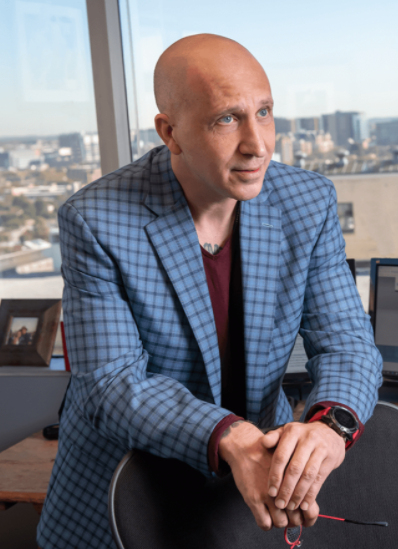
Charles I. Joseph is a Fellow of the American College of Trial Lawyers and partner at Baxter Baker, P.A., in Baltimore, Maryland. He represents parties in a variety of complex civil litigation matters and focuses a majority of his practice defending health care providers in in medical malpractice cases.

Gillian Drake is an accomplished theatre Director in Washington, DC and has a Masters Degree in Directing. Since 1985 Ms. Drake has been the President of On Trial Associates, Inc, where she specializes in preparing witnesses for trial and working with lawyers in her nationally recognized course “Acting for Lawyers.”
Kailey Silverstein is an associate at Jones Day in Washington, DC. In 2020, Ms. Silverstein graduated from the University of Maryland School of Law summa cum laude. In law school, Ms. Silverstein was a member of the Law Review, the National Mock Trial Team, and the National Moot Court Team.
* The Waterboys, My Wanderings in the Weary Land, on Good Luck, Seeker (Cooking Vinyl 2020).
[1] John King was a legendary trial attorney and a Fellow of the American College of Trial Lawyers. Mr. King trained and influenced many great attorneys, including three who directly impacted my career: Dale Adkins and Philip Franke, both Fellows of the American College, and Brad Hallwig, who is one of the smartest lawyers and best problem solvers I have ever met.
[2] Jacob Mohr, Exploring the Monomyth: 6 Lessons from Joseph Campbell’s Theory of “The Hero’s Journey,” TCK Publ’g, https://www.tckpublishing.com/what-is-the-heros-journey/ (last visited Aug. 20, 2020).
[3] Nat’l Storytelling Network, What Is Storytelling?, https://storynet.org/what-is-storytelling/ (last visited Sept. 20, 2019).
[4] See LitCharts, Tragic Hero, https://www.litcharts.com/literary-devices-and-terms/tragic-hero (last visited Sept. 20, 2019).
[5] See Aristotle, Poetics (S. H. Butcher trans.) (350 B.C.E.) http://classics.mit.edu/Aristotle/poetics.1.1.html (last visited Sept. 20, 2019).
[6] Joseph Campbell, The Hero with a Thousand Faces (3d ed., New World Library 2008) (1949).
[7] Christopher Vogler, A Practical Guide to Joseph Campbell’s The Hero with a Thousand Faces, https://web.archive.org/web/20161026112937/http://www.thewritersjourney.com/hero’s_journey.htm#Memo (last modified Oct. 26, 2016).
[8] Campbell, supra note 10, at 1.
[9] See id.
[10] Id. at 23.
[11] See id. at vii-ix. The Departure – 1) The Call to Adventure, 2) The Refusal of the Call, 3) Supernatural Aid, 4) The Crossing of the First Threshold, and 5) The Belly of the Whale; The Initiation – 6) The Road of Trials, 7) The Meeting with the Goddess, 8) Woman as the Temptress, 9) Atonement with the Father, 10) Apotheosis, and 11) The Ultimate Boon; and the Return – 12) Refusal of the Return, 13) The Magic Flight, 14) Rescue from Without, 15) The Crossing of the Return Threshold, 16) The Master of Two Worlds, and 17) Freedom to Live.
[12] Vogler, supra note 11.
[13] Id.
[14] Id.
[15] The Waterboys, Good Luck, Seeker (Cooking Vinyl 2020).
[16] Nick Cave and the Bad Seeds, Spinning Song, on Ghosteen (Ghosteen Ltd. 2019).
[17]Jacobellis v. Ohio, 378 U.S. 184, 197 (1964) (Stewart, J., concurring).
[18] Am. coll. of trial lawyers, Improving Jury Deliberations Through Jury Instructions Based on Cognitive Science 1 (2019), https://www.actl.com/docs/default-source/default-document-library/position-statements-and-white-papers/improving-jury-deliberations-final.pdf?sfvrsn=6.
[19] Id. at 3.
[20] One of my favorite descriptions for this stage of the Hero’s Journey comes from Mike Scott’s lyrics in the Waterboys’s song “Wanderings in the Weary Land.” The Waterboys, My Wanderings in the Weary Land, on Good Luck, Seeker (Cooking Vinyl 2020). The song also serves as the title for this Article. Mike Scott writes as follows:
Suddenly a chorus of lamentations arose,
the air dense with complaint, anger, victimhood
I felt their voices seeping into my head,
my own thought-voice raised in bitterness too
I could become one of Them!
I turned towards the only bright light,
a shard of silver in the dim distance
as if at the end of a tunnel
And I ran.
[21] Nick Cave and the Bad Seeds, supra note 20.
[22] Usually, the attorney should start figuring out their case themes and how they plan on winning the case the moment they either first meet with their client (plaintiff) or receive the Complaint (defendant). Discovery serves as the opportunity to collect evidence, soundbites, literature, and other tangible evidence to bolster your themes. For the Storyteller, Discovery is the chance to build your client’s Story and look for ways to develop themes or secure information that enhance that Story.
[23] Vogler, supra note 11.
[24] Id.
[25] Both Martinez v. The Johns Hopkins Hosp., 212 Md. App. 634, 70 A.3d 397 (2013) and Copsey v. Park, 228 Md. App. 107, 137 A.3d 299 (2016) provide excellent examples regarding the applicable law and the growing trend.
[26] There are specific situations when one has no choice but to blame another party. When I have encountered these rare situations, I have worked to incorporate this alternative defense into the main Story, and I made sure that the battle with codefendant did not take away from my main focus, i.e., my client and their journey.
[27] Nick Cave and the Bad Seeds, Hollywood, on Ghosteen (Ghosteen Ltd. 2019).
[28] Rick Friedman & Patrick Malone, Rules of the Road: A Plaintiff Lawyer’s Guide to Proving Liability (2d ed. 2010).
[29] See David Ball & Don Keenan, Reptile: The 2009 Manual of the Plaintiff’s Revolution (2009). The Reptile Theory attempts to forge a case around a defendant’s actions and link those with alleged violations in safety issues. The goal of the Reptile Theory is to overwhelm a juror’s decision-making process and instead focus the jury on safety concepts and why defendant’s actions are unsafe.



 ublawforum.com
Leave a comment