
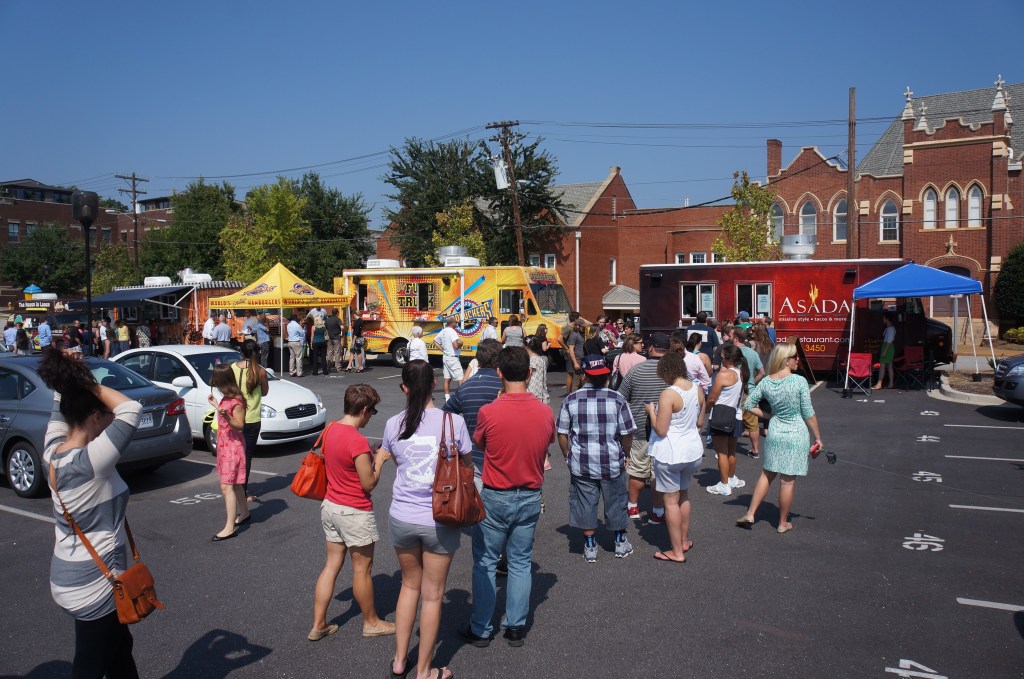
DESPITE THE ADDED VALUE FOOD TRUCKS BRING TO BALTIMORE, THE 300-FOOT RULE IS DESIGNED TO PRESERVE THE BRICK-AND-MORTAR RESTAURANTS AND DOES NOT VIOLATE SUBSTANTIVE DUE PROCESS OR EQUAL PROTECTION.
The Court of Appeals of Maryland held that the 300-foot rule does not violate food trucks’ substantive due process and equal protection rights under Article 24 and the rule is not impermissibly vague on its face. Pizza di Joey, LLC v. Mayor of Baltimore, 470 Md. 308, 369, 235 A.3d 873, 908 (2020). The court held that the claims made by the food trucks concerning substantive due process and equal protection are justiciable and ripe to present an actual controversy. Id. at 340-42, 342, 235 A.3d at 891-92. The court also held that the 300-foot rule is not void for vagueness, a point that the circuit court raised sua sponte. Id. at 357-58, 369, 235 A.3d at 901, 908.
Joey Vanoni (“Vanoni”), a resident of Federal Hill, Maryland, opened his food truck business “Pizza di Joey” in 2014 after obtaining his vendor license from Baltimore City (“City”). Due to the 300-foot rule, Vanoni traveled to Anne Arundel County to operate his food truck. Vanoni also opened a brick-and-mortar restaurant in Federal Hill but wished to expand his food truck reach to Baltimore City.
Like Vanoni, Nicole McGowan (“McGowan”) has been a staple in the food truck industry, serving BBQ under the name “Madame BBQ” until recently when she rebranded to “MindGrub” and expanded her menu in 2016. McGowan operated mostly out of Howard County and ventured to Baltimore City with one-day permits for parties or special events. McGowan also hoped to expand her business to Baltimore City but has pulled back due to the 300-foot rule.
The issues with the ordinance began when a University of Maryland police officer notified Vanoni that his food truck was the recipient of a complaint by a nearby restaurant while he was parked in Baltimore City. The restaurant complained that Vanoni was in violation of the 300-foot rule. However, Vanoni was able to access his computer and convince the officer that he was not in violation because his menu items were different than that of the complaining restaurant. The 300-foot rule stated that no mobile food vendors could set up within 300 feet of a brick-and-mortar establishment that sold similar items on its menu. The officer later bought a slice from Vanoni and allowed him to remain where he was, but the incident put Vanoni on notice. It gave him reason to be concerned about the enforcement of the 300-foot rule and the possibility of losing his vendor license or facing criminal charges. Ultimately, Vanoni concluded that with the number of restaurants that sell Italian sandwiches and pizza in the city, it would be difficult for him to find locations and he was forced to operate his business primarily in Anne Arundel County. Similarly, McGowan calculated that with the diversification of her menu and the number of brick-and-mortar restaurants selling similar food items, she could not legally operate her food truck in the City.
The Circuit Court for Baltimore City found that, although the food trucks complaints were ripe since Vanoni showed a credible threat of prosecution, the 300-foot rule is substantially related to the City’s interest in preserving the vibrancy of its commercial districts that are fueled by brick-and-mortar establishments. The circuit court also determined sua sponte that the 300-foot rule was unconstitutionally vague because it does not give food trucks fair notice of the rule’s scope and how it will be enforced, nor does it give guidance as to how the distance between brick-and-mortar establishments and the food trucks will be measured. The circuit court then enjoined the City from enforcing the 300-foot rule effective February 19, 2018.
The Court of Special Appeals held that the food trucks’ complaints were ripe but on different grounds because the food trucks may lose their right to pursue business opportunities in their chosen profession. The Court of Special Appeals agreed with the circuit court that the 300-foot rule does not violate the food trucks’ substantive due process or equal protection rights, but reversed the injunction because the food trucks did not challenge the vagueness, and if the vagueness had been challenged, it would be impermissibly vague.
The Court of Appeals of Maryland reviewed the appeal de novo and found the food trucks’ claim justiciable for the same reason as the Court of Special Appeals. This is because the food trucks are aggrieved by the 300-foot rule in a way that the general public is not due to the fact that food trucks paid fees to obtain their vendor licenses. The court analyzed the 300-foot rule under a rational basis standard and looked to whether the rule was adequate in combatting the “free rider problem.” The 300-foot rule carries a strong presumption of constitutionality and will only be invalidated if the City abused its legislative authority or unreasonably enacted the rule. The brick-and-mortar establishments further the City’s legitimate interests by providing jobs, tax revenue, and eliminating vacant properties, where, on the other hand, mobile vendors can siphon off business from these brick-and-mortar establishments and move to another location.
The Court of Appeals of Maryland found that the circuit court erred by raising the vagueness challenge to the 300-foot rule sua sponte. Pizza di Joey, 470 Md. at 358-59, 235 A.3d at 902. The court reasoned that a trial court should not raise a claim for a party which it did not raise itself, let alone a claim that was waived. Id. at 359, 235 A.3d at 902. The court explained that the adversarial system should rely on what the parties wish to argue, not to bring up claims in its stead. Id. at 360, 235 A.3d at 903. The language of the 300-foot rule that the circuit court found impermissibly vague was whether the food trucks were engaged in the same type of food service as nearby restaurants, which could trigger complaints. Id. at 367-68, 235 A.3d at 907. However, based on the interaction with Vanoni and the police officer that triggered this lawsuit, enforcement authorities can make judgment calls themselves about the 300-foot rule based on the specific facts of a situation. Id. at 368, 235 A.3d at 907-08.
The 300-foot rule is not an infringement on food trucks’ substantive due process or equal protection rights because it is designed to achieve the City’s interest in protecting the vibrance of its communities with brick-and-mortar establishments. The rule is also not unconstitutionally vague because enforcement discretion is a key part of allowing food trucks to operate in different locations throughout the City. By allowing food trucks to operate near other restaurants, it provides more options that may be attractive to people in the area. However, if food trucks begin to encroach on the business of brick-and-mortar restaurants, the rule may be enforced to ensure that balance is kept in the community and those with the most invested, like restaurant owners, remain protected.

Steve Ahlbrandt is a 3rd-year student at the University of Baltimore School of Law and a Staff Editor for Law Forum. Steve received his Bachelor of Science from the University of Delaware. While in Baltimore, he has served as the President of the Entertainment, Arts & Sports Law Association where he competed annually at the Tulane Pro Football Negotiation Competition in New Orleans, LA. Steve has also interned with Silverman, Thompson, Slutkin, & White, and recently accepted a job offer as a Real Estate Attorney at Stock & Leader LLP in his hometown of York, PA.



 ublawforum.com
Leave a comment