

THE DAUBERT STANDARD WILL BE USED TO DETERMINE THE ADMISSION OF ALL EXPERT TESTIMONY, WHICH WILL ULTIMATELY CONTROL WHETHER THE TESTIMONY IS RELIABLE UNDER THE MARYLAND RULE 5-702 REQUIREMENT.
The Court of Appeals of Maryland held that the Daubert standard will replace the Frye-Reed general acceptance test for the admission of all expert testimony. Rochkind v. Stevenson, 471 Md. 1, 33-34, 236 A.3d 630, 649 (2020). The Daubert standard extends the analysis by considering additional factors to evaluate the testimony’s reliability. Id. at 30, 236 A.3d at 647. The following factors include whether a theory can be tested, has been reviewed by other peers, has a rate of error, has a set of standards, and whether a theory has been generally accepted. Id. at 35, 236 A.3d at 650. The court further elaborated that the Daubert test focuses on the reliability of the methods exhausted in order to reach a particular conclusion. Id. at 31, 236 A.3d at 648.
In 1991, Starlena Stevenson was only ten months old when she and her mother moved to a residence called Fairview, which is where they lived for over a year. Stanley Rochkind was the owner of this residence. Shortly after moving there, Ms. Stevenson’s mother discovered paint chipping throughout the house including the front porch, floors, and windowsills. While still a resident at Fairview, Ms. Stevenson received blood lead tests and the levels were thirteen to fourteen micrograms per deciliter. Two months after moving out of the residence, Ms. Stevenson’s levels decreased by two micrograms. Shortly after, Ms. Stevenson was diagnosed with Attention Deficit Hyperactivity Disorder (ADHD) and a variety of other disorders.
In December 2011, Ms. Stevenson filed a complaint against Mr. Rochkind in the Circuit Court for Baltimore City, alleging negligence and several violations of the Maryland Consumer Protection Act. The results of lead testing confirmed that over twenty interior surfaces and almost ten exterior surfaces of the Fairview residence contained lead. Expert Dr. Cecilia Carrington (“Dr. Carrington”) concluded that there was a connection between Ms. Stevenson’s elevated lead levels and the lead presence at the Fairview residence.
After the trial court denied Mr. Rochkind’s four motions to exclude Dr. Carrington’s expert testimony, the jury returned a verdict awarding over $1.3 million dollars in economic and noneconomic damages. Mr. Rochkind renewed the previous motions and requested to hold a Frye-Reed hearing, but all requests were denied. The second trial dealt with the issue of damages and the jury returned a reduction of damages for $1.1 million dollars, which was due to a statutory cap. Mr. Rochkind appealed but the Court of Special Appeals of Maryland held that Dr. Carrington’s testimony was properly added.
In Stevenson I, Mr. Rochkind’s first appeal was granted for the Court of Appeals of Maryland to determine the fate of Dr. Carrington’s testimony. Mr. Rochkind argued that Dr. Carrington’s testimony be excluded since the Frye-Reed and Maryland Rule 5-702 (“Rule 5-702”) requirements were not satisfied. The court held that Dr. Carrington’s testimony failed to show that the Environmental Protection Agency (EPA) supported the claim that lead exposure caused ADHD. As a result, the court remanded the case back to the circuit court to assess the issue regarding damages.
The Circuit Court of Baltimore City declared a mistrial since Dr. Carrington mentioned in her testimony that lead exposure does cause ADHD, which was to be excluded per the Court of Appeals of Maryland. Ultimately, in the fourth trial, Dr. Carrington properly testified without mentioning ADHD and the jury awarded Ms. Stevenson $3 million dollars in economic and non-economic damages. Subsequently, Ms. Stevenson filed a petition for a writ of certiorari and Mr. Rochkind filed a cross petition, which were granted.
The Court of Appeals of Maryland sought to determine whether the court should use the Daubert standard for the admission of expert testimony, specifically Dr. Carrington’s testimony. Rochkind, 471 Md. at 10, 236 A.3d at 635-36. The court explained that the general acceptance analysis under the Frye-Reed test is no longer effective for a full assessment of reliability of expert testimony. Id. at 31, 236 A.3d at 647-48. Courts have communicated that the Frye-Reed test is too restrictive and allows potentially unreliable methods to go unquestioned. Id. at 32, 236 A.3d at 648-49.
Maryland courts have expressed that the Frye-Reed test has “drifted” in the direction of the Daubert analysis in two ways. Rochkind, 471 Md. at 15, 236 A.3d at 638-39. First, the Frye-Reed test has been used to evaluate scientific conclusions, and second, the test has also been applied to novel and established scientific methods. Id. Courts have found that expert testimony is inadmissible if it is based on scientific methods without consideration on whether the analysis was flawed and included an “analytical gap.” Id. at 19, 236 A.3d at 640. An analytical gap is present when the expert’s data and his or her conclusions fail to connect. Id. at 18-19, 236 A.3d at 640. Maryland courts agreed that expert testimony was subject to a Frye-Reed hearing and was found inadmissible when it offered novel scientific techniques that were directly controversial or viewed as a technique that was experimental. Id. at 19, 236 A.3d at 641.
Maryland Rule 5-702 provides additional requirements to the Frye-Reed analysis because the general acceptance test does not fully determine the admissibility of expert testimony. Rochkind, 471 Md. at 23, 236 A.3d at 643. In Stevenson I, the Court of Appeals of Maryland concluded that the “sufficient factual basis element” under the Rule 5-702 requirement, was not satisfied, which led to inadmissible testimony. Id. at 22, 236 A.3d at 642. The EPA could not support Dr. Carrington’s testimony because the studies only stated that there was “an association between lead exposure and ADHD.” Id. at 25, 236 A.3d at 644. Therefore, she failed to provide a factual basis for causation. Id.
The Court of Appeals of Maryland has adopted the Daubert standard to replace the Frye-Reed test to effectively evaluate all expert testimony. Rochkind, 471 Md. at 26, 236 A.3d at 645. For Ms. Stevenson’s case, the Daubert standard will be applied since the circuit court failed to hold a Rule 5-702 pretrial hearing. Id. at 25-26, 236. A.3d at 645. Dr. Carrington could have provided clarity to the scientific methodology regarding the causation between Ms. Stevenson’s ADHD and her lead exposure at the Fairview residence. Id.
The dissent argued that adopting the Daubert standard is not necessary, given this case’s procedural history. Rochkind, 471 Md. at 47, 236 A.3d at 657. The dissent included that the majority should not make a decision on a matter that is not at issue in the circuit court. Id. at 53, 236 A.3d at 660-61. It also asserted that the majority failed to observe the impact that this analytical change would have on litigants of various financial backgrounds, particularly people of color. Id. at 54, 236 A.3d at 661. The dissent concluded that the Daubert standard has caused less claims to be filed because of many plaintiffs’ inability to present efficient expert testimony. Id.
Here, the Court of Appeals of Maryland held that the Daubert standard will be the prevailing standard because of its considerations in determining the admissibility of expert testimony. This court prefers the Daubert standard over the Frye-Reed analysis because it considers the requirements under Rule 5-702 as well. Plaintiffs may struggle to get their expert’s testimony admitted due to a higher level of judicial discretion. Though the dissent believes the majority’s approach is premature and lacks sufficient research, plaintiffs are strongly encouraged to seek the best experts for their trials. Practitioners are also put on notice to ensure that their experts provide efficient and accurate testimony for admissibility in order to adhere to this new standard.
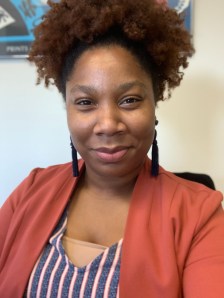
Markisha Dobson is a second-year day student at the University of Baltimore School of Law and a Staff Editor for Law Forum. Markisha graduated from Towson University in May 2014 and pursued work in the legal field thereafter. She started working in collections as a full time paralegal for Nagle & Zaller, P.C. in Columbia. Upon entering law school, Markisha has had over two years of legal experience. She plans to pursue legal work with a governmental agency specializing in public interest.






Leave a Reply