

Baltimore’s infamous spy plane program has been officially terminated after controversy and scrutiny from the public. The program commenced early in 2016, but the purpose of the planes remained unclear until August 2016.[1] At that time, news emerged that the planes were privately funded, and it allowed for Baltimore Police to keep watch on people and vehicles, both in real-time and after the fact.[2] While the program was justified by citing cases that ruled helicopter surveillance of a specific person or home was not an invasion of privacy, the public felt this was substantially more invasive, as it was a much larger scale.[3] Overall, the public disapproved of the program.[4]
Overtime, the surveillance program continued to receive more attention and scrutiny. Eventually, the issue was taken to federal court over privacy concerns. There the Baltimore Police stated that the data would only be stored for 45 days, would only be used to observe known crime scenes, and identifying information would not be obtained from the planes’ data.[5] These assertions were proven false after an independent audit was performed.[6] Although the Baltimore Police received a ruling in their favor at the U.S. Court of Appeals for the Fourth Circuit, the mistrust in this program continued to grow, and the ACLU appealed.[7] While this appeal is still pending, Baltimore City officials unanimously voted to end the program due to the privacy issues.[8]
Given the judicial system’s previous ruling that aerial surveillance of people’s homes is not a privacy violation, it will be interesting to see the result of the spy planes case on appeal. While the program in Baltimore has been terminated, the upcoming ruling may determine how other cities follow suit in their crime prevention methods. It will also be noteworthy to see the way that Baltimore City progresses in crime prevention after this method left such a bad taste in people’s mouths and a severe mistrust of city officials.
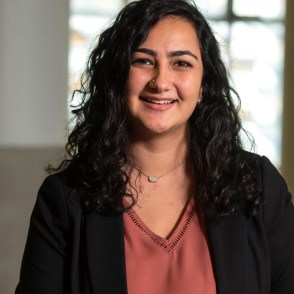
Naseam Jabberi is a third-year student at the University of Baltimore and a Staff Editor of the Law Forum. Naseam received her bachelor’s degree in political science and international relations at Florida State University. She has served as the University of Baltimore’s Diversity Council Director as well as the president of the International Law Society. Naseam has a passion for serving vulnerable populations, and hopes to continue to pursue this passion.
[1] Janus Rose, Baltimore Police Can’t Explain Why Their All-Seeing Spy Planes Were Kept Secret, VICE (Aug. 25, 2016), https://www.vice.com/en/article/9a3nyp/baltimore-police-cant-explain-why-their-all-seeing-spy-planes-were-kept-secret.
[2] Id.
[3] Id.
[4] Id.
[5] Todd Feathers, Baltimore Police Lied About Almost Every Aspect of Its Spy Plane Program, VICE (Dec. 10, 2020), https://www.vice.com/en/article/qjpjqd/baltimore-police-lied-about-almost-every-aspect-of-its-spy-plane-program.
[6] Id.
[7] Id.
[8] Jayne Miller, Baltimore Ends Contract With Company That Operated Controversial ‘Spy Planes’, WBALTV (Feb. 3, 2021)



 ublawforum.com
Leave a comment