
Maryland’s House and Senate passed legislation that repealed the prohibition on selling, distributing, and disposing of over-the-counter drugs and medicines through vending machines on May 18, 2021.[1] Until October 1, 2021, Maryland was one of four states that prohibited the sale and distribution of most over-the-counter medications through vending machines.[2] Under Maryland’s new legislation, vending machines can now distribute over-the-counter drugs, including cold and flu medications, allergy relief, pain medications, and other products such as sexual wellness items that are approved as over-the-counter medication by the U.S. Food and Drug Administration (“FDA”).[3] The new law advances health equity by ensuring critical nonprescription drugs are conveniently accessible by strategically placing vending machines in areas with little access to pharmacies.
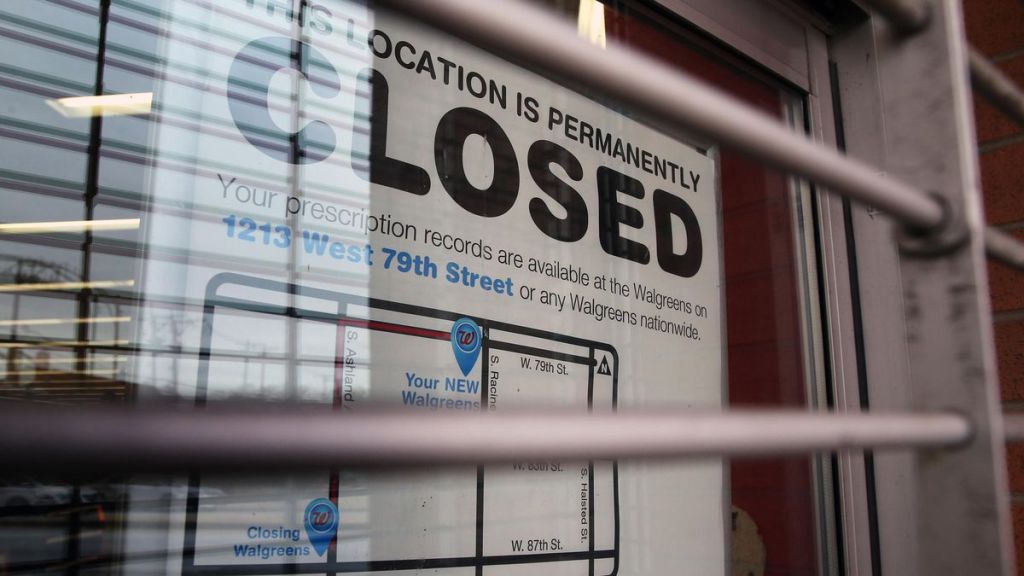
Maryland is affected by a growing number of areas with poor access to pharmacies due to poverty, otherwise known as pharmacy deserts.[4] Pharmacy deserts are prominent in rural and racially segregated urban neighborhoods.[5] Delegate Robbyn Lewis sponsored the new Maryland bill noting that difficulties during the pandemic exposed these cracks in Maryland’s health care system.[6] Research has found that the average Marylander is within five miles of a pharmacy.[7]
However, only five percent of those pharmacies are accessible twenty-four hours a day.[8] Many pharmacies close by 6 p.m., impacting residents who have to work one or more jobs to make ends meet. Further, many pharmacies are not evenly spread across the state.[9]
This law reduces obstacles to health care access by allowing timely and convenient access to over-the-counter drugs. By eliminating inequities in pharmacy access, Marylanders will not have to travel far distances or wait until the nearest pharmacy opens. Not only does this law promote health care equality, but the distribution of non-prescription drugs through vending machines could save up to $5.2 billion from taxpayers and consumers by decreasing doctor visits.[10]
Maryland’s legislature’s strong support for passing the bill evolved from recognizing racial and socioeconomic disparities in access to pharmacy services.[11] The legislature acknowledged that vending machines’ distribution of over-the-counter drugs responds with real action by alleviating the already strained health care system.[12] Health equity is a top concern for Maryland’s health care systems and the Maryland legislature.[13] Moving forward, Marylanders can expect to have better access to pharmaceutical services.

Julia Rowland is a second-year law student at the University of Baltimore School of Law and a proud University of Delaware alumna. Julia is a Staff Editor for Law Forum and a competitor on the National Appellate Advocacy Moot Court Team. She also serves as a teaching assistant for Contracts, the Secretary of the Student Bar Association, and a UB LEADS Mentor for the incoming 1L class.
[1] S.B. 439, 442nd Gen. Assemb., Reg. Sess. (Md. 2021) [hereinafter “S.B. 439”].
[2] Rachel Logan, More Non-prescription Meds Coming to MD. Vending Machines, Maryland Daily Record (Oct. 19, 2021), https://thedailyrecord.com/2021/10/19/more-non-prescription-meds-coming-to-md-vending-machines/.
[3] S.B. 439
[4] Rachel Logan, More Non-prescription Meds Coming to MD. Vending Machines, Maryland Daily Record (Oct. 19, 2021), https://thedailyrecord.com/2021/10/19/more-non-prescription-meds-coming-to-md-vending-machines/.
[5] Id.
[6] Id.
[7] Marie A. Chisholm-Burns et al., Evaluation of racial and socioeconomic disparities in medication pricing and pharmacy access and services, 74 American Journal of Health-System Pharmacy 653–668 (2017), https://doi.org/10.2146/ajhp150872.
[8] Id.
[9] Id.
[10] Marie A. Chisholm-Burns et al., Evaluation of racial and socioeconomic disparities in medication pricing and pharmacy access and services, 74 American Journal of Health-System Pharmacy 653–668 (2017), https://doi.org/10.2146/ajhp150872.
[11] S.B. 439
[12] Id.
[13] Id.


 ublawforum.com
Leave a comment