
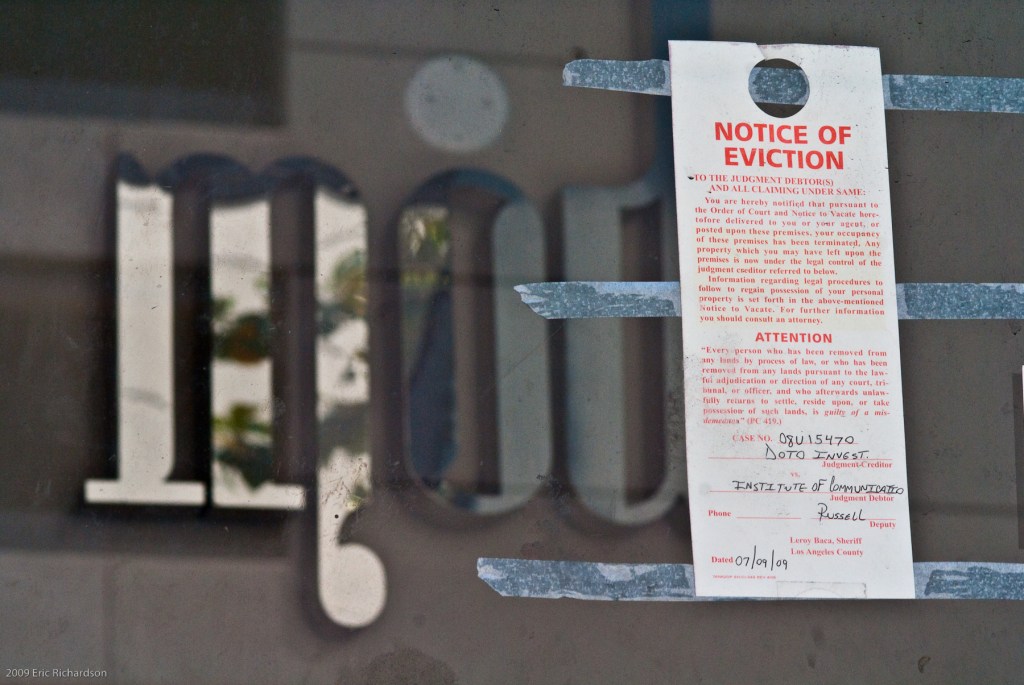
In the wake of COVID-19 related unemployment, millions of U.S. households fell behind on rental payments.[1] In Maryland, that number is currently over 117,000, the majority of whom are households of color.[2] Maryland is the second of a handful of states to enact legislation creating a program that provides people facing eviction with access to legal counsel.[3] This program will affect tenants and landlords impacted by COVID-19 and the courts that oversee eviction cases.[4]
The legislation, which took effect in October 2021, will alter landlord-tenant evictions. First, it requires that before filing repossession suits, landlords provide tenants notice of that intent and of what payments they claim are missing.[5] Second, the bill establishes a program giving residential tenants with qualifying income access to representation in their housing cases.[6] The legislature reasoned that COVID-19 exacerbated the already disproportionate impact evictions had on Black, Brown, and low-income families.[7] The legislature concluded that providing tenants with access to counsel in eviction cases would prevent family displacement and avoid public health concerns such as overcrowded living arrangements and homelessness.[8] Finally, the bill requires creation of a task force to monitor the program, evaluate funding sources, and recommend future change to the General Assembly.[9]
Because Maryland is the second state to pass such legislation, there are no large-scale models from which to extrapolate the expected impact.[10] Projected costs from Maryland “test” counties with similar programs indicate providing legal assistance will likely cost the State several million dollars annually.[11] However, some studies suggest that while the cost of providing counsel is substantial, this cost can be outweighed through benefits inherent in avoiding displacement and re-stabilization of residents.[12]
It is likely that the judiciary’s time will be diverted to address landlord-tenant matters more frequently, considering the additional restrictions for landlords’ filings and the likelihood that represented tenants will contest rent cases.[13] These factors may reduce default judgment rates and slow the eviction process.[14]
Tenants will likely benefit substantially from this bill. They will receive notice before landlords initiate suit and may therefore be able to resolve deficiencies before litigation.[15] Tenants will receive information on their right to appear when they otherwise might not have appeared at all.[16] Qualifying tenants also gain the benefit of representation in eviction proceedings, which is correlated with a higher probability of a successful outcome.[17]
Landlords will need to ensure they follow the strict requirements in the notices they give tenants.[18] Because some tenants will avail themselves of counsel, landlords may be less likely to obtain automatic default judgments.[19] In those cases, it may take longer for landlords to repossess property.[20] Smaller, non-business landlords who are not represented by counsel may have difficulty evicting tenants who are represented by counsel.[21]
This legislation provides balance to landlord-tenant evictions in the aftermath of COVID-19. However, because the program can only provide free representation if it remains funded, the task force will need to ensure it is supported by sustainable funding sources.[22]

Lauren Stone is third-year evening student at the University of Baltimore School of Law and an Associate Editor for Law Forum. Lauren received a Bachelor of Arts degree in music performance from Roanoke College in 2014. She currently works full-time as a paralegal at Consumer Law Center LLC. Lauren expects to graduate in May 2023. After law school, Lauren is interested in pursuing a career involving civil litigation.
[1] Kristian Hernández, Twice as Many U.S. Renters Fell Behind on Payments During the Pandemic, Pew Trusts (Jul. 7, 2021), https://www.pewtrusts.org/en/research-and-analysis/blogs/stateline/2021/07/07/twice-as-many-us-renters-fell-behind-on-payments-during-the-pandemic.
[2] Rent Debt in America: Stabilizing Renters is Key to Equitable Recovery, Nat’l Equity Atlas., https://nationalequityatlas.org/rent-debt (last visited Nov. 17, 2021).
[3] Horus Alas, Maryland is Second State to Provide Tenants Access to Counsel, US News (Jun. 16, 2021, 3:37 P.M.), https://www.usnews.com/news/best-states/articles/2021-06-16/maryland-joins-states-providing-tenants-access-to-counsel.
[4]See Fiscal and Policy Note to H.B. 18, 2021 Leg., 442nd Sess. (Md. 2021) (identifying potential financial and policy ramifications of providing access to counsel in eviction cases) (hereinafter “Fiscal and Policy Note to H.B. 18”).
[5]See Md. Code Ann. Real Prop. § 8-401(c) (West 2021).
[6]See Md. Code Ann. Real Prop. § 8-904 (West 2021).
[7]2021 Md. Laws, ch. 746 (H.B. 18) at Preamble.
[8] Id.
[9] Real Prop. § 8-908.
[10] Nat’l Low Income Housing Coal., From the Field: Maryland Becomes Second State to Enact Right to Counsel for Eviction Proceedings, (Jun. 21, 2021), https://nlihc.org/resource/field-maryland-becomes-second-state-enact-right-counsel-eviction-proceedings.
[11] See Fiscal and Policy Note to H.B. 18 at State Fiscal Effect (identifying costs some Maryland jurisdictions incurred when implementing similar programs).
[12] Stout Risius Stout, LLC, The Economic Impact of an Eviction Right to Counsel in Baltimore City, Prepared for The Public Justice Center (May 20, 2020), at pg. 11-12; see also 2021 Md. Laws, ch. 746 (H.B. 18) at Preamble.
[13] See Fiscal and Policy Note to H.B. 18 at Related Impacts on the Judiciary.
[14] See Bennett Leckrone, Advocates Petition Hogan to Temporarily Halt Evictions, Maryland Matters (May 1, 2021) https://www.marylandmatters.org/2021/05/01/advocates-petition-hogan-to-temporarily-halt-evictions/ (describing the rate at which Maryland District eviction courts adjudicate cases); see also Fiscal and Policy Note to H.B. 18 at Related Impacts on the Judiciary.
[15] See Fiscal and Policy Note to H.B. 18 at Related Impacts on the Judiciary.
[16] See id.
[17] See Nat’l Low Income Housing Coalition, supra note 10.
[18] See Fiscal and Policy Note to H.B. 18 at Small Business Effect.
[19] See Maryland Attorney General, Press Release: Attorney General Frosh Announces Members to the Access to Counsel in Evictions Task Force, Md. Off. of the Att’y General (Aug. 17, 2021) https://www.marylandattorneygeneral.gov/press/2021/081721.pdf.
[20] See Fiscal and Policy Note to H.B. 18 at Related Impacts on the Judiciary.
[21] See Alas, supra note 3 (discussing remarks of Del. Kathy Szeliga).
[22] See Md. Code Ann. Real Prop. § 8-909; see also Nat’l Low Income Housing Coalition, supra note 10.



 ublawforum.com
Leave a comment