

The Board of Immigration Appeals’ (“BIA”) recent decision in the Matter of Arambula-Bravo set precedent to change how Maryland immigration attorneys approach motions to reopen and terminate, substantially limiting relief available to non-citizens.[1] Prior to the BIA’s recent decision in the Matter of Arambula-Bravo, precedent provided Maryland immigration attorneys with the opportunity to reopen and/or terminate proceedings based on a Notice to Appear (“NTA”) that failed to specify a date and time for the non-citizen’s immigration proceedings on the original charging document.[2]
Immigration proceedings against a non-citizen are initiated through the issuance of a “Notice to Appear” (“NTA”).[3] An NTA serves as a charging document in immigration law, which lists the charges brought against the non-citizen.[4] However, only a sufficient NTA will initiate proceedings.[5] Amongst other requirements, a sufficient NTA must provide the noncitizen with a date and time for which the non-citizen must appear in immigration court.[6] Such requirements are necessary in order for the immigration judge to have jurisdiction over immigration proceedings in the first place.[7] Thus, if an NTA is deficient (lacking one or more of the requirements under 8 U.S.C. § 1229(a)), immigration proceedings were never properly initiated, meaning there was no jurisdiction for the immigration judge to make a decision.[8] Consequently, a removal order arising out of a deficient NTA can be appealed through a motion to reopen and terminate for lack of service.[9]
Prior to the decision in the Matter of Arambula-Bravo, precedent established that to be sufficient, the initial NTA had to include the date and time for the non-citizen to appear in immigration court.[10] This allowed Maryland immigration attorneys to file motions to reopen or terminate proceedings based on lack of service for their client’s that had been served with an initial deficient NTA lacking the date and time.[11] Through this mechanism, non-citizens had a much better chance at appealing their removal orders.
However, this most recent BIA decision established that the initial NTA does not have to provide the date and time for the notice to be a sufficient charging document.[12] Thus, even if the initial NTA is served to the non-citizen without a specified date and time, the NTA is still sufficient and establishes jurisdiction for immigration proceedings.[13] The BIA established that the initial NTA could be supplemented with a subsequent notice that provides a date and time for immigration proceedings, which allowed proceedings to be initiated upon the initial NTA.[14]
This change of law may potentially derail thousands of non-citizens’ chances of reopening and terminating their proceedings, because the decision substantially limits options for Maryland immigration attorneys to pursue relief. Motions may no longer be based on lack of jurisdiction and lack of service under this change of law. Maryland immigration judges should carefully consider the ramifications of this recent decision. If the state strictly follows this decision, it will deprive millions of non-citizens from pursuing relief they would otherwise be eligible for.
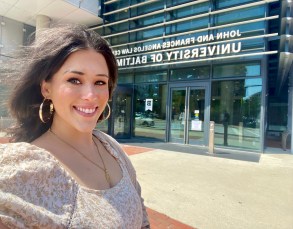
Mary Prunty is a third-year law student at the University of Baltimore School of Law. She graduated from West Virginia University with a B.S. in English. Before coming to law school, Mary graduated from Salisbury University with a Masters of Arts in teaching for Secondary Education English. Since then, Mary has been an active member in the UB law community, serving as an Associate Editor for Law Forum, Communications Director for UB’s Students Supporting the Women’s Law Forum, and Teaching Assistant for Introduction to Legal Writing Skills for first-year students. Mary participated in UB’s Immigration Rights Clinic in fall 2021. The past two summers, Mary worked as a law clerk for Frame & Frame, L.L.C. Currently, she works as a law clerk for the Law Offices of Raymond O. Griffith. Mary will graduate in May 2022.
[1] Matter of Arambula-Bravo, 28 I&N Dec. 388 (BIA 2021).
[2] Pereira v. Sessions, 585 U.S. _____ (2018); Niz-Chavez v. Garland, 141 S. Ct. 1474, 1479 (2021).
[3] See 8 U.S.C. § 1229; INA § 239.
[4] See USCIS memorandum, Notice to Appear Policy Memorandum, United States Citizenship and Immigration Services (Jun. 14, 2021), https://www.uscis.gov/laws-and-policy/other-resources/notice-to-appear-policy-memorandum.
[5] See 8 U.S.C. § 1229(a).
[6] See 8 U.S.C. § 1229; INA § 239.
[7] See Pereria v. Sessions, 585 U.S. _____ (2018); Niz-Chavez v. Garland, 141 S. Ct. 1474, 1479 (2021).
[8] See Id., 8 U.S.C. § 1229.
[9] See Id., 8 U.S.C. § 1229.
[10] See Id.
[11] See Id.
[12] Matter of Arambula-Bravo, 28 I&N Dec. 388 (BIA 2021).
[13] See Id.
[14] See Id.



 ublawforum.com
Leave a comment