
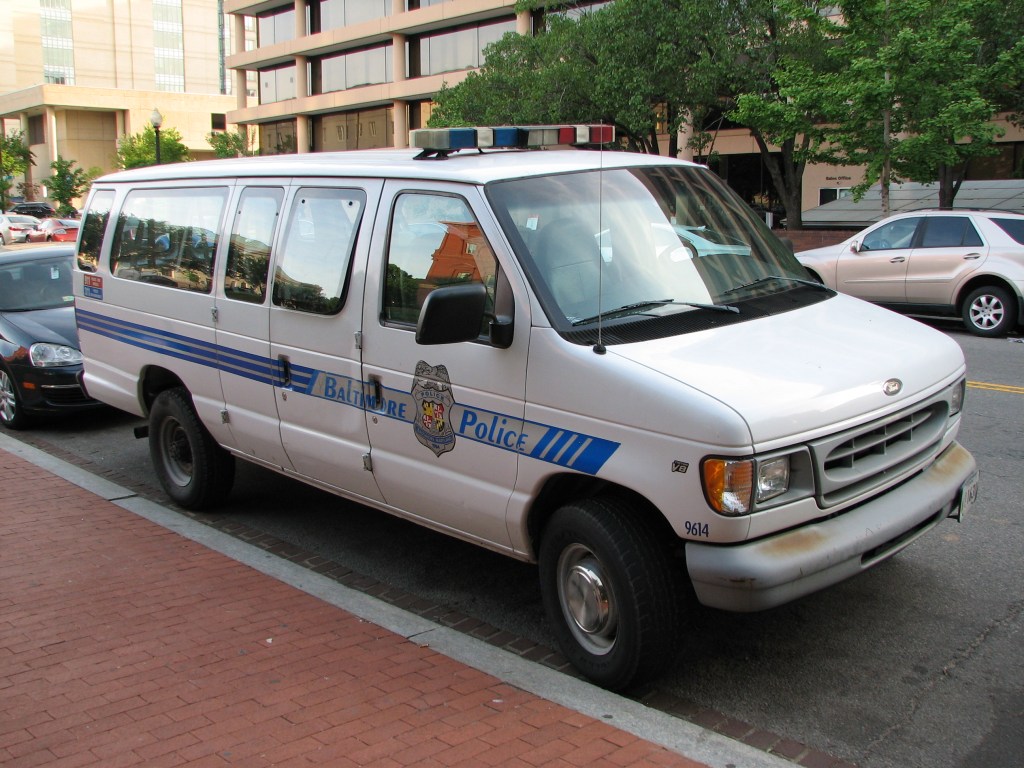
Several officers of the Baltimore Gun Trace Task Force (“GTTF”), an elite unit within the Baltimore Police Department that was responsible for removing firearms off of the street, were responsible for committing crimes of robbery, assault, planting false evidence, writing false police reports, and giving false testimony in court over the course of three years.[1] After securing convictions for each of the officers, including several guilty pleas, two victims filed suit against the city, the police department, and the various officers for financial compensation of the losses brought on by the illegal actions of the officers.[2]
After the Court of Appeals of Maryland held that the officers were acting within the scope of employment when their crimes were committed, they subsequently held that the mayor and city council were responsible for fulfilling the judgements reached in the settlement between the officers and the two victims.[3] The Court determined that because the officers were at least somewhat motivated by the interests of the city when they committed their crimes, and because although their actions were not expressly authorized by the city, their misconduct was incidental to their job performance, and the court thus ruled their misconduct was within the scope of their employment.[4]
Holding that the officers were acting within the scope of their employment for the actions committed against the two victims is a milestone in cleaning up the mess left by the GTTF.[5] The decision, however, is not a blanket ruling for future GTTF victims.[6] As indicated in the close of the decision, the closing instruction require a case-by-case basis determination of who, if anyone, is responsible for fulfilling judgements entered for future GTTF victims.[7] This allows room for the city and the police department to potentially distinguish actions by the GTTF towards certain victims to avoid fulfilling judgements.[8] The decision is, however, an important milestone for compensating those who were victims of the task force.

Laura Corbin is a third-year law student with a primary interest in criminal law. Laura has enjoyed her experience on Law Forum because it has allowed her to expand on my writing skills and gauged her to explore topics in the law she wouldn’t have necessarily explored on my own. Laura’s ultimate career goal is to become an Assistant State’s Attorney. Upon graduation, Laura will be undertaking a position as a law clerk for the Honorable Cynthia Jones of the Circuit Court for Baltimore City.
[1] Justin Fenton, Baltimore Police Officers Found Guilty of Racketeering, Robbery in Gun Trace Task Force Corruption, Balt. Sun (Feb. 12, 2018), https://www.baltimoresun.com/news/crime/bs-md-ci-gttf-verdict-20180208-story.html.
[2] Jessica Anderson, Gun Trace Task Force Overview, Baltimore Sun, https://data.baltimoresun.com/news/gun-trace-overview/; Court Rules City on Hook for Settlement in 2 Gun Trace Task Force Lawsuits, WBALTV (Apr. 24, 2020), https://www.wbaltv.com/article/gttf-maryland-court-of-appeals-rules-baltimore-city-pay-settlement-plaintiffs-2-gun-trace-task-force-lawsuits/32269975.
[3] Balt. City Police Dep’t. v. Potts, 468 Md. 265, 274, 227 A.3d 186, 191-92 (2020).
[4] Id. at 274, 306, 318 227 A.3d at 192, 211, 218.
[5] Steven D Silverman, An Important Milestone in the Effort to Hold the City and Police Department Liable for the Harms Caused by the Gun Trace Task Force, MD. Crim. Atty. Blog (Aug. 6, 2020), https://www.marylandcriminalattorneyblog.com/an-important-milestone-in-the-effort-to-hold-the-city-and-police-department-liable-for-the-harms-caused-by-the-gun-trace-task-force/.
[6] Id.
[7] Potts, 468 Md.at 320, 227 A.3d at 219
[8] Silverman, supra note 5.



 ublawforum.com
Leave a comment