
IF QUALIFIED AS A “SECOND AUTHOR,” AN ANALYST WHO DID NOT AUTHOR A DNA REPORT MAY TESTIFY REGARDING THE REPORT WITHOUT VIOLATING RIGHTS TO CONFRONTATION.
The Court of Appeals of Maryland held that a criminal defendant’s confrontation clause rights were not violated by the admission of conclusions contained in a DNA report, where admitted solely through an analyst who did not create the report but reviewed the report and independently adopted its conclusions. State v. Miller, 475 Md. 263, 303, 256 A.3d 920, 944 (2021). The Court of Appeals of Maryland reversed the Court of Special Appeals of Maryland by holding: (1) the forensic analyst who conducted the technical review of a DNA report was allowed to testify as the “functional equivalent of a second author of the report”; and (2) brief references to the primary author’s conclusions were harmless error because the testifying analyst’s testimony was substantively her own opinion. Id.
In 2008, an unidentified person assaulted L.J. in her apartment. Members of the Baltimore Police Department collected DNA from the scene, and forensic analyst Thomas Hebert (“Hebert”) identified an “unknown male” as the source of the DNA in his 2008 report. Nine years later, Oliver Miller (“Miller”) was arrested for an unrelated offense and his DNA was entered into the FBI’s Combined DNA Index System (“CODIS”). When entered, Miller’s CODIS profile produced a “hit,” matching him to the “unknown male” profile in the 2008 report. In 2017, Hebert authored a second DNA report, which identified Miller as “the source” of the DNA recovered in 2008.
At trial in the Circuit Court for Baltimore City for the 2008 assault, the State neither offered the 2017 DNA report into evidence nor offered Hebert as a witness. Instead, Kimberly Morrow (“Morrow”), an analyst and “technical reviewer” of the 2017 DNA report, testified about the DNA match. Under the FBI’s Quality and Assurance Standards (“QAS”), analysts must conduct a “technical review” of each DNA profile input to CODIS. This review requires a “thorough, substantive review of the primary analyst’s work,” in which the reviewer determines if there is an “appropriate and sufficient basis for the scientific conclusions.”
Miller moved to exclude Morrow’s testimony, arguing admission of Hebert’s analysis through Morrow would violate his constitutional right to confrontation. In response, Morrow explained that as a technical reviewer, she independently arrived at the same conclusions as Hebert before she signed the report. The court denied Miller’s motion and permitted Morrow to testify. Morrow’s testimony included “exact language” from the 2017 report, and Morrow affirmed she agreed with Hebert’s conclusions. The jury found Miller guilty of several sex offenses in connection with the 2008 assault.
Miller appealed to the Court of Special Appeals of Maryland, contending Morrow’s testimony violated his rights under both the Sixth Amendment of the U.S. Constitution (“Sixth Amendment”) and Article 21 of the Maryland Declaration of Rights (“Article 21”) because Hebert was not present for cross-examination. The Court of Special Appeals of Maryland concluded Hebert’s 2017 report was testimonial, and Miller was denied his rights to confrontation when the contents of the report were admitted through Morrow’s testimony. The intermediate court found the error was not harmless and ordered a new trial. The Court of Appeals of Maryland granted the State’s petition for certiorari to decide whether admission of a forensic report’s conclusions, through a reviewing analyst of the report and not the author, violated a defendant’s constitutional rights to confrontation.
The confrontation clauses of the Sixth Amendment and Article 21 preserve a criminal defendant’s right to confront all witnesses presented against him. Miller, 475 Md. at 280-81, 256 A.3d at 930 (citing U.S. Const. amend. VI; citing Md. Decl. of Rts. Art. 21). Admission of testimonial hearsay where the declarant is not available for cross-examination violates a defendant’s right to confrontation. Miller, 475 Md. at 281, 256 A.3d at 931 (quoting Crawford v. Washington, 541 U.S. 36, 59 (2014)). A forensic report is testimonial when prepared with the “primary purpose” of accusing the defendant of committing a crime. Miller, 475 Md. at 282, 256 A.3d at 931 (quoting Williams v. Illinois, 567 U.S. 50, 82-84 (2012) (plurality op.)). Under Article 21, a forensic report is testimonial where the author would reasonably understand the report’s “primary purpose” was to establish facts “potentially relevant to a later criminal prosecution.” Miller, 475 Md. at 283, 256 A.3d at 931-32 (quoting Leidig v. State, 475 Md. 181, 186, 256 A.3d 870, 873 (2021)). The State conceded, and the court agreed, Hebert’s 2017 report was testimonial. Miller, 475 Md. at 283, 256 A.3d at 932.
The court next determined whether an analyst’s testimony concerning a report they did not author (i.e., “surrogate testimony”) constitutes hearsay, such that the defendant’s rights to confrontation are violated. Miller, 475 Md. at 284, 256 A.3d at 932-33. The level of an analyst’s first-hand knowledge of the report, at the time the report was made, is significant to whether the analyst’s testimony is hearsay or their own expert opinion. Id. at 286-87, 289, 256 A.3d at 934, 935 (first citing Bullcoming v. New Mexico, 564 U.S. 647, 652 (2011); and then citing Cooper v. State, 434 Md. 209, 231, 73 A.3d 1108, 1121 (2013)).
The court concluded, where a second analyst conducted a technical review of a forensic report in compliance with QAS, the second analyst’s first-hand knowledge is sufficient for the analyst to testify as the equivalent of a “second author” of the report. Miller, 475 Md. at 293-94, 256 A.3d at 938-39. The technical review required by QAS ensures: (1) the second analyst conducted a thorough review of the data at the time the report was made; and (2) the analyst is responsible for the report by signing it and indicating they independently adopted the same conclusions from the data. Id. at 294-95, 256 A.3d at 939. Thus, if challenged, the State must lay a foundation that the analyst became responsible for the report by conducting a technical review sufficient to satisfy QAS. Id. at 301, 256 A.3d at 942-43.
The court found the evidence in the instant case demonstrated Morrow’s technical review compiled with QAS and qualified her as a “second author” of the 2017 report. Miller, 475 Md. 293, 256 A.3d at 938. Morrow’s testimony established she independently reviewed the data, documentation, statistics, and interpretations underlying the report before determining the report’s conclusions were correct. Id. at 291, 256 A.3d at 936-37. When Morrow signed the report, she not only took part in its creation, but also adopted the report’s conclusions as her own. Id. Thus, Morrow’s testimony was not hearsay, but her own expert opinion. Id. at 293, 256 A.3d at 938. Portions of the testimony potentially violative of Miller’s right to confrontation were harmless error: Morrow’s testimony largely contained her own expert opinion and mere references to Hebert’s report were insignificant. Id. at 302, 256 A.3d at 943.
The Court of Appeals of Maryland held the primary author of a DNA report is not required to testify if an analyst is the equivalent of a “second author.” While this decision defines the degree of involvement required of an analyst who provides “surrogate testimony,” it possibly abridges constitutional safeguards for the accused. Critics increasingly question the conclusiveness of forensic evidence; however, DNA may be viewed as irrefutable evidence to a jury. In the present case, neither the primary nor the secondary author conducted the testing of Miller’s 2017 DNA profile, nor did they make the initial CODIS match. A defendant’s ability to confront analysts who create a DNA profile and those who make the match connecting the defendant to the crime was left unsettled by the Miller court.
Concern for constitutional safeguards in admission of DNA evidence is possibly even greater where confirmation bias may be at play. When an analyst knows a match exists, and their job is to ensure the already processed data can support the conclusion, the question must be raised as to whether their review can truly be independent.
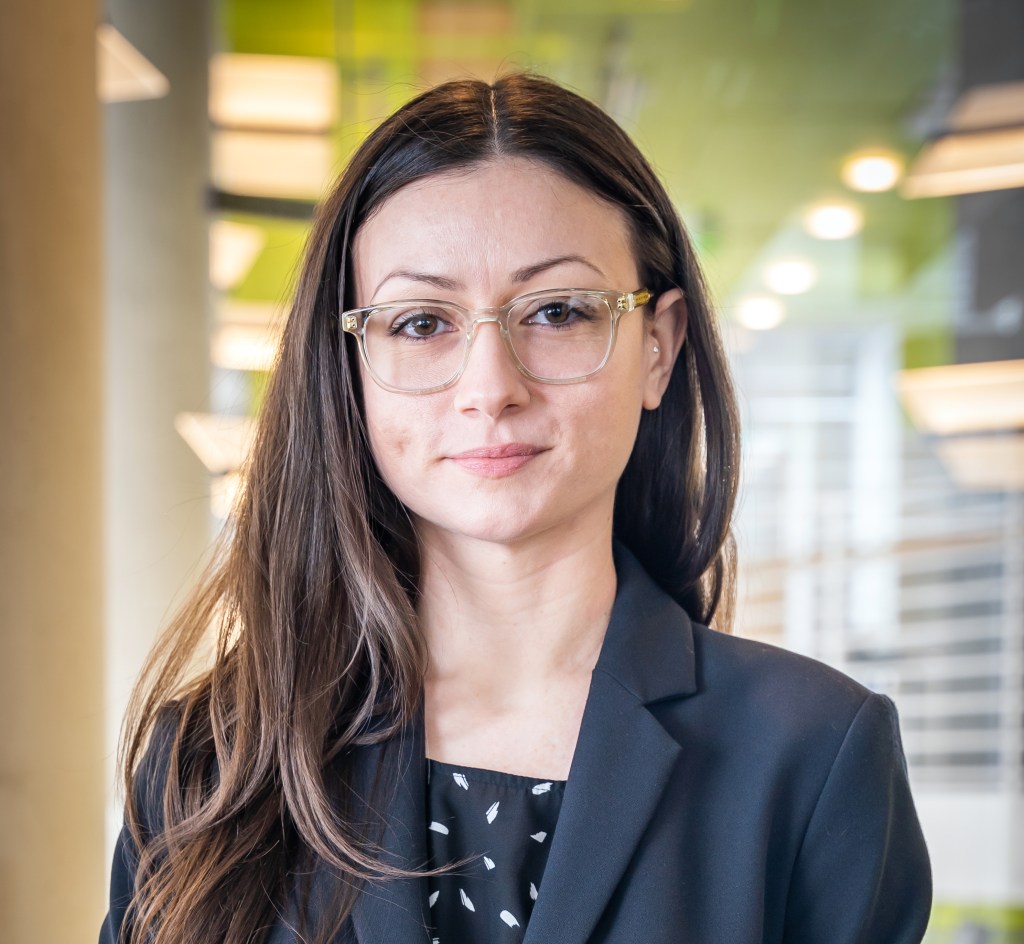
Chelsea Roberts is 3L Day Student. In 2014 she earned a BS in Film Production at Towson University. After five years working in the Maryland Film industry, she recognized her commitment to public service, and enrolled in law school. Chelsea has completed several internships with the DOJ, and is a Distinguished Scholar in the Royal Shannonhouse Honor Society. Chelsea currently serves as Law Forum’s Editor-in-Chief and is pursuing a career in the federal government after graduation.
Read more: STATE V. MILLER


 ublawforum.com
Leave a comment