
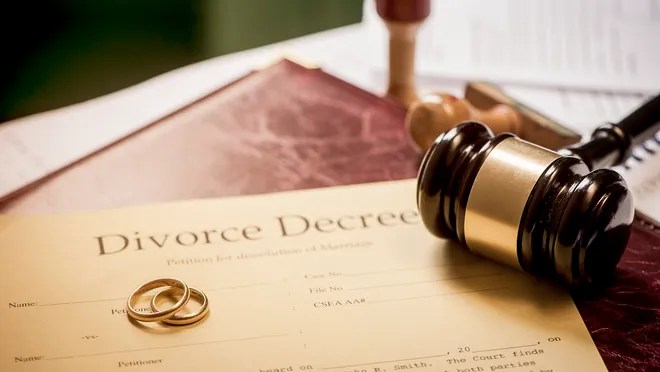
Divorce is the “legal ending of a marriage . . . the legal dissolution of a marriage by a court.”[1] Currently, the only forms of divorce in Maryland that do not require a spouse to state a reason for filing a divorce petition are mutual consent divorces and divorces following twelve-month separations.[2] In Maryland, spouses seeking a divorce may only do so on grounds of adultery, cruelty, excessively vicious conduct, felony conviction, desertion, mutual consent, 12-month separation, or insanity.[3] These divorce statutes may soon change and broaden.
On January 11, 2023, Democratic State Delegate Vanessa E. Atterbeary of Howard County introduced House Bill 14 in the Maryland House of Delegates, and Republican State Senator Chris West of Carroll County and Baltimore County introduced its companion bill, Senate Bill 36, in the Maryland State Senate.[4] These bills, if passed, will repeal the Maryland limited divorce statute [5] and amend the absolute divorce statute.[6] Namely, these bills will allow a spouse to unilaterally file for divorce on grounds of “irreconcilable differences[,]” with no requirement to list specific grounds for the divorce.[7] Divorces for “irreconcilable differences,” colloquially called no-fault divorces, are not uncommon across the United States — thirty-nine other states are already no-fault divorce states. [8] Nevertheless, if enacted, H.B. 14 and S.B. 36 would expand access to no-fault divorce grounds for a spouse seeking to trigger divorce proceedings.[9]
Advocates claim that amending Maryland’s divorce statute will streamline divorce proceedings by allowing people in unhappy marriages to immediately start the divorce process instead of waiting several months, as limited divorce and some grounds of absolute divorce mandate.[10] Dorothy Lennig, director of the House of Ruth Maryland’s domestic violence legal clinic, explained to the Maryland House Judiciary Committee that H.B. 14’s “whole idea” is to “take down the temperature in these filings.”[11] Advocates also argue that identifying a reason for divorce sets a bad tone from the onset of divorce proceedings, which may detrimentally loom throughout the process.[12] Ultimately, these bills leave in place four grounds to file for divorce: irreconcilable differences, mutual consent, permanent incapacity, and six-month separation grounds.[13]
Amending Maryland’s divorce statute would do more than simply make divorce more accessible — it would also provide important protections for vulnerable spouses. It is questionable at best whether longer divorce periods better serve a child’s interest.[14] A study by the National Bureau of Economic Research shows that in no-fault divorce states, there was a ten “percent drop in a woman’s chance of being killed by her spouse or boyfriend” as opposed to states without no-fault divorce.[15] Further, the same study revealed that female suicide rates fell by twenty percent in states with new no-fault divorce statutes.[16] Changing Maryland’s divorce statute would help balance marital power, and give more power to abused spouses, as they have an “open exit” from their marriages.[17] On top of these benefits, studies in California found that rather than increasing, the rate of divorce actually fell after California’s Legislature passed its own no-fault divorce statute in 1970, perhaps due to this positive shift in the balance of power.[18]
By adding a speedy path to no-fault divorce, individuals can ‘move on with their lives,’ and children are saved from potentially watching traumatic proceedings between their parents.[19] Moreover, this change allows a person to leave an unhappy marriage without the fear of their spouse drawing out the process.[20] If Maryland legislators pass this bill and Governor Wes Moore signs it into law, Maryland’s laws will better serve the intimate interests of individuals and families, and have the potential to protect lives.

Ali Mahdi is a second-year J.D. Candidate at the University of Baltimore School of Law and the incoming Editor-in-Chief for the University of Baltimore Law Forum. During Spring 2023, he was a legal intern on the Litigation and Legal Policy Team in the U.S. Department of Justice’s Office of International Affairs. Ali graduated from the University of Delaware in 2019, majoring in Economics and in Political Science, concentrating in Global Politics and earning a minor in Sustainable Infrastructure. This summer, he is a summer associate at a civil litigation firm in Downtown Baltimore. He is interested in litigation and will graduate in May 2024.
Read more: Not My Fault: Maryland Legislators Craft a Remedy to the State’s Divorce Statute[1] Divorce, Black’s Law Dictionary (11th ed. 2019).
[2] Md. Code Ann., Fam. Law § 7-102 (West 2018); Md. Code Ann., Fam. Law § 7-103 (West 2018) [together, hereinafter, the “Divorce Statutes”].
[3] Id.
[4] H.D. 14, 2023 Gen. Assemb., 445th Sess. (Md. 2023); S. 36, 2023 Gen. Assemb., 445th Sess. (Md. 2023) [together, hereinafter, the “Divorce Bills”].
[5] Limited divorce is a type of legal separation used by people who do not have grounds for absolute divorce yet or have other burdens preventing an absolute divorce; once a court grants a limited divorce, the parties may begin making separation decisions, such as child custody and property division. PLL Staff, The Difference between Absolute and Limited Divorce, People’s L. Libr. Md. (last updated Jan. 18, 2022, 7:43 AM), https://www.peoples-law.org/difference-between-absolute-and-limited-divorce.
[6] Divorce Bills, supra 4. Absolute divorce is the type of divorce which wholly ends a marriage and allows the parties to remarry. PLL Staff, supra note 5.
[7] Divorce Bills, supra 4. See Irreconcilable Differences, Black’s Law Dictionary (11th ed. 2019). Irreconcilable differences refer to when “[d]fferences between spouses [are] so strong as to give rise to grounds for divorce; persistent and unresolvable disagreements between spouses, leading to the breakdown of the marriage.”. Id.
[8] Steve Lash, Legislators Consider Making Maryland a No-Fault Divorce State, Daily Rec. (Jan. 31, 2023), https://thedailyrecord.com/2023/01/31/legislators-consider-making-maryland-a-no-fault-divorce-state/.
[9] Md. Code Ann., Fam. Law § 7-103(a) (West 2018).
[10] Id.
[11] Lash, supra note 8.
[12] Lucy Warwick-Ching, New ‘No Fault’ Divorce Laws May Stimulate Rise in Amicable Splits Among the Wealthy, Fin. Times (June 27, 2022), https://www.ft.com/content/b4f98738-e7bc-4a43-9c76-718d0045fa45.
[13] Divorce Bills, supra note 4.
[14] Donald S. Moir, No Fault Divorce and the Best Interests of Children, 69 Denv. U. L. Rev. 663, 681 (1992) (“It is questionable, however, that longer “waiting periods” would reduce the rate of divorce sufficiently to justify the detriments.”).
[15] Steve Chapman, Surprise: No-Fault Divorce May Strengthen Marriage, Balt. Sun. (Apr. 2, 2004, 12:00 AM), https://www.baltimoresun.com/news/bs-xpm-2004-04-02-0404020237-story.html.
[16] Id.
[17] Id.
[18] Id.
[19] Warwick-Ching, supra note 12.
[20] Lash, supra note 8.


 ublawforum.com
Leave a comment