
By: Victoria Garner*
- Introduction
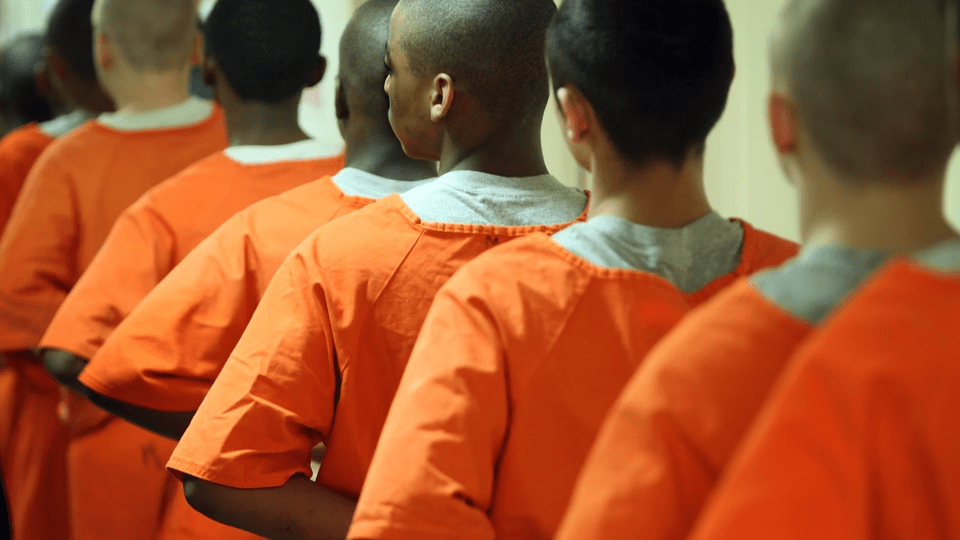
In July 2022, forty-eight-year-old Timothy Reynolds was shot and killed in Baltimore, Maryland during a confrontation with a group of boys known as “squeegee kids” – children who clean windshields at Baltimore city intersections for money.[1] Within hours following the arrest of a fifteen-year-old boy suspected of murdering Reynolds, Baltimore City State’s Attorney Marilyn Mosby charged the boy with first-degree murder, an offense for which children are automatically waived into adult court in Maryland.[2] The incident gained national attention, bringing renewed focus on how to handle children who commit serious crimes such as murder and calling into question Maryland’s law allowing children to be automatically placed in adult court.[3] Currently, Maryland is in the minority of states that sends hundreds of children into the adult system every year without considering the child’s maturity, upbringing, or potential for rehabilitation.[4] However, Maryland Senator Jill Carter and House Delegate Charlotte Crutchfield have introduced a bill to the General Assembly labeled the Youth Equity & Safety Act (the “YES Act”) to address this issue.[5] If enacted, the YES Act would repeal the provisions that automatically strip the juvenile court of its original jurisdiction over children alleged to have committed certain offenses.[6]
This comment examines the impact of the current Maryland statute allowing for, and sometimes mandating, juvenile adjudication in adult courts and whether the proposed YES Act adequately protects juvenile offenders faced with serious offenses.[7] Part II examines the origins, development, and purpose of the juvenile justice system in the United States and in Maryland.[8] Next, Part II explores the reasons for establishing a juvenile justice system separate from the adult criminal justice system. This section also outlines Maryland’s processes of discretionary transfers from juvenile to adult courts and automatic filing of juvenile cases into adult criminal court.[9]
Part III considers social science research on juvenile brain development and analyzes the issues surrounding the effectiveness and racial impact of automatic waiver practices.[10]
Part IV examines recent Supreme Court holdings on issues of juvenile justice.[11] This section also examines the YES Act which has been introduced in the Maryland General Assembly to repeal the automatic waiver statute and analyzes whether the YES Act provides an adequate solution.[12]
Lastly, Part V offers a recommendation for state legislators to abrogate waiver statutes that allow for cases involving children to be adjudicated in adult criminal court.[13]
- Historical Development
- Conception and Development: An Overview of the Juvenile Justice System in the United States
Prior to the late 19th century, the United States criminal justice system provided no formal distinction between juvenile and adult offenders; children were incarcerated in the same facilities as adults and could be tried, convicted, and even sentenced to death in criminal courts.[14] It was not until the Progressive Era reforms at the turn of the 20th century that the concept of a juvenile justice system gained momentum to protect juvenile offenders from these harsh penalties.[15] Juvenile justice reform advocates, such as the Society for the Prevention of Pauperism (later known as the Society for the Reformation of Juvenile Delinquents), recognized that juvenile offenders were different from adult offenders in terms of their physical and mental development and maturity, which diminished their capacity for criminal culpability.[16] Relying on social and psychological research on juvenile development, reform advocates promoted the development of an entirely separate system for determining guilt and punishment for children that centered on rehabilitation rather than punishment.[17]
In the late 1800s, reformers successfully advocated for separate juvenile court systems and incarceration facilities based on the premise that children have qualities that make them fundamentally and developmentally different from adults and, therefore, less culpable for their actions and more amenable to rehabilitation.[18] The first juvenile court was established in 1899 in Cook County, Illinois.[19] This system adopted the principle of parens patriae, where “[t]he state, through its courts, had the inherent power and duty to provide protection to children by focusing on the child’s welfare.”[20] “By 1925, every state had established juvenile courts[,]” and generally, the processes of these early juvenile courts were private, informal, and minors had no legal representation. [21]
By the late 1960s, there was growing concern about the juvenile justice system’s effectiveness and lack of procedural safeguards.[22] Several decisions by the United States Supreme Court addressed these concerns and subsequently altered the nature of the juvenile courts.[23] In 1967, the Supreme Court challenged the principle of parens patriae and acknowledged in its landmark decision, In re Gault, that the juvenile justice system’s lack of formal proceedings and constitutional due process could potentially lead to substantial deprivations of children’s liberties.[24] The Court held that the Constitution requires children to have many of the same due process rights guaranteed to adults accused of crimes, such as notice of the charges against them, the right to legal counsel, and the right to confront witnesses.[25] In the years following the Gault decision, the Supreme Court extended other constitutional rights to children, including the right to have charges proven beyond a reasonable doubt and the right against double jeopardy.[26] Therefore, juvenile offenders were able to enjoy the same Constitutional protections as adults while continuing to benefit from the protections of the juvenile justice system.[27]
- The Rise of Charging Juvenile Offenders as Adults
Despite the expansion of constitutional rights to children during the first half of the twentieth century, in response to rising juvenile crime rates in the late 1970s and early 1980s, state and federal legislators across the United States began adopting more punitive “tough on crime” policies that emphasized deterrence and punishment over rehabilitation for these offenders.[28] The popular, racist “super-predator” theory exacerbated public fear; John Dilulio, a prominent criminologist at Princeton University in the 1990s who coined the term “super-predator,” asserted that violent crime was “[m]ost acute among black inner-city males.”[29] Dilulio predicted that these children, who he described as a “wolf pack” of “radically impulsive, brutally remorseless” teens who had “no respect for human life,” would take to the streets to rape, burglarize, and murder.[30] Dilulio later admitted that his predictions were wrong and the rate of juvenile offenses had already begun to decline at the time of his assertions.[31] Nevertheless, his predictions, coupled with incidents of crimes committed by juvenile offenders,[32] caused a panic.[33] The belief that juvenile courts were too lenient led almost every state legislature to enact procedures throughout the 1990s that made it easier to deprive children of the juvenile system’s protections.[34] One of these procedures is known as “waiver”.[35] Although there are several different types of waiver, one common method is “judicial” or “discretionary” waiver, which allows juvenile court judges to waive jurisdiction and refer the cases to adult criminal court jurisdiction. [36]
Another form of waiver that garnered much attention and criticism is “mandatory” or “automatic” waiver.[37] This form of waiver bypasses the juvenile court altogether and places juvenile offenders into adult criminal court if they meet certain criteria for age, severity of offense, and/or prior criminal record.[38] Despite the availability of juvenile courts, a considerable number of states, including Maryland, continue to treat certain children as adults, charging and prosecuting them in the adult criminal justice system.[39]
- Automatic Waiver for Children in Maryland
Throughout the 1900s, Maryland was one of only three states (including Mississippi and Pennsylvania) to automatically charge children as adults if the child was fourteen years or older and accused of murder.[40] Throughout the 1980s and 1990s, however, Maryland’s legislature followed the “tough on crime” trend and assembled a list of other offenses for which children could be automatically transferred into adult criminal courts, making it significantly easier to charge children as adults.[41] Over time, the number of offenses prompting automatic waiver rose from one to thirty-three.[42] Currently, Maryland law allows juvenile cases to be adjudicated in adult criminal court through either discretionary judicial waiver or automatic waiver.[43]
Discretionary waiver statutes in Maryland permit a Juvenile Court judge to hold a hearing to decide whether to waive a juvenile offender into adult court.[44] If the child is not yet fifteen years old and “[i]s charged with committing an act that, if committed by an adult, would be punishable by life imprisonment,” the judge has the discretion to transfer the case to adult court.[45] Unlike automatic waiver, discretionary waiver allows the Juvenile Court to consider several factors, including the child’s mental and physical condition, and supposed amenability to treatment in making its decision.[46]
Maryland’s automatic waiver statute, however, involves a type of “offense exclusion” that automatically excludes certain offenses from Juvenile Court jurisdiction altogether.[47] Juvenile Court jurisdiction is excluded for children as young as fourteen who are charged with committing a crime that, “[i]f committed by an adult, would be punishable by life imprisonment.”[48] The statute also automatically excludes Juvenile Court jurisdiction for children ages sixteen or older who are charged with a multitude of designated crimes ranging from second degree murder to violations of traffic laws.[49] A child who is automatically waived into adult court is granted the opportunity to have a “waiver hearing” to argue that his or her case should be transferred to juvenile court.[50] This transfer process is known as a “reverse waiver.”[51]
In early 2022, lawmakers in the Maryland General Assembly passed a number of juvenile justice reforms in the state.[52] The reforms, which came after years of research and discussion on juvenile brain development, included generally prohibiting minors under thirteen years old from facing criminal charges (unless for serious offenses, such as murder), banning jail time for children who commit low-level offenses such as misdemeanors, requiring police to notify a child’s parents or legal guardians before interrogating them, setting a minimum age for children to receive criminal charges, and creating a probation term time limit.[53] Many juvenile justice reform advocates hailed this as a huge success and movement towards the Department of Juvenile Services “treating children like children.”[54] However, despite these reforms, Maryland remains one of the few states that still allows for children as young as fourteen years old to be charged and prosecuted as an adult.[55]
- Issue: Why Jurisdiction Matters and The need to repeal automatic waiver
- Prosecuting Children in Adult Courts is Ineffective and Harmful
Automatically charging Maryland children as adults disregards important scientific findings about the cognitive development of children.[56] Over the past two decades, scientific research has shown that children lack the cognitive development of adults, which impacts a child’s decision making, impulse control, and susceptibility to peer pressure.[57] Social science research shows that children are significantly less capable than adults at weighing the risks and consequences of their actions, regulating their impulses and behaviors, managing stressful situations, and ignoring peer pressure.[58] Generally, the section of the brain that deals with decision-making is not fully developed until a person reaches their early twenties.[59] Although this does not excuse children from criminal responsibility, the law widely recognizes that children are less criminally blameworthy than adults and more capable of change and rehabilitation.[60]
In a number of decisions addressing juvenile justice laws over the last two decades, the U.S. Supreme Court has cited research showing cognitive development differences between children and adults as part of its rationale in striking down harsh sentencing schemes for children.[61] Unfortunately, this recognition did not discourage Maryland from routinely charging children in the adult criminal justice system through waiver laws.[62] Between 2013 and 2022, Maryland charged approximately 8,692 minors as adults.[63] Per capita, available data shows that the only state that automatically sends more of its young children into adult courts than Maryland is Alabama.[64]
Maryland’s automatic waiver limits the analysis of a juvenile offender’s suitability for juvenile or adult court to an examination of the child’s age and the offense committed.[65] This limitation unacceptably ignores individualized consideration of the culpability, background, maturity, and personal circumstances of a juvenile offender. Although lawmakers designed these automatic waiver provisions to deter children from committing certain crimes and severely punishing and incapacitating those who were not deterred, a concept embodied in the slogan, “Adult Time for Adult Crime,” this effect has not been realized.[66] The University of California, Los Angeles (UCLA) School of Law’s Juvenile Justice Project reviewed the effects of juvenile cases prosecuted in adult courts and found little, if any, deterrent effect.[67] In fact, in a number of states, recidivism rates increased when children were charged as adults.[68] Perhaps, in part, because children charged in adult court cannot access or benefit from the services made available through juvenile court, such as educational programs, community programs and services, and other resources specifically designed for juvenile development.[69] Many adult facilities lack basic necessities, including education and mental health counseling options.[70]
Prosecuting children as adults has also proven to be harmful and puts children at risk.[71] Children in the adult criminal justice system face a higher risk of sexual abuse, physical assault, and suicide.[72] Current law also requires children charged with violent crimes such as first-degree murder to stay in adult jails while they await trial.[73] Nationally, children held in adult facilities are considerably susceptible to physical harm.[74] The probability of suicide, aggressive assault, and sexual assault drastically increases for children housed in adult facilities.[75] Furthermore, children are significantly more likely to commit suicide in an adult jail than if they are held in a juvenile facility.[76] Although only 1% of all adult jail inmates nationwide are children, 21% of the victims of sexual violence in adult jails are those under eighteen.[77] For safety purposes, children held in Maryland adult prisons and jails are occasionally put in isolation.[78] Although this tactic may temporarily protect the children from certain harms, it simultaneously creates new problems in addition to exacerbating others.[79] A juvenile in isolation is typically constrained to his or her cell for 23 hours per day.[80] This often leads children to become “[p]aranoid, anxious, and despondent, all of which exacerbate mental health conditions and suicidal tendencies.”[81] Isolation is generally prohibited in the juvenile justice system because its known to harm children’s mental well-being.[82]
- The Automatic Waiver Statute Disproportionately Impacts African American Children
Automatic waiver laws have created vast racial disparity, with African American children making up 84 percent of all children charged as adults in Maryland.[83] Evidence shows that Maryland’s automatic waiver has created massive disparities by driving a substantially high number of mostly African American children to be tried as adults, and referring “[m]ore children to adult court than California, which is six times its size.”[84] Many juvenile cases that originate in adult court through automatic waiver are waived to juvenile court.[85] However, there are clear racial disparities regarding which cases are transferred to juvenile court from the adult system.[86] Nearly all white juvenile defendants have their cases transferred to juvenile court, whereas less than half of African American juvenile defendants have their cases transferred.[87]
- Maryland Should Repeal Automatic Waiver and End the Policy of Charging Children as Adults
Child offenders are fundamentally different from adults, and the goals of the juvenile system, successful reentry into the community through rehabilitation, treatment, and guidance, are not served when children are charged as adults.[88] Specifically, the Maryland Juvenile System purports to “[p]rovide for the care, protection, and wholesome mental and physical development” of children and to “[p]rovide for a program of treatment, training, and rehabilitation consistent with the child’s best interests and the protection of the public interest.”[89] The goals of the juvenile justice system are different from those of the adult system with the understanding that children are fundamentally different from adults.[90] Therefore, the Maryland Legislature should repeal the automatic waiver statute.
- Recent Supreme Court Precedent Should Inform Maryland’s Legislature on Juvenile Waiver
The United States Supreme Court addressed the fundamental differences between children and adults in Miller v. Alabama.[91] Here, the Supreme Court held that mandatory life imprisonment without parole for those who were children at the time of their crimes, violated the Eighth Amendment’s prohibition on cruel and unusual punishment.[92] The Court reasoned that such a sentence “[p]recludes consideration of [a defendant’s] chronological age and its hallmark features-among them, immaturity, impetuosity, and failure to appreciate risks and consequences.”[93] The Court stated that, “‘[j]ust as the chronological age of a minor is itself a relevant mitigating factor of great weight, so must the background and mental and emotional development of a youthful defendant be duly considered’ in assessing his culpability.[94]
The Court concluded that its holding is meant to set forth a certain process for judges to follow when determining whether it is appropriate to impose such a severe sentence on a juvenile.[95] Specifically, this holding requires that judges “[c]onsider the ‘mitigating qualities of youth.’”[96] The Miller decision identified several features that courts should consider before sentencing children to life without parole: “[i]mmaturity, impetuosity, failure to appreciate risks and consequences, brutal or dysfunctional family and home environments, impacts of peer pressure, and the circumstances of the crime itself, including the extent of the child’s involvement.”[97]
Miller is a seminal case recognizing that children’s specific, unique characteristics associated with their youth which make them unsuitable recipients of the law’s most severe punishments.[98] The Supreme Court’s findings emphasize the importance of not only exercising judicial discretion when sentencing children, but also of discontinuing practices that sentence children as adults without considering their youth, maturity, and potential for rehabilitation.[99]
The emphasis on consideration of children’s unique characteristics and judicial discretion should inform the development of waiver laws in Maryland. To date, Maryland’s automatic waiver statute fails to do this by preventing judges from considering the unique factors of youth identified by social and psychological research and recognized by the Supreme Court and the Maryland Legislature over the past decade.[100] Therefore, the Maryland Legislature should amend these laws to reflect the importance of considering all of these factors in deciding which cases go to juvenile court or adult court.
Maryland’s discretionary transfer statutes are more consistent with both the Supreme Court’s holding in Miller and the goals of Maryland’s juvenile justice system; further, these statutes suggest that Maryland already has a framework in place to consider such relevant factors before deciding to transfer jurisdiction from juvenile to adult court.[101] Discretionary waiver, unlike automatic waiver, allows the court to consider not only a child’s age and the nature of the offense committed, but also the child’s mental and physical condition, and potential for rehabilitation.[102] If juvenile offenders are to be waived into the adult court system, an action which could potentially impose serious consequences on their lives, then at the very least, children should be granted a hearing in juvenile court before any waiver determination can be made.
- The General Assembly Should Pass the YES Act to Repeal Automatic Waiver in Maryland
As stated earlier, Maryland legislators have enacted sweeping juvenile justice reforms over the last few years.[103] In addressing the failures of automatic waiver to achieve any of the goals of the juvenile justice system, Maryland lawmakers on the Juvenile Justice Reform Council have also introduced the YES Act to repeal the automatic waiver statute.[104] The YES Act:
expands the jurisdiction of the juvenile court to establish original jurisdiction over (1) children older than age 14 who are alleged to have done an act which, if committed by an adult, would be a crime punishable by life imprisonment; (2) children older than age 16 who are alleged to have committed specified crimes; and (3) children who have previously been convicted as an adult of a felony and are subsequently alleged to have committed an act that would be a felony if committed by an adult.[105]
The YES Act will also repeal the existing provisions that govern the transfers of such children from criminal court to the juvenile court through reverse waiver and designate the acts currently excluded from the juvenile court’s jurisdiction as “reportable offenses” in the Criminal Procedure and Education Articles.[106]
As outlined in the Racial Equity Impact Note accompanying the YES Act, an important rationale for the push to repeal automatic waiver is acknowledging the history of racism that led to its implementation, as well as the “racial inequity” and “injustice” that has resulted from its practice in Maryland.[107] Another important rationale is to shift the burden that is automatically placed on children to prove why they should have their case adjudicated in juvenile court, essentially leaving discretionary waiver as the main option for transferring a juvenile case to adult court.[108] The sponsor of the bill and member of Maryland’s Juvenile Justice Reform Council, Maryland State Senator Jill Carter, explained that the burden would instead be placed on the state’s attorneys to argue why the criminal court should have jurisdiction over the case.”[109] Leaving the decision to the juvenile court’s discretion mandates the consideration of several important factors that are not initially considered under the automatic waiver law, including the mental and physical condition of the child, the amenability of the child to treatment in an institution, facility, or program available to delinquent children, and public safety.[110]
As stated previously, one of the underlying rationales for enacting the automatic waiver statute was specific incapacitation of repeat juvenile offenders.[111] If the legislative goal is to incapacitate repeat juvenile offenders, then excluding offenders solely on the basis of the seriousness of an offense would not prove to be an effective strategy because repeat offenders are distinguishable by their pattern of criminal activity, not by the seriousness of their offense.[112] Proponents of repealing automatic waiver statutes also recognize that the offense exclusion that occurs through automatic waiver focuses on retribution, reminiscent of an earlier era of “tough on crime” policies, which is at odds with a core philosophy of the juvenile justice system: rehabilitation.[113]
Legislators enacted Maryland’s current automatic waiver statute in response to the increase in juvenile crime from a period that ended more than two decades ago.[114] Furthermore, the Maryland General Assembly relied on the ill-founded and now discredited “super-predator” theory when enacting the waiver statute.[115] Repealing Maryland’s automatic waiver in favor of solely using the discretionary waiver statute will improve the balancing between public safety and protection from juvenile offenders who may not be amenable to rehabilitation or treatment in the juvenile justice system, with protecting juvenile offenders’ constitutional rights and furthering the goals of the juvenile system. Moreover, Maryland’s discretionary waiver statute will allow for due consideration of each juvenile on a case-by-case basis before a waiver determination is made.[116] Consideration of such factors is especially crucial in light of the potentially devastating impacts of holding children or sentencing children to time in adult facilities.
- The YES Act Still May Not Go Far Enough in its Effort to Protect Children in Maryland
Legislators and supporters of the YES Act aim to repeal automatic waiver to not only keep children in the juvenile system, but also to help juvenile offenders receive the resources they need and protect them from the harsh environment of the adult system.[117] However, the YES Act may not go far enough in its effort to protect children. Current law still requires children charged with violent crimes such as first-degree murder to stay in adult jails awaiting trial, which places them at greater risk of physical and mental harm.[118] With this in mind, the YES Act should also include language that all children who are held pre-trial, including those charged with serious or violent crimes, should be held in juvenile facilities. Adding language to this effect is important to ensure that all children can access the resources in juvenile facilities and to help protect their safety prior to their trial dates.
- Conclusion
The youthfulness of children and the unique characteristics attendant to their youthfulness are meaningful. Repealing Maryland’s automatic waiver statute in favor of the discretionary waiver statute will allow for the courts to take these characteristics into consideration before waiving children into the adult court system. Although discretionary waiver allows for examination of these characteristics, in consideration of the racial impact, harms and inadequacies associated with waiving children into adult court, the Maryland legislature should further consider abrogating all the laws through which juvenile cases are waived into the adult system.
The juvenile system was created for adjudicating cases where children are the alleged perpetrators of both violent and non-violent offenses. Therefore, if Maryland is going to have a juvenile system and provide for the care, protection, and mental and physical development of children, then the juvenile system should be used, even for the most difficult of cases. It is long overdue for Maryland to allow what is known about juvenile development and the effects of charging children as adults and holding children in adult facilities, rather than past debunked theories, to inform the development of its juvenile adjudicatory laws and policies.

* Victoria L. Garner: J.D. Candidate, May 2024, University of Baltimore School of Law; B.A., 2020, The George Washington University. I would like to extend a heartfelt thank you to my faculty advisor, Professor Odeana Neal, for her support and guidance throughout the research and writing process and her invaluable insights into the juvenile justice system. Thank you to everyone on the University of Baltimore Law Forum executive board and staff for all the work they put into editing and preparing this comment for publication. I also want to thank my friends and family, especially my mom and dad, Veronica and Anthony Garner, for their encouragement and support. Finally, a special thank you to my law school family for always supporting me when I needed it most. I truly could not have gotten through this journey without you all.
[1] Mike Hellgren, Document: Timothy Reynolds Shot 5 Times in July Encounter with Squeegee Workers, CBS Balt. (Nov. 15, 2022, 11:22 PM), https://www.cbsnews.com/baltimore/news/document-timothy-reynolds-shot-5-times-in-july-encounter-with-squeegee-workers/; see also J. Brian Charles, Maryland’s Obsession with Trying Children as Adults, Balt. Beat (Sept. 7, 2022), https://baltimorebeat.com/marylands-obsession-with-trying-children-as-adults/.
[2] See Keith Daniels, Squeegee Kid Charged as Adult in Murder Raises Concern About Youth Crime in Baltimore, ABC News (Nov. 18, 2022, 1:10 PM), https://katv.com/news/nation-world/squeegee-kid-charged-as-adult-in-murder-raises-concern-about-youth-crime-in-baltimore-city-juvenile-violence-prevention-programs-mayor-brandon-scott-baltimoe-police; see also Charles, supra note 1.
[3] See Ashley McDowell, Some Marylanders see the Process of Prosecuting Minors as an Issue, ABC WMAR-2 News, (Oct. 18, 2022, 11:12 PM), https://www.wmar2news.com/news/local-news/some-marylanders-see-the-process-of-prosecuting-minors-as-an-issue.
[4] See Marcy Mistrett, National Trends in Charging Children as Adults, The Sent’g Project 6 (July 20, 2021), http://dls.maryland.gov/pubs/prod/NoPblTabMtg/CmsnJuvRefCncl/Sentencing-Project-National-Trends-in-Charging-Children.pdf.
[5] S. 93, 2023 Gen. Assemb., 445th Sess. (Md. 2023).
[6] Id.
[7] See infra Parts II-V.
[8] See infra Section II.A.
[9] See infra Sections II.B-C.
[10] See infra Sections III.A-B.
[11] See infra Section IV.A.
[12] See infra Section IV.B.
[13] See infra Part V.
[14] Juvenile Justice History, Ctr. on Juv. & Crim. Just.,
https://www.cjcj.org/history-education/juvenile-justice-history (last visited Nov. 23, 2022); Nat’l Rsch. Council Inst. of Med., Juvenile Crime, Juvenile Justice 157 (Joan McCord et al. eds., 2001); see also In re Gault, 387 U.S. 1, 16 (1967) (“[C]hildren under seven were considered incapable of possessing criminal intent. Beyond that age, they were subjected to arrest, trial, and in theory to punishment like adult offenders.”).
[15] Nat’l Rsch. Council Inst. of Med., supra note 14, at 157.
[16] See Chelsea Ellen Heaney, Youthfulness Matters: A Call to Modernize Juvenile Waiver Statutes, 43 Hastings Const. L.Q. 389, 395 (2016).
[17] Youth in the Justice System: An Overview, Juv. L. Ctr., https://jlc.org/youth-justice-system-overview (last visited Nov. 23, 2022); see also Heaney, supra note 16, at 392.
[18] Youth in the Justice System: An Overview, supra note 17.
[19] Eric Fritsch & Craig Hemmens, Juvenile Waiver in the United States 1979-1995: A Comparison and Analysis of State Waiver Statutes, 46 Juv. & Fam. Ct. J. 17, 20 (1995).
[20] Ellie D. Shefi, Waiving Goodbye: Incarcerating Waived Juveniles in Adult Correctional Facilities Will Not Reduce Crime, 36 U. Mich. J. L. Reform 653, 658 (2003); see Shari R. Kim, Parens patriae? Automatic Waiver to Criminal Court and its Toll on Youth and Society, Am. Psych.-L. Soc’y (Oct. 2014), https://www.apadivisions.org/division-41/publications/newsletters/news/2014/10/innocence-research; see also Parens Patriae, Cornell L. Sch. Legal Info. Inst., https://www.law.cornell.edu/wex/parens_patriae (last visited Aug. 9, 2023) (explaining that parens patriae is a doctrine that grants the inherent power and authority to the state to act as a guardian for those who are legally unable to act on their own behalf).
[21] Juvenile Justice History, supra note 14; Shefi, supra note 20, at 658-59.
[22] Shefi, supra note 20, at 658-59.
[23] See Kent v. United States, 383 U.S. 541, 561 (1966) (holding that sufficient investigation must be conducted prior to waiving a child’s case to adult court); See also In re Gault, 387 U.S. 1, 30-31 (1967) (holding that the Due Process clause of the 14th Amendment applies to juvenile adjudicatory proceedings).
[24] See In re Gault, 387 U.S. at 29–31.
[25] Id. at 59-60. (Black, J., concurring); Heaney, supra note 16, at 393.
[26] See In re Winship, 397 U.S. 358, 368 (1970) (holding that the state must prove charges against a juvenile “beyond a reasonable doubt” in juvenile court proceedings); see also Breed v. Jones, 421 U.S. 519, 541 (1975) (holding that the Double Jeopardy Clause of the Fifth Amendment applies to juvenile court proceedings).
[27] Fritsch & Hemmens, supra note 19, at 21; Kent, 383 U.S. at 556.
[28] Barry Holman & Jason Ziedenberg, The Dangers of Detention: The Impact of Incarcerating Youth in Detention and Other Secure Facilities, Just. Pol’y Inst., 12 (2006), https://justicepolicy.org/wp-content/uploads/2022/02/06-11_rep_dangersofdetention_jj.pdf (“[T]he ‘tough-on-crime’ concerns of the 1990s changed the priorities and orientation of the juvenile justice system. Rising warnings of youth ‘superpredators,’ ‘school shootings,’ and the amplification of serious episodes of juvenile crime in the biggest cities fueled political momentum to make the system ‘tougher’ on kids.”); see also Clyde Haberman, When Youth Violence Spurred ‘Superpredator’ Fear, N.Y. Times (Apr. 6, 2014), https://www.nytimes.com/2014/04/07/us/politics/killing-on-bus-recalls-superpredator-threat-of-90s.html.
[29] John Dilulio, The Coming of the Super-predators, Wash. Exam‘r (Nov. 27, 1995, 12:00 AM), https://www.washingtonexaminer.com/weekly-standard/the-coming-of-the-super-predators; see also John J. Dilulio Jr., My Black Crime Problem, and Ours, City J. (1996), https://www.city-journal.org/html/my-black-crime-problem-and-ours-11773.html (“[N]ot only is the number of young black criminals likely to surge, but also the black crime rate, both black-on-black and black-on-white, is increasing, so that as many as half of the juvenile super-predators could be young black males.”).
[30] John J. Dilulio Jr., My Black Crime Problem, and Ours, City J.(1996), https://www.city-journal.org/article/my-black-crime-problem-and-ours; The Superpredator Myth, 25 Years Later, Equal Just. Initiative(Apr. 7, 2014), https://eji.org/news/superpredator-myth-20-years-later/.
[31] See Elizabeth Becker, As Ex-Theorist on Young ‘Superpredators,’ Bush Aide Has Regrets, N.Y. Times, (Feb. 9, 2001), https://www.nytimes.com/2001/02/09/us/as-ex-theorist-on-young-superpredators-bush-aide-has-regrets.html.
[32] The Superpredator Myth, 25 Years Later, supra note 30.
[33] Id.
[34] See Nat’l Rsch. Council Inst. of Med., supra note 14, at 158; Fritsch & Hemmens, supra note 19, at 17.
[35] See Judicially Waived Cases, Youth.gov, https://youth.gov/youth-topics/juvenile-justice/judicially-waived-cases (last visited Nov. 23, 2022); (“A judicial waiver refers to the mechanism wherein a juvenile judge waives jurisdiction over a case and refers it to criminal court jurisdiction instead.”).
[36] Id.
[37] Fritsch & Hemmens, supra note 19, at 18.
[38] Id.
[39] See Patrick Griffin, et al., Trying Juveniles as Adults: An Analysis of State Transfer Laws and Reporting, U.S. Dep’t of Just. (Sept. 2011), https://www.ojp.gov/pdffiles1/ojjdp/232434.pdf.
[40] See Barry C. Feld, The Juvenile Court Meets the Principle of the Offense: Legislative Changes to Juvenile Waiver Statutes, 78 J.of Crim. L. and Criminology 471, 512-13 (1987).
[41] Wendy Hess, et al., Just Kids: Baltimore’s Youth in the Adult Criminal Justice System 4-6 (Oct. 2010), https://justkidsmaryland.org/wp-content/uploads/2014/06/Just-Kids-Report.pdf.
[42] Id. at 6.
[43] See infra Section II.C.
[44] Md. Code Ann., Cts. & Jud. Proc. § 3-8A-06(b) (West 2020).
[45] Id. at § 3-8A-06(a)(1)-(2).
[46] Id. at § 3-8A-06(e)(1)-(5).
[47] Hess et al., supra note 41, at 6.
[48] Md. Code Ann., Cts. & Jud. Proc. § 3-8A-03(d)(1) (West 2023); see also Maryland‘s Transfer Laws, Off. of Juv. Just. and Delinq. Prevention, https://ojjdp.ojp.gov/sites/g/files/xyckuh176/files/pubs/tryingjuvasadult/states/md.html (last visited Jan. 6, 2023) (statutory exclusion offenses include: “crimes punishable by death or life imprisonment, second degree murder or the attempt, manslaughter, Second degree murder or the attempt, manslaughter, abduction, kidnapping, first degree assault, armed robbery or the attempt, second degree rape, second and third degree sexual offenses in violation of specified statutes, attempted rape, attempted second degree sexual assault, carjacking and armed carjacking, certain firearms violations, including wearing, carrying, or transporting a handgun on the person or in a vehicle without a permit; possessing or using a machine gun for aggressive purposes or in the perpetration or attempted perpetration of a crime of violence; violating restrictions on the transfer, sale, or possession of regulated firearms; knowingly possessing, selling, or transferring a stolen regulated firearm; possessing a short-barreled rifle or shotgun; and using, wearing, carrying, or transporting firearms during and in relation to a drug trafficking crime.”)
[49] See Cts. & Jud. Proc. § 3-8A-03(d)(2)-(4).
[50] See Md. Code Ann., Crim Proc. § 4-202(b)(1)-(3)(West 2023).
[51] Maryland‘s Transfer Laws, supra note 48.
[52] Maryland Enacts Sweeping Youth Justice Reforms, Annie E. Casey Found.(June 22, 2022), https://www.aecf.org/blog/maryland-enacts-sweeping-youth-justice-reforms.
[53] Lea Skene & Darcy Costello, Juvenile Justice Reform Bills Clear Maryland General Assembly, Head to Governor’s Desk, Balt. Sun, (Mar. 31, 2022, 5:35 PM), https://www.baltimoresun.com/politics/bs-md-pol-juvenile-justice-bills-clear-statehouse-20220331-n5cpi73htjdhnchdctcc4mi7ne-story.html; see S. 691, 442nd Gen. Assemb., Reg. Sess. (Md. 2022); see also S. 53, 442nd Gen. Assemb., Reg. Sess. (Md. 2022).
[54] Lea Skene & Darcy Costello, Juvenile Justice Reform Bills Seeking to ‘Treat Children as Children’ Could Mean Big Changes for Maryland’s Youth, Balt. Sun (Mar. 31, 2022, 10:12 AM),https://www.baltimoresun.com/politics/bs-md-pol-juvenile-justice-bills-maryland-20220330-zuw76v5njvdjld5v5gg5yz5xoq-story.html.
[55] McDowell, supra note 3.
[56] Hess et al., supra note 41, at 15.
[57] Elizabeth S. Scott & Laurence Steinberg, Blaming Youth, 81 Tex. L. Rev. 799, 814-16 (Feb. 2003).
[58] Hess et al., supra note 41, at 15; see also Morgan Tyler, Understanding the Adolescent Brain and Legal Culpability, A.B.A. (Aug. 1, 2015), https://www.americanbar.org/groups/public_interest/child_law/resources/child_law_practiceonline/child_law_practice/vol-34/august-2015/understanding-the-adolescent-brain-and-legal-culpability/ (“As the cognitive control system matures through adolescence it provides: increased impulse control, better emotional regulation, more foresight and detection of options, better planning and anticipation of outcomes, greater resistance to stress and peer pressure.”).
[59] Graham v. Florida, 560 U.S. 48, 68 (2010)
[60] See Hannah Gaskill, Juvenile Justice Bill Seeks to Address Failures of Many Systems, Md. Matters (Mar. 4, 2022), https://www.marylandmatters.org/2022/03/04/juvenile-justice-bill-seeks-to-address-failures-of-many-systems/; see also Courtney M. McSwain, Focusing on Racial Justice and Systemic Reform Helped Advocates Raise the Minimum Age in Maryland, Nat’l Juv. Just. Network (July 28, 2022), https://njjn.org/article/focusing-on-racial-justice-and-systemic-reform-helped-advocates-raise-the-minimum-age-in-maryland-; Id., at 68 (“Juveniles are more capable of change than are adults, and their actions are less likely to be evidence of ‘irretrievably depraved character’ than are the actions of adults . . . it would be misguided to equate the failings of a minor with those of an adult, for a greater possibility exists that a minor’s character deficiencies will be reformed.”).
[61] See Roper v. Simmons, 543 U.S. 551, 569-70 (2005) (holding that the death penalty for juvenile offenders is unconstitutional; see also Graham, 560 U.S. at 74 (holding juvenile offenders cannot be sentenced to life imprisonment without parole for non-homicide offenses); see also J.D.B. v. North Carolina, 564 U.S. 261 (2011) (holding that age is relevant when determining police custody for Miranda purposes).
[62] See Hess et al., supra note 41, at 2, 6.
[63] See Juveniles Charged as Adults Dashboard, Governor’s Off. of Crime Prevention, Youth, and Victim Servs, http://goccp.maryland.gov/data-dashboards/juveniles-charged-as-adults-dashboard/ (last visited Sept. 28, 2023).
[64] Mistrett, supra note 4, at 6; see also Hannah Gaskill, Senators Consider Reversing Law on Charging Children as Adults, Balt. Sun (Feb. 16, 2023, 7:13 PM), https://www.baltimoresun.com/politics/bs-md-pol-juvenile-justice-20230217-t66dj3hq6jbi3gdfxv6toipogi-story.html (explaining that Maryland is second only to Florida in the number of children it sends to adult court).
[65] Gaskill, supra note 64.
[66] See Hess et al., supra note 41, at 11.
[67] See The Impact of Prosecuting Youth in the Criminal Justice System: A Review of the Literature, UCLA Sch. of L. Juv. Just. Project 30 (July 2010), http://www.antoniocasella.eu/restorative/UCLA_july2010.pdf [hereinafter The Impact of Prosecuting Youth].
[68] Id. (”Transfer has not proven successful thus far on any justifying outcome measures. It has not led to increased deterrence of juvenile crime. Many studies have found that transfer has increased recidivism”); see also Nicole Scialabba, Should Juveniles be Charged as Adults in the Criminal Justice System? A.B.A. (Oct. 3, 2016), https://www.americanbar.org/groups/litigation/committees/childrens-rights/articles/2016/should-juveniles-be-charged-as-adults/; see also Gordon Bazemore & Mark Umbreit, Rethinking the Sanctioning Function in Juvenile Court: Retributive or Restorative Responses to Youth Crime, 41 Crime & Delinq. 296, 299-300 (1995) (explaining that one of the reasons children tried as adults face higher recidivism rates is that the adult system has less focus on rehabilitation and family support); see also Richard E. Redding, Juvenile Transfer Laws: An Effective Deterrent to Delinquency?, U.S. Dep’t of Just. Off. of Juv. Just. and Delinq. Prevention 4 (June 2010), https://www.ojp.gov/pdffiles1/ojjdp/220595.pdf (“[Y]outh tried in adult criminal court generally have greater recidivism rates after release than those tried in juvenile court.”).
[69] Scialabba, supra note 68; see also Rachel Baye, Maryland Tries Hundreds of Juvenile Defendants as Adults. One Annapolis Bill Tries to Change That, WYPR (Feb. 17, 2023 5:12 PM), https://www.wypr.org/wypr-news/2023-02-17/maryland-tries-hundreds-of-juvenile-defendants-as-adults-one-annapolis-bill-tries-to-change-that (“[O]nly in the juvenile system do [juveniles] have access to psychologists, psychiatrists and medical professionals who can diagnose and issue a course of treatment not just for mental health, but for all kinds of issues.”).
[70] See Baye, supra note 69.
[71] See The Impact of Prosecuting Youth, supra note 67, at 28.
[72] Id.
[73] William J. Ford, Lawmakers, Advocates Push for Changes in Youth Juvenile Justice System, Md. Matters (Feb. 21, 2023), https://www.marylandmatters.org/2023/02/21/lawmakers-advocates-push-for-changes-in-youth-juvenile-justice-system/.
[74] Hess et al., supra note 41, at 13.
[75] Id.
[76] Id.
[77] Id.
[78] Id.
[79] Id.
[80] Hess et al., supra note 41, at 13.
[81] Id.
[82] Id.
[83] See Comm’n on Juv. Just. Juris., Final Report to the Government and General Assembly Commission on Juvenile Justice Jurisdiction 35 (Sept. 30, 2001), https://msa.maryland.gov/megafile/msa/speccol/sc5300/sc5339/000113/000000/000424/unrestricted/20040824e.pdf (“[A]lmost 80% of those charged with excluded offenses are Black.”); see also S. 93, 2023 Gen. Assemb., 445th Sess. (Md. 2023).
[84] J. Brian Charles, Maryland’s Obsession with Trying Children as Adults, Balt. Beat, (Sept. 7, 2022), https://baltimorebeat.com/marylands-obsession-with-trying-children-as-adults/; see also S. 93, 2023 Gen. Assemb., 445th Sess. (Md. 2023).
[85] Hess et al., supra note 41, at 8.
[86] See Rachel Baye, Maryland Tries Hundreds of Juvenile Defendants as Adults. One Annapolis Bill Tries to Change That, WYPR (Feb. 17, 2023, 5:12 PM), https://www.wypr.org/wypr-news/2023-02-17/maryland-tries-hundreds-of-juvenile-defendants-as-adults-one-annapolis-bill-tries-to-change-that.
[87] Id.
[88] See Juvenile Justice, Youth.gov, https://youth.gov/youth-topics/juvenile-justice#:~:text=The%20primary%20goals%20of%20the,of%20youth%20into%20the%20community (last visited Feb. 23, 2023).
[89] Md. Code Ann., Cts. and Jud. Proc., § 3-8A-02(a)(4) (West 2023).
[90] Juvenile Justice, supra note 88.
[91] Miller v. Alabama, 567 U.S. 460, 471-72 (2012) (holding that mandatory life sentences without the possibility of parole for juvenile offenders violates the Eighth Amendment).
[92] Id. at 465.
[93] Id. at 477.
[94] Id. at 476 (quoting Eddings v. Oklahoma, 455 U.S. 104, 116 (1982)) (identifying numerous mitigating factors based on the juvenile petitioners’ backgrounds including childhood abuse at the hands of their parents, spending time in and out of foster care, development of a dependency on drugs and alcohol, and previous suicide attempts).
[95] See Miller, 567 U.S. at 483.
[96] Id. at 476 (quoting Johnson v. Texas, 509 U.S. 350, 367 (1993)).
[97] Heaney, supra note 16, at 413; Miller,567 U.S.at 477.
[98] See Ten Years After Miller v. Alabama, Equal Just. Initiative, (June 24, 2022), https://eji.org/news/ten-years-after-miller-v-alabama/.
[99] See Miller, 567 U.S. at 471-72; see also Roper v. Simmons, 543 U.S. 551, 571 (2005) (“Once the diminished culpability of juveniles is recognized, it is evident that the penological justifications for the death penalty apply to them with lesser force than to adults . . . retribution is not proportional if the law’s most severe penalty is imposed on one whose culpability or blameworthiness is diminished, to a substantial degree, by reason of youth and immaturity.”).
[100] See supra Section II.C.
[101] Id.
[102] Id.
[103] See supra Sections I, III.C; see also S. 494, 2021 Gen. Assemb., 443rd Sess. (Md. 2021).
[104] S. 93, 2023 Gen. Assemb., 445th Sess. (Md. 2023).
[105] Dep’t of Legis. Serv., Racial Equity Impact Note, S. 93, 445th Sess., at 1 (2023).
[106] Id.
[107] See Hannah Gaskill, Reform Council Recommends Ending Policy of Automatically Charging Some Youth as Adults, Md. Matters (Sept. 9, 2021), https://www.marylandmatters.org/2021/09/09/reform-council-recommends-ending-policy-of-automatically-charging-some-youth-as-adults/.
[108] Id.
[109] Id.
[110] See Md. Code Ann., Crim. Proc. § 4-202 (West 2023).
[111] See supra Section III.A.
[112] Feld, supra note 40, at 496-97.
[113] See id. at 510 (“This legislative attention to the most serious present offenses reflects the values of retributivism, a belief that certain heinous offenses deserve adult consequences.”).
[114] Hess, et al., supra note 41, at 6.
[115] Id.; see also Amanda Engel, Bill to End Auto Charging Kids in Adult Court Heard in Committee, ABC WMAR-2 (last updated Mar. 17, 2023, 12:10 PM), https://www.wmar2news.com/infocus/bill-to-end-auto-charging-kids-in-adult-court-to-be-heard-in-committee.
[116] See Md. Code Ann., Cts. & Jud. Proc. § 3-8A-06(a)(1)-(2) (West 2020).
[117] See Dennis Valera, Proposed Senate Bill Aims to Prevent Maryland Youth from Being Charged as Adults, CBS News Balt. (Feb. 16, 2023, 10:35 PM), https://www.cbsnews.com/baltimore/news/proposed-senate-bill-aims-to-prevent-maryland-youth-from-being-charged-as-adults/.
[118] See supra Section III.A.


 ublawforum.com
Leave a comment