
By: Domonique Flowers *
I. Introduction
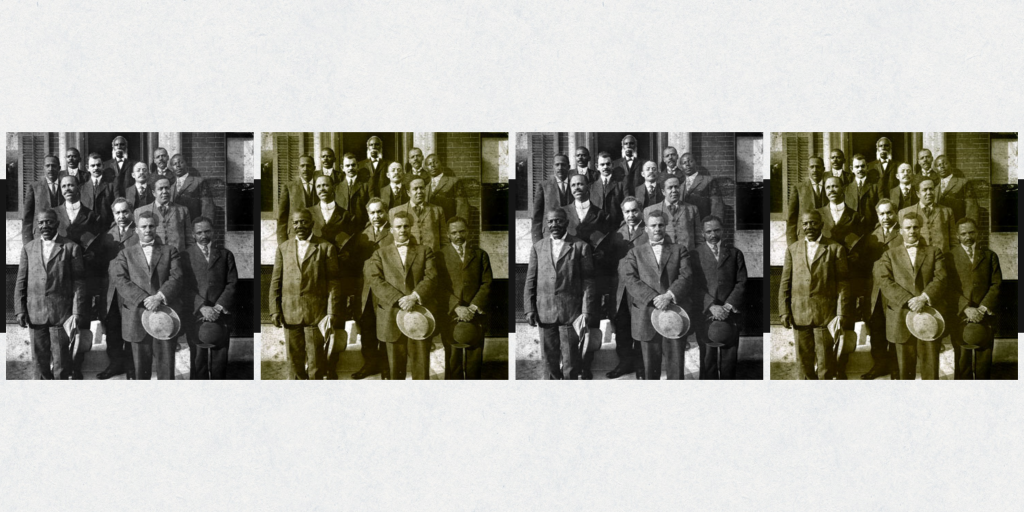
The testimonial dinner held at Madison Street Presbyterian Church was unlike any other that come before it. A large assortment of Black Baltimore citizens gathered in the summer of 1889 to celebrate the triumph of Harry Cummings and Charles Johnson, who had recently completed their law program in only two years.[1] What made their extraordinary accomplishment even more remarkable was that they were the only Black graduates of the University of Maryland Law School.[2] Everett Waring and Joseph Davis, legends in their own right, both presented the newly minted lawyers with law books as well as candid advice concerning the new legacy that they would soon establish as Black lawyers.[3] Everett Waring, a graduate of Howard Law School, was the first Black attorney to be admitted to the bar of the Supreme Bench of Baltimore on October 10, 1885.[4] The two prominent attorneys had already made headlines in the years since and had argued many high-profile cases. Yet as Davis and Waring presided over this monumental event, they did not realize that this occasion would mark the start of a second generation of Black lawyers who would continue in their footsteps and utilize the legal system as a buttress against the specter of racial discrimination that had plagued Black citizens in Maryland.[5]
This article addresses the legal achievements of the second generation of Black lawyers, including Harry Cummings, Joseph Davis and Ashbie Hawkins, by analyzing their progress in combating racial segregation policies using legal challenges and public policy reform in Maryland during the late 19th and early 20th centuries. This article will demonstrate that this second generation not only continued the initial groundwork created by the first African American lawyers in Maryland but also transformed the legal system into a mechanism used to advance the legal rights of African American citizens in the areas of equal rights, educational policy, suffrage reform, and housing discrimination.
This article is divided into four sections. Section One provides a brief recap concerning the first generation of African American lawyers in Maryland and discusses the initial legacy that they established. It starts with the first attempts by Black individuals in Maryland to become lawyers leading up to the In re Wilson decision of 1885 which struck down the racial restriction statute that prevented African Americans from practicing law at the state level. Section Two introduces the second generation of lawyers and focuses on some of their earlier attempts to use courts to redress the grievances of African Americans resulting from discrimination from private citizens and institutions. Section Three will look at legal challenges against discriminatory practices in state and local statutes and ordinances which sought to disenfranchise and segregate Black citizens at the turn of the 20th century. Finally, Section Four analyzes the efforts of Cummings, the first Black councilmember in Baltimore City, to use political policy reform to advance the educational interests of African American students and teachers.
II. The First Generation of Lawyers
During the first half of the 19th century, the thought of a Black lawyer in Maryland, and indeed in any part of the country was, in many ways, unthinkable. In fact, Maryland held the onerous distinction of being one of the first states to enact a statute in 1832 limiting bar admission to white males who had studied law in any part of the United States for at least two years.[6] Until that time, the various courts of Maryland essentially set their own standards that dictated bar admission in Maryland.[7] Just a year prior to the law’s creation, Nat Turner led his ill-fated rebellion — prompting states like Maryland and Virginia to buckle down and pass a series of laws aimed at controlling both free and enslaved Blacks, as well as codifying racial discrimination.[8]
Courts at this time did not admit African Americans to the practice of law and would not entertain the notion that Black men were capable of becoming lawyers.[9] Macon Bolling Allen would soon have the honor of becoming the first Black American to practice law after being admitted in 1844 to practice before the courts of Maine.[10] Other states began admitting Black men to the practice of law, including Massachusetts with the admission of Robert Morris in 1847, New York with the admission of George Vashon in 1848, and Ohio with the admission of John Mercer Langston in 1854.[11] It was not until 1857 that Edward Draper became one of the first Black men in Maryland to take the next step in becoming a lawyer.[12] Due to a lack of formal requirements, reading the law under the tutelage of a seasoned practitioner was the only practical method to become a lawyer.[13] After studying under the mentorship of Charles Gilman, a well-respected lawyer in Baltimore, Draper underwent an examination by Baltimore Superior Court Judge Zacheus Collins Lee who approved a certificate attesting to his qualifications for admission to the Maryland Bar provided he was a free white citizen of the state.[14] This double-edged distinction was a far cry from actual admittance to any of the state courts of Maryland. His situation, in many ways, was reflective of the precedent established by the Dred Scott case decided that same year.[15] In his opinion to the Court, Chief Justice Roger B. Taney declared that African Americans, both enslaved and free, were not citizens of the United States and were not entitled to the rights and privileges that came with citizenship.[16] Despite the circumstances that prevented him from becoming a lawyer in Maryland, Draper served as the forerunner for the first generation of individuals who would continue the long struggle that led to the first Black lawyers who could practice law in Maryland.
Following the Civil War, African Americans were repeatedly banned from admission to the state bar of Maryland.[17] In contrast to the refusal of the Maryland courts to openly admit Black lawyers, the federal court system was more welcoming.[18] In fact, some of the first Black lawyers admitted to practice in the Maryland federal court system had already been admitted as lawyers in other state courts.[19] James Harris Wolff was admitted to the Supreme Judicial Council of Massachusetts in 1875.[20] Prior to that, Wolff had attended Harvard Law School for a year after studying the law under a former Massachusetts Congressman.[21] Shortly after his Massachusetts bar admission, Wolff moved to Maryland to become the first Black attorney admitted to the United States Circuit Court of Maryland.[22] Despite this achievement, he did not stay in Maryland for long, most likely due to Maryland’s statute banning Black attorneys from practicing law at the state level.[23] The first significant challenge to this law came from Charles Taylor, a Black lawyer from Massachusetts who also moved to Maryland.[24] Though Taylor was able to gain admission to the federal bar in Maryland, the state bar denied his application.[25] Undeterred, he then petitioned the Court of Appeals of Maryland.[26] In support of his petition to the Court of Appeals, Taylor claimed that under the Privileges and Immunities Clause of Article IV, Section 2 of the Constitution, admission to the bar was a privilege of state citizenship that the General Assembly could not abridge on account of his race.[27] In attacking the 1832 Maryland statute that limited the practice of law to only white male citizens of the state, Taylor argued that it was a violation of the Equal Protection Clause of the Fourteenth Amendment.[28] While Taylor cited to the Slaughterhouse Cases to support his argument, at the time of the case, the Court had not fully defined the scope of the Privileges and Immunity Clause nor had it expanded the definition of equal protection to include the “privileges” under state law.[29] In fact, under its own interpretation of the Slaughterhouse Cases, the Court found that the power of the federal government to protect “privileges” only belonged to U.S. citizens and that the practice of law was not such a privilege but rather governed by the legislature of each state to set boundaries and qualifications.[30] In rejecting his rationale and denying his petition to practice law, the Maryland Court of Appeals in In re Taylor upheld the state law, arguing that the Fourteenth Amendment did not apply to admission to the bar.[31]
Between 1877 and 1885, there were numerous failed challenges to this prohibition, including the Maryland legislature’s multiple attempts to stunt several measures to strike the racial bar admission restriction.[32] One of these included an attempt by a Black lawyer named Richard King who petitioned unsuccessfully to the Maryland House of Delegates and, ultimately asked the U.S. Senate to override the statute.[33] The next attempt to overturn the state law was in 1885, and it was spearheaded by the Mutual United Brotherhood of Liberty, a civil rights organization formed by Reverend Harvey Johnson.[34] Johnson convinced Charles Wilson, a Black lawyer from Massachusetts who moved to Maryland to teach, to act as a plaintiff in a test case, In re Wilson, to overturn the law.[35] Wilson, who was represented by a white attorney named Alexander Hobbs, argued that racial discrimination violated the Equal Protection Clause, citing to several cases involving racial exclusion in the selection of jury members.[36] On March 19, 1885, the Supreme Bench of Baltimore unanimously agreed that “if blacks could not be discriminated against in jury selection, they also could not be discriminated against in the opportunity to become judges” and lawyers.[37] In overturning the Maryland Court of Appeals decision in In re Taylor, the judges of the Supreme Bench in In re Wilson held that the racial exclusion provision of the 1832 state law was in fact a denial of equal protection under the Fourteenth Amendment.[38] It is important to note that this triumph did not necessarily overturn the state law itself.[39] Instead, the judges indicated that despite the existence of the term “white” in the statute, Blacks must now be allowed to practice law.[40] Furthermore, because the statute still existed, the ruling of In re Wilson only applied in Baltimore City, effectively meaning that Black lawyers were still barred from practicing law in other parts of the state.[41]
While this hurdle was over, the struggle continued as the state bar still found reasons other than race to deny Wilson’s application.[42] While Wilson was never admitted to the bar, Johnson and the United Brotherhood of Liberty convinced Everett Waring, a recent graduate of Howard Law School, to come to Maryland.[43] Waring became the first Black attorney to be admitted to the bar of the Supreme Bench of Baltimore on October 10, 1885.[44] He also became one of many of the first generation of Black lawyers in Maryland. This generation, conceived from Draper’s early attempt in 1857, also included James Harris Wolff, the first Black attorney admitted to the federal court in Maryland; Charles Taylor, the first Black lawyer to initiate a case attempting to overturn the statute; Richard King, the Black lawyer who appealed to the Maryland House of Delegates to strike down the statute; Charles Wilson, the lawyer who succeeded in overturning the statute; and Everett Waring, the first Black lawyer to be admitted to practice law at the state level.[45] Thereafter, Waring was joined by Joseph Davis become the second Black attorney to practice law in Maryland in March 1886.[46]
Both Waring and Davis continued the legacy of this first generation by joining with the Brotherhood of Liberty as co-counsel in tackling some of the most egregious affronts to Black civil rights during that time.[47] Their first legal challenges were against the Bastardy Acts, which essentially allowed judges to issue warrants for the apprehension of women accused of giving birth to illegitimate children unless they provided the name of the father of the child who would then be arrested.[48] The purpose of the law was to prevent the child from becoming a ward of the state by compelling the father to provide funds for the mother or the state.[49] While the law was originally created in 1781 to protect women in general, it was changed twice, first in 1785 to include all free women, and finally in 1860 to apply to only white women.[50] Waring challenged the constitutionality of the Bastardy Act in his representation of a Black woman named Lucinda Moxley and argued that the Act unfairly discriminated against Black women who did not possess the same rights as white women.[51] While the Baltimore Supreme Bench ruled against Waring and his client in finding that the Act did not violate the Fourteenth Amendment, this case was groundbreaking in that it was the first time that an African American appeared to argue in front of the Supreme Bench.[52] This first generation made history again when Waring and Davis represented a group of Navassa laborers between 1889 and 1890 who had been accused of killing white officers in an uprising on Navassa Island that opposed the inhumane and cruel treatment the laborers faced from rapacious managers.[53] After several defeats in the lower courts, the Brotherhood of Liberty appealed the case to the United States Supreme Court.[54] October 29, 1890, marked the first time that Black lawyers from Maryland argued in front of the U.S. Supreme Court and, though their argument was ultimately unsuccessful, they later convinced President Benjamin Harrison to commute the death sentences of their clients to life in prison.[55]
Though some of their efforts were met with setbacks, a few of the attempts by the first generation of Black lawyers would later be met with success. The racial statute was on the books for over half a century was finally changed in 1888 when the racial restriction was removed due to the efforts of Maryland Law School Dean, John Prentiss Poe.[56] Later, the state’s other discriminatory laws changed when the term “white,” was removed from laws including the Bastardy Act as well as the prohibition of Blacks to serve on juries.[57] More importantly, the first generation’s fight for the rights of Black citizens became the standard bearer for the work that the next generation of lawyers would continue. While the actions of Waring, Davis, and others epitomized the Black attorney as a zealous fighter for civil justice in the face of racial adversity, the actions of the next generation continued to mold and redefine this image by transforming the legal system into a weapon for social change.
III Litigating against Discrimination in Criminal and Civil Cases
Not before long, the second generation of lawyers, represented by Harry Cumming and Charles Taylor, began the crucial work of championing the rights of African Americans by defending against lawsuits and representing Black citizens falsely accused of wrongdoing. While little is known about the life of Charles Taylor, Harry Cummings came from a prominent Black family and many of his siblings went on to a make name for themselves. His sister, Ida Rebecca Cummings, eventually became Baltimore’s first kindergarten teacher.[58] Born in Baltimore, Maryland on May 19, 1866, Cummings was the grandson of slaves but grew up as the son of free Blacks.[59] His father, Harry Sr., worked primarily as a chef while his mother, Eliza Jane Cummings, worked in domestic service and was heavily involved in several different occupations involving church and missionary leadership.[60] Both parents instilled the importance of a quality education in their eight children.[61] Harry Cummings grew up in Baltimore and attended the city’s public schools.[62] With high school in Baltimore closed to their son, Cummings’ parents sent him to Lincoln University in Oxford, PA, where he attended the university’s preparatory school.[63] Later, he attended Lincoln University where he graduated in 1886.[64] During his time at Lincoln University, Cummings moved from the classroom to the law offices of Joseph Seldon Davis where he read law for one year.[65]
Cummings applied to the University of Maryland School of Law in 1886, the same year that he graduated from Lincoln University and a year after the admission of Waring to the Maryland Bar.[66] Harry Cummings and Charles S. Johnson completed the three-year course in only two years, graduating in 1889.[67] Before enrolling in the University of Maryland Law School, Johnson attended and graduated from Lincoln University.[68] When asked about how he was treated during his time at the University of Maryland Law School, he replied, “‘we are as cordially received and as finely treated’ here as when we were in a northern college.”[69] The New York Times reported on the graduation of Cummings and Johnson stating that “[t]he graduating students themselves, by the good judgement and tact of the two colored ones, and the kindly feeling of a majority of the white ones, in return, prevented any color discrimination in seating the guests at the graduation exercises.”[70]
Shortly after their admission to the Maryland bar, Cummings and Johnson helped prepare correspondence in equity jurisprudence for Judge Charles E. Phelps, who sat on the city bench and taught at the law school.[71], Both Cummings and Johnson went on to embark on what was a prosperous legal career spent vindicating the rights of African Americans against an oppressive and unjust legal system.
Following Reconstruction, African Americans’ position nationwide eroded so seriously that it was described as “the nadir of the Negro’s status in American society.”[72] While Maryland never seceded from the Union, it did not have the same protections as states that benefited from federal Reconstruction.[73] As a result, Black Maryland citizens still experienced racism because many white residents still had strong allegiances to the South after the war. Yet, this level of discrimination never reached the levels faced by Blacks in deep southern states.[74]
By 1889, Baltimore had made some progress towards stripping away pockets of racial injustice. By this time, Maryland had abolished the discriminatory state polices known as the Black laws.[75] These restrictions, among others, encroached on Black people’s ability to vote, a right recently acquired through the passage of the Fifteenth Amendment.[76] That same year, Baltimore also set a milestone by hiring the City’s first African American educators to teach Black children.[77] However, these small gains towards equality resulted in the creation of a carceral system in Baltimore linking race to crime.[78] This system involved the systematic incarceration of African Americans, typically at the beckoning of segregationists who used the fabricated concern of protecting white women as a platform to undermine the rights of African Americans by inflicting harsh punishments.[79] One of the victims of this repressive system was a young clerk named Joseph Sampson.[80] Described as a good looking and well-connected young man, Sampson worked in a wholesale coal dealer shop owned by Irving Hall.[81] On August 6, 1889, Mary Wren, a young white woman, accused him of rape which allegedly took place at his house on Warner Street in Baltimore.[82] Following his arraignment, he pleaded not guilty and hired Charles W. Johnson to represent him.[83] At the time, Johnson had only practiced as a lawyer for two months but had already tried and won an astonishing fifteen cases.[84]
On the day of Sampson’s trial, Judge Edward Duffy presided over a crowded court room packed with spectators of all races.[85] Most came with the specific intent of witnessing Charles Johnson in action, especially since this would be the first time that a Black lawyer pleaded a criminal case in Maryland where the defendant was facing the death penalty.[86] After the prosecutor’s opening statement, Johnson arose as the crowd waited with bated breath.[87] As Johnson began his opening statement to the jury, the silence in the courtroom was striking.[88] In what was described as a “masterly” display of the English language, Johnson eloquently portrayed the facts of the case and indicated to the jury what he intended to prove.[89] His presentation was so impressive that it forced even “the venerable and laconic Judge Duffy” to put down his pen and glasses and lean forward to hear every word Johnson uttered.[90] After completing his argument and taking his seat, Mary Wren stood to give her account of what took place at Sampson’s home.[91] Without hesitation, Johnson subjected her to a two-hour cross examination despite the repeated objections raised by the State which were promptly overruled in Sampson’s favor.[92] Under such an assault, Ms. Wrens recollection of what took place crumbled.[93] Following this testimony came the examination of other witnesses prior to the deliberation by an all-white jury.[94] In what could only be described as a miracle, they all rendered a verdict of not guilty without ever setting foot outside of the jury box.[95] For his win, Johnson’s friends hailed him as a hero and whisked him away from the courtroom.[96]
Notwithstanding his solo success in winning Sampson’s case, Johnson typically worked with other lawyers in most of the cases he litigated. In fact, two weeks following the Sampson victory, he found himself assisting the state in prosecuting four white men for the rape of a Black woman.[97] He worked very closely with Cummings during these years, and one of their first cases together occurred a few months following the Sampson case in November 1889 when Cummings and Johnson represented a Black man charged with assaulting a white girl.[98] Their client’s arrest took place many months before the court scheduled his trial for assault in the Baltimore County Courthouse.[99] This case had the distinction of being the first time that Black lawyers argued in a court room in Baltimore County.[100] Despite finding themselves at the mercy of an all-white jury of men, Cummings and Johnson successfully presented an alibi argument for their client which resulted in him being acquitted of all charges.[101]
In addition to criminal work, both Johnson and Cummings were active in representing clients in civil actions, typically clients challenging segregated practices by private institutions. While portions of Baltimore were integrated, many public sectors were still partially segregated, resulting in Black people being excluded from different services.[102] Prejudice against African Americans increased by 1890 with Blacks being turned away from hotels, restaurants, lunchrooms, stores, and other public accommodations.[103] The theaters were especially strict and forced Black people to sit upstairs — if they were even sold a ticket at all.[104] While Black citizens complained about such ill-treatment, Black leaders accomplished very little with only some modest accommodations.[105] In December of 1890, two Black residents took the initiative of filing a lawsuit in the Superior Court of Baltimore against separate entities.[106] Mr. H. H. Sutton, represented by Johnson, and Mr. Edward Fields, represented by Cummings, filed suit against Mr. Forepaugh, manager of Forepaugh’s Museum, and Mr. Kernan, proprietor of Kernan’s Theater, respectively.[107] Their lawsuits alleged that they were refused services at each of these venues and, as such, they requested to be awarded the sum of $5,000.[108] While the outcome of this case is unknown, it was speculated that they reached a settlement in the amount of $25 or $50, which was a normal outcome for these types of cases.[109] Still, even when these cases settled, they represented a change in the manner in which African Americans used lawsuits to challenge private discrimination. Rather than simply demanding the end of segregated practices, these lawsuits were the first attempts by Black people to seek monetary damages against institutions for civil rights violations.[110]
Even the University of Maryland Law School, where Cummings and Johnson both graduated from, was not insulated from the spread of racism which seemed to permeate the culture of the day. In 1889, the school admitted two Black students named John Dozier and Ashbie Hawkins.[111] Unfortunately, the racial climate at the school began to change with many of the students and staff becoming discontent with integration and petitioning that Dozier and Hawkins be kicked out.[112] Bowing to public pressure, the law school subsequently expelled them with Dean John Prentiss Poe, an early opponent of the admission of Black students, commenting that the “school would jeopardize its interest by allowing colored students to attend.”[113] Both Dozier and Hawkins continued to pursue their goals with Hawkins attending Howard Law School in 1892 before working a few years as a teacher and ultimately being admitted to practice as a lawyer in 1897.[114] Hawkins would went on to start his own law firm and eventually represented a Black student who, much like himself, was kicked out of an institution of higher learning for the “indignity” of being Black.[115]
In February 1896, Dr. J. Marcus Cargill, an African American member of Baltimore’s City Council, nominated a student named Robert Clark to enroll in the Maryland Institute of Art and Design (the Institute).[116] However, after years of begrudgingly accepting a handful of Black applicants from three different Republican councilmembers, the Institute declined to admit yet another Black student.[117] The Institution’s refusal to admit Mr. Clark was based on a by-law adopted by the management of the Institute back in November of 1895, which limited all admissions to the school to “reputable white pupils.”[118] In June of 1896, Cummings became involved and notified Baltimore Mayor Hooper that if Cargill’s appointee was not admitted, a case would be brought against the Trustees of the Maryland Institute.[119] Mayor Hooper, however, ensured Cummings that he had already conducted an investigation and concluded that the trustees had not violated their contract.[120]
Ultimately, Robert Clark took matters into his own hands and file a petition in October of 1897 for a writ of mandamus in the Superior Court of Maryland asking that the court issue a writ requiring the Maryland Institute to receive him.[121] W. Ashbie Hawkins and John Phelps, the son of Judge Phelps, represented Clark and alleged in the petition that the Institute only passed the by-law limiting admission to whites students, only after the execution of the contract that permitted councilmembers to appoint pupils to the school.[122] The petition alleged that the by-law was void against appointees of City Council members and was in fact a violation of the original agreement between the Institute and the City which did not prevent students of color from being accepted.[123] The Hawkins’ second argument was that the by-law constituted illegal discrimination in violation of the 14th Amendment of the U.S. Constitution.[124] In its response, the Maryland Institute insisted that the creation of the by-law was necessary due to the negative reaction by the public during the election of October 1895 when the school had announced the admission of colored pupils.[125] This caused a bitter discussion concerning the subject of mixed schools and the mingling of white and colored students prompting the adoption of the by-law the following month.[126] In further support of its decision to prevent Clark’s enrollment, the Institute expressed difficulty in inducing white students to attend — in fact arguing that there had been a steady decline of white students in recent years.[127]
The Institute defended itself against the accusation that it had violated the contract, arguing that during the time of the signing of the contract, no mixed schools existed since the Institute’s founders originally established the school for white students only.[128] The by-law was therefore neither a violation of the contract nor a violation of any rights possessed by the petitioner under the U.S. Constitution.[129] While Hawkins alleged the exclusion of colored pupils violated the Privileges and Immunities Clause, the Institute argued that the school is a private institution and not a state agency subject to that provision.[130] In December 1897, the Superior Court agreed with the Institute and dismissed the writ of mandamus.[131] In an opinion written by Judge Ritchie, the Court found that as a private corporation, the Institute was not subject to the Equal Protection Clause of the Fourteenth Amendment.[132] The opinion also indicated that the Immunity Clause does not apply, as the right of free education is not a privilege or immunity incident to citizenship of the United States.[133] The right of public education only exists as a virtue of the law of any particular state.[134]
Hawkins and Phelps soon appealed the decision to the Maryland Court of Appeals.[135] However, the court affirmed the lower court’s decision — rejecting the claim by Hawkins that it was unconstitutional to deny Clark’s admission and stating that the school did not violate any contractual provisions.[136] Judge Bryan wrote the opinion, stating once more that as a private institution, the school had every right to deny Clark admission based on the disastrous occurrences when the school previously enrolled Black students.[137] Since the original intent of the school was to educate only white pupils and there was nothing in its contract with the city to the contrary, no contractual obligation had been breached.[138] As for the argument concerning Clark’s deprivation of rights under the Fourteenth Amendment of the U.S. Constitution, Judge Bryan indicated that the denial of admission had not deprived Clark of any privilege or immunity, nor had it deprived him of any property.[139] Furthermore, in agreeing with the lower court’s decision, Judge Bryan once more stated that the Fourteenth Amendment only protects against state action, not action by private individuals or entities.[140] Despite this setback, Hawkins and other lawyers continued to fight discrimination at the turn of the century utilizing not only the court system but also protest movements, which were highly effective in later struggles against the anti-suffrage movement of the early 20th century as well as against Baltimore’s residential segregation laws.
IV. Challenges Against Anti-Suffrage Legislation and Discriminatory Housing Ordinances
In the early 1900s, Black Republican leaders in Baltimore converged to fight Jim Crow legislation concerning public transportation.[141] A small cadre of Black lawyers recently admitted to the bar assisted in these efforts, including Cornelius C. Fitzgerald and William L. Fitzgerald.[142] Many of these lawyers like Cummings and Hawkins would also join other Black Republican leaders in the fight against the restrictive racial legislation called the Separate Car Law, passed in 1902, which first mandated segregated railroads and then steam ships in 1902.[143] Members of the Black community organized boycotts as a result, which were backed by Black newspapers such as the Afro American.[144]
In March of 1904 the Democrat-controlled General Assembly passed the Poe Amendment.[145] The General Assembly named the amendment after John P. Poe, the Dean of the University of Maryland School of Law who by this time was quite well established not only within the Democratic leadership, but also the upper echelons of the Republican Party, including President Theodore Roosevelt.[146] The first provision of the Poe Amendment, referred to as the grandfather clause, provided that all persons eligible to vote on or prior to January 1, 1869 and male decedents of such persons who would be 21 years of age by 1906 henceforth would be able to vote.[147] The second provision, referred to as the understanding clause, stipulated that persons unable to qualify under the grandfather clause could still vote if they could offer a reasonable explanation under any section of the Maryland Constitution.[148] “Voter registrars would determine the reasonableness of any explanation offered.”[149] The Poe Amendment’s true purpose was to disqualify thousands of Black voters in Maryland.[150] The insidious nature of the bill gave most of Maryland’s white citizens the privilege to vote because they qualified under the grandfather clause.[151] Black voters would immediately be barred, as they had no such right until 1870 with the passage of the Fifteenth Amendment and thus would have to qualify under the Poe Amendment’s understanding clause.[152] Even though the Poe Amendment passed the General Assembly, because it took the form of a proposed amendment to the state constitution, it would still have to be voted on by popular ratification in the November 1905 election.[153]
To defeat the passage of this Amendment, Republican leadership in Maryland used every effort at their disposal to encourage all Republican to come out and vote. Democrats outnumbered Republicans in many districts and as a result, local Republican clubs encouraged its membership to increase its numbers.[154] Black leaders, mostly in the Republican Party, also began to band together and soon formed the Suffrage League of Maryland, which was comprised of esteemed Black lawyers in the community including Harry Cummings and Ashbie Hawkins.[155] Throughout 1905, the Suffrage League held rallies, distributed pamphlets, raised donations, and taught illiterate Blacks about voting rules and procedures.[156] In September 1905, during the third anniversary of Men’s Day celebrated at Methodist Episcopal Church, Harry Cummings addressed the congregation stating, “[n]ever before in the political history of this State has the right of the colored citizen to exercise the right of franchise been in such jeopardy.”[157]By the end of September 1905, the Suffrage League was in a position to appoint new campaign committees and added new members to the finance committee.[158] During a meeting at the African Methodist Episcopal Zion Church, the Suffrage League gathered to discuss continuing the vigorous campaign against the Poe Amendment.[159] The campaign committee consisted of several well-known Republican leaders including Harry Cummings, Hiram Watty, and Reverend Alexander.[160]
Despite intense campaigning from both sides, Election Day voter turnout was low, with only sixty-three percent of registered voters turning out to cast a vote.[161] Surprisingly, voter registration among white voters was higher than the estimated eighty percent of Black voters in Baltimore who were registered.[162] Yet, despite the tenacious control that the Democratic Party held on Maryland, their supporters lost in their bid to disenfranchise Black voters.[163] After the defeat of the Poe Amendment, the Democratic Party proposed other amendments to prevent Black citizens from voting and while these successive amendments would also be defeated, a new threat to Black autonomy was soon on the horizon.[164] Rather than seeking political disempowerment through further anti-suffrage attempts, the segregation movement instead sought to reestablish authority over African Americans through attempts at wholesale segregation.
In December of 1910, Baltimore passed the first residential segregation bill of its kind, which constituted an attempt to stem the wave of Black residents from moving into certain areas of the city.[165] This bill prevented Black and white Baltimoreans from moving onto blocks on which the majority of residents were of the other race.[166] Ashbie Hawkins and his law partner, another prominent Black attorney named George McMechen, endeavored to fight this ordinance through several court challenges.[167] During one such challenge in February 1911, the Superior Court of Baltimore declared the ordinance defective, noting that the bill vested the building inspector with an arbitrary power and that certain provisions called for unreasonable classifications which made the entire ordinance invalid as a whole.[168] Several more versions of the ordinance were passed before the 1913 iteration of the ordinance, which courts deemed legally sufficient.[169] Hawkins once more challenged this by initiating a test case using John Gurry, a Black man who attempted to move into a white block, and whom the police subsequently cited with violating the ordinance.[170] Arguing in front of the Criminal Court, Hawkins convinced Judge Elliot to invalidate the ordinance once more based on unclear and arcane language.[171] The city soon appealed to the Maryland Court of Appeals, which heard the case.[172]
The Court decided to examine whether the ordinance was a reasonable use of police power rather than focusing on the meaning and intent of the ordinance.[173] Writing for the Court, Judge Constable declared that while the separation of the races for the purposes of maintaining the peace was a reasonable use of state police powers, the separation of Black and white citizens was not necessary — as a section of the ordinance allotted for the residents in a given area to decide whether or not to allow a mixture of Black and white people to move in.[174] Furthermore, the ordinance had the unintended effect of unfairly removing the ownership rights of property owners at the time the ordinance was passed.[175] The decision in essence allowed the continuation of the ordinance and the perpetuation of racial segregation in housing. Soon, advocates, including Hawkins and the local chapter of the National Association for the Advancement of Colored People (NAACP), recruited another plaintiff, Thomas Jackson, in another test case before the Maryland Court of Appeals.[176] However, the court delayed a decision in this instance, instead opting to wait for the U.S. Supreme Court’s ruling in a case involving a similar segregation statute originating from Kentucky.[177] The U.S. Supreme Court in Buchanan v. Warley would ultimately decide that laws in which residents were segregated based on race were unconstitutional infringements on the right to own property.[178] This decision would invariably lead to the Maryland Court of Appeals similarly ruling to nullify the ordinance in Baltimore.[179]
Though integration would still be a challenge for years to come, this success, due in part to Hawkins and the local NAACP chapter, would allow homeowners to sell to whomever they chose regardless of race. While the victories against the Poe Amendment and the segregated housing ordinances were remarkable demonstrations of the effectiveness of both protest movements and litigation, Black lawyers also possessed other avenues to aid them in reforming discriminatory practices. This included the advantages that came with attaining political power. For black politicians, instead of attacking discriminatory laws already in effect, it was significantly more advantageous to instead reshape political policy in pursuit of laws that bridged the widening gap of equal rights and opportunities between Black and white individuals.
V. Harry Cummings Reshaping Educational Political Policy
During the last half of the 19th century, few African Americans held public office across the nation.[180] States previously aligned with the Confederacy had disenfranchised Black individuals, and many Northern states had small populations of Black individuals.[181] A few states along the border had considerable Black populations, such as Maryland, where the cities of Baltimore, Annapolis, and Cambridge all elected Black city councilmen during the last half of the 19th century.[182] This adjustment proved to be hard work for these newly-elected men, with minor payoffs in the interest of preventing serious losses.[183] Despite the large presence of African Americans in Baltimore following the end of the Civil War and the growing influence of the Republican Party, few Black candidates were initially successful at winning public office.[184] James Montgomery mounted an unsuccessful congressional run in the sixth district in 1874, becoming the first Black citizen to run for office in Maryland.[185] Several black lawyers were successful in gaining appointments to positions of political influence. The governor appointed Warner McGuinn, a Black attorney who practiced with both Cummings and Johnson from 1893 to 1895, as a clerk to the state liquor board in 1896.[186] Another black lawyer, Malachi Gibson, was appointed to serve on the Judiciary Committee for the State of Maryland.[187] However, the election of Harry Cummings in 1891 would mark the first time that the Black community had a voice on the Baltimore City Council.[188]
On the eve of the municipal election in 1890, the spotlight fell on the eleventh ward, where Black Republicans made their case for their candidate in a packed hall on Biddle Street.[189] Here, a chorus of supporters lauded Harry Cummings, including Ashbie Hawkins, who made a desperate plea to the crowd to elect Harry Cummings — threatening that if the white Republicans did not support Cummings at the election, he would never vote for another Republican ticket.[190] Cummings succeeded in clenching the victory for the Republican Party, becoming the first African American Councilmember for Baltimore City.[191] All eyes now fell on Cummings, whom the Baltimore Sun had dubbed the “colored councilman.”[192] He was known to take an active role in Republican politics and was also well regarded as a good organizer among his race.[193] When questioned about his platform as a new Councilmember, he stated his intent to make education his top priority.[194] The importance of such a promise was certainly crucial, especially considering the lamentable track record that Baltimore City possessed when it came to providing quality education to Black youth.
Baltimore first established public schools in 1829 to educate the children of white, mostly upper-class families.[195] The children of well-to-do white families received education from a variety of expensive religious schools and private academies, while most Black children in Baltimore attended free Sunday school or learned from friends or relatives.[196] Black families submitted several petitions to the mayor and city during the antebellum period in an effort to establish public funding for Black children, though all were routinely rejected.[197] Instead, Black school children were primarily educated by either private or religious institutions.[198] In 1865, the City Council finally responded to community pressure concerning the education of Black school children by appropriating $10,000 to “colored schools” for the purpose of improving the quality of education in these institutions.[199] The City Council was slow to act, however, and it would take another two years of debate until the Council passed an ordinance that allowed free public education for Black school children to become a reality.[200]
From 1890 to 1891, as a member of the Education Committee for the Baltimore City Council, Cummings voted on several ordinances aimed at increasing the educational opportunities of Black students, including an ordinance that provided for the purchase of two dwellings and lots for the use of male and female colored schools.[201] This ordinance was later voted on and signed into law by the mayor the next month.[202] During his next year in office, Cummings took direct action and introduced an ordinance to provide for the leasing of additional grounds for the use of colored grammar and primary schools.[203] This ordinance was followed by another ordinance for a manual training school for colored students.[204] The need for such a school geared towards instructing Black students was essential for the Black community. At the time, the only manual training school in Baltimore exclusively enrolled white students.[205] Black Marylanders saw this program as an innovative and progressive step at the time, especially due to the lack of adequate training programs for Black artisans.[206]
The ordinance for the establishment of a manual training school passed in February 1892 and, seven months later, on September 5, 1892, the Manual Training School for Colored Youth opened its doors with 105 pupils and five staff members, serving as one of the only institutions in the state that exclusively taught Black students skilled trades.[207] Despite this accomplishment, Cummings would lose his reelection bid in the fall of 1892.[208] Even as an ex-Councilmember, the Black community held Cummings in high regard, and Cummings continued to encourage social and political progress on behalf of Black citizens in Baltimore, causing his popularity within the Black community to rise. In 1897, Cummings was reelected to the Council to represent the eleventh ward once again.[209]
From 1897 to 1899, Cummings introduced a slew of proposals and amendments that were eventually passed by the Republican-controlled City Council.[210] Some of these proposals benefited both Black and white students, including the establishment of a citywide kindergarten course in all public schools.[211] Most of his legislative proposals, however, were geared towards improving the opportunities of Black teachers and students, including hiring a Black Directress of Sewing in Black schools.[212] In order to accommodate individuals with day jobs, he also introduced an ordinance establishing a night school at the Colored Polytechnic Institute.[213] After leaving the Council again at the end of his term in 1899, Cummings continued to rally against the structural barriers to Black people finding better work by calling out “unfair and unjust restrictions imposed [on black workers].”[214]
The highlight of Cummings’ political involvement was delivering a speech to second the nomination of Theodore Roosevelt for president at the 1904 Republican National Convention in Chicago.[215] Despite some pushback from white Republican leaders, Senator Louis E. McComas nominated Harry Cummings to deliver this speech.[216] This engagement made him the first Black person to speak before such a body.[217] During his speech, not only did Cummings praise the accomplishments of President Roosevelt, but he also reminded the Republican Party about its mission to safeguard the rights of all citizens irrespective of race:
This nomination will be an advanced step towards the fulfillment of the great mission of the Republican Party. And that mission will not be performed until every section of our Constitution and every amendment, thereof shall be respected and made effective and until every citizen of every section, of every race and of every religion shall proclaim in one grand chorus of that Constitution, Thou art my shield and buckler.[218]
Harry Cummings continued to fight for the rights of African Americans through the first few years of the 20th century up through the time he was elected to the City Council again in 1907.[219] During his third term, Cummings continued to make occasional strides in Black educational institutions, leading to improvements such as the separation of the teachers training course from the regular high school curriculum.[220] Cummings also continued his pledge to increase the educational opportunities for Black students. This mission sometimes put Cummings at odds with his white colleagues, who sought to reverse some of his progress by specifically transforming one of the schools meant for Black children into one that only educated white children.[221] Cummings’ colleagues justified this action by explaining that the school was located in a mixed neighborhood.[222] Though the Baltimore City Council passed this legislation, Cummings convinced the mayor of the importance of educating Black youth, prompting the mayor to veto the legislation.[223]
One of Cummings’ most difficult fights was against segregation ordinances proposed by the city in 1910, 1911, and 1913.[224] However, Baltimore’s Black political community remained strong in its response to this latest threat and Cummings received widespread attention for labeling the new segregation laws “pure racism.”[225] Cummings stressed the desire of Baltimore’s Black community to integrate with white individuals, stating, “all they wanted was an opportunity to secure better homes, live under better conditions, [and] be better citizens.”[226] The ordinances passed by the Council declared that Blacks could not live on a city block with a majority of whites and applications for building permits must include whether the area was to be used by “negros or whites.”[227] While Hawkins and other advocates battled these ordinances through court challenges, Cummings utilized his position on the Council to buck the majority as he continued to speak out against new housing segregation proposals. In one session he stated, “this segregated Ordinance has had a hard time to get safely through this Council and to stand the test of judicial determination before just and fair judges, of which our city can justly boast. The reason for it is that the law is a bad law, and try as you will, you can never find a right way to do a wrong thing.”[228]
Cummings would continue to exemplify the spirit of uplifting African American citizens in Baltimore throughout his final years on the council up until he passed away following a debilitating sickness on September 6, 1917.[229] Following his death, the flag at the City Hall was placed at half-mast by order of the mayor.[230] The Baltimore Sun, in an editorial at his death in 1917 said, “[t]hough never lukewarm in the cause of his own people, he knew instinctively how to conduct himself in a southern city. He made few enemies. Placed in a position where it was easy to arouse race prejudices, he took the wiser path and found that it paid both for himself and for his race.”[231]
VI. Conclusion
The transformative work of the next generation of Black lawyers in Maryland cannot be overstated, as their legacy continued to reshape the ways in which African Americans sought to address the inequalities that endured. In fact, between 1885 and 1922, close to forty-two Black attorneys would eventually be added to the ranks.[232] The attorneys that took up the mantle continued the political, social, and legal advances of their predecessors through further measures aimed at increasing the agency of Black citizens. In the area of political reform, attorneys Warner T. McGuinn and William L. Fitzgerald would serve on the Baltimore City Council from 1919 to 1923, where they continued advocating for legislation to expand Black schools as well as create movie theaters and recreational facilities for Black citizens.[233] This effort came 30 years after Cummings and Johnson represented Black patrons who were denied access to similar public facilities. The impact of Black attorneys would reverberate throughout the 1920s and 1930s, culminating in the 1936 decision of the Maryland Court of Appeals in Murray v. Pearson, where the Court of Appeals compelled the University of Maryland to admit Black students nearly 50 years after it closed its doors to African Americans with the expulsion of Dozier and Hawkins.[234]
From the end of Reconstruction through the early 20th century, Baltimore was without a doubt the focal point for civil rights activism that would continually change the lives of African Americans. While the spirit of activism arguably began in the decade following Reconstruction, it began to truly take shape in 1885 with the formation of the United Brotherhood of Liberty, which was one of the first civil rights organizations and arguably the precursor to the NAACP.[235] Yet for all the hard work and progress accomplished by this organization, none of it would have been possible without the team of dedicated lawyers willing to initiate lawsuits to fight against the injustices of the day. This same fervor would continue with the litigation strategies of Cummings, Johnson, and Hawkins, whose willingness to challenge the oppressive system present in Baltimore made them a force to be reckoned with. By the turn of the century, Harry Cummings’ reform measures would ensure active Black political participation for the first time at the local level, especially in the fight for the education rights of underprivileged Black students and teachers in Baltimore City.
As the 20th century unfolded with the encroaches of the anti-suffrage and housing segregation movements, Black lawyers were involved in every struggle designed to push back against these existential threats against the inherent rights and liberties of Black citizens. Together these remarkable crusaders for justice would continue to systematically transform the legal and political system of Maryland into a bulwark against racial discrimination, the effects of which would have a profound impact in the continued fight for civil rights for decades to come.

* Domonique Flowers, Esq. I am extremely grateful to the individuals who gave me the inspiration to write this article including Justice John Browning, Professor Jose Anderson, and Dean Claudia Diamond. I would also like to extend my gratitude to the Staff Editors for the 2023-2024 University of Baltimore Law Forum for your guidance and diligence in this endeavor. I could not have accomplished my research objectives without the organizations that allowed me to present my initial research findings including the Historical Committee for the Bar Association of Baltimore City and the Maryland Center for History and Culture. Special thanks to my family for supporting me throughout this process including my wife Ciara Flowers. I want to dedicate this article to my late aunt Gail Flowers who tragically passed away this year during the writing process. It is my hope that this article encourages people from underrepresented backgrounds to consider joining the legal profession and to use it to counter any injustices that are still prevalent in today’s society.
[1] See City News in Brief: Miscellaneous Items Gathered Here and There by Reporters of the Sun, Balt. Sun, June 7, 1889, at 4 [hereinafter, “City News”] (though a monumental event, this event was barely mentioned and was combined with other random stories of the day).
[2] David S. Bogen, The First Integration of the University of Maryland School of Law, 84 Md. Hist. Mag. 39, 39 (1989) [hereinafter The First Integration].
[3] City News, supra note 1, at 4.
[4] The First Integration, supra note 2, at 39.
[5] City News, supra note 1, at 4.
[6] Act of Mar. 10, 1832, ch. 268, § 2, 1831 Md. Laws.
[7] The First Integration, supra note 2, at 39.
[8] Id.
[9] See generally J. Clay Smith, Emancipation: The Making of the Black Lawyer, 1844-1944, at 93 (1993).
[10] Id.
[11] John G. Browning, To Fight the Battle, First You Need Warriors: Edward Garrison Draper, Everett Waring, and the Quest for Maryland’s First Black Lawyer, 53 U. Balt. L.F. 1, 3 (2022).
[12] Id. at 11.
[13] David B. Kopel, Lyman Trumbull: Author of the Thirteenth Amendment, Author of the Civil Rights Act, and the First Second Amendment Lawyer, 47 Loy. U. Chi. L.J. 1117, 1179 (2016).
[14] Id. at 10-12.
[15] Steve Luxenberg, Separate: The story of Plessy v. Ferguson and America’s Journey from Slavery to Segregation 62 (2019).
[16] Id. at 64.
[17] See generally infra note20.
[18] Browning, supra note 11, at 3.
[19] See, e.g., infra note20-24.
[20] Smith, supra note 9, at 103.
[21] Id.
[22] Id. at 103-04.
[23] Id. at 104.
[24] Dennis P. Halpin, A Brotherhood of Liberty: Black Reconstruction and its Legacies in Baltimore, 1865-1920, at 54-55 (2019) [hereinafter A Brotherhood of Liberty].
[25] Id. at 55.
[26] See In re Taylor, 48 Md. 28 (1877).
[27] Id. at 29-30.
[28] Id. at 29.
[29] David S. Bogen, The Transformation of the Fourteenth Amendment: Reflections from the Admission of Maryland’s First Black Lawyer, 44 Md. L. Rev. 939, 1033 (1985) [hereinafter The Transformation].
[30] Elaine K. Freeman, Harvey Johnson and Everett Waring: A Study of Leadership in the Baltimore Negro Community, 1880-1900, at 23 (Sept. 1968) (M.A. thesis, George Washington University).
[31] The Transformation, supra note 29, at 1033.
[32] The First Integration, supra note 2, at 39.
[33] A Brotherhood of Liberty, supra note 24, at 55.
[34] Id. at 47, 54.
[35] Smith, supra note 9, at 144.
[36] The Transformation, supra note 29, at 1039.
[37] Id. at 1039-40. See Strauder v. West Virginia, 100 U.S. 303, 311-12 (1880) (declaring that excluding persons from a jury on the basis of race violates the Fourteenth Amendment).
[38] Admitted to the Bar, Balt. Sun, Mar. 20, 1885, at 1.
[39] A Brotherhood of Liberty, supra note 24, at 56.
[40] Freeman supra, note 30, at 23-24.
[41] A Brotherhood of Liberty, supra note 24, at 56.
[42] Smith, supra note 9, at 144.
[43] David S. Bogen, The Forgotten Era, 19 Md. Bar J. 10, 10 (1986) [hereinafter The Forgotten Era].
[44] Id.
[45] Browning, supra note 11, at 16-19.
[46] Bar Association Hold Its Banquet, Balt. Afro-Am., Sept. 29, 1922, at 12.
[47] See A Brotherhood of Liberty, supra note 24, at 71.
[48] Freeman, supra note 30, at 28.
[49] Id. at 28-29.
[50] Id. at 29.
[51] Browning, supra note 11, at 22-23.
[52] Id. at 23-24.
[53] Id. at 30-32.
[54] A Brotherhood of Liberty, supra note 24, at 86.
[55] Id. at 86-88.
[56] Taunya L. Banks, Setting the Record Straight: Maryland’s First Black Women Law Graduates, 63 Md. L. Rev. 752, 753 (2004); see Browning, supra note 11, at 25; but cf. The Transformation, supra note 29, at 1043 n.363 (suggesting that Poe’s actions in removing the term white were due to pragmaticism versus any desire to help the progress of African Americans).
[57] Jeffrey R. Brackett, Notes on the Progress of the Colored People of Maryland Since the War 79 (Herbert B. Adams, ed. 1889).
[58] Miss Ida’ Dies; Was First City Kindergarten Teacher, Balt. Afro-Am., Nov. 11, 1958, at 1.
[59] Harold A. McDougall, Black Baltimore: A New Theory of Community 37 (1993).
[60] Mrs. Eliza J. Cummings: Mother of City Councilman Dead. Her Work for Her People, Balt. Afro-Am., May 29, 1913.
[61] Quincey Johnson, With Color Flying: The First Black Law Graduate Integrates Education and Politics, 4 Md. in Balt., 22, 22 (1990).
[62] Id.
[63] Id.
[64] Suzanne E. Greene, Black Republicans on the Baltimore City Council, 1890-1931, 74 Md. Hist. Mag. 203, 205 (1979).
[65] Johnson, supra note 61, at 22.
[66] Id.
[67] Smith, supra note 9, at 145.
[68] The First Integration, supra note 2, at 40.
[69] Brackett, supra note 57, at 77.
[70] See Johnson, supra note61, at 22; see also Brackett, supra note 57, at 77).
[71] Brackett, supra note 57, at 77; see also The First Integration, supra note 2, at 40 (a previous Union fighter and one of the only full-time faculty members who was in support of the rights of African Americans, Judge Phelps encouraged admission of black students at the University of Maryland Law School).
[72] Rayford Logan, The Betrayal of the Negro from Rutherford B. Hayes to Woodrow Wilson 62 (First Da Capo Press ed. 1997).
[73] Dennis P. Halpin, Reforming Charm City: Grassroots Activism, Politics, and the Making of Modern Baltimore, 1877-1920, at 75 (Oct. 2012) (Ph.D. dissertation, Rutgers University) (on file with the Rutgers University Library) [hereinafter, “Reforming Charm City”].
[74] Id. at 76.
[75] Given a Chance in Life: A Liberal Tendency in Maryland, N.Y. Age, Aug. 31, 1889, at 1 [hereinafter Given a Chance in Life].
[76] Reforming Charm City, supra note 73, at 11, 83-84.
[77] Howell S. Baum, Brown in Baltimore: School Desegregation and the Limits of Liberalism 27(2010).
[78] A Brotherhood of Liberty, supra note 24, at 93.
[79] Id.
[80] Given a Chance in Life, supra note 75, at 1.
[81] Id.
[82] Id.
[83] Id.
[84] Id.
[85] Id.
[86] Given a Chance in Life, supra note 75, at 1.
[87] Id.
[88] Id.
[89] Id.
[90] Id.
[91] Id.
[92] Given a Chance in Life, supra note 75, at 1.
[93] Id.
[94] Id.
[95] Id.
[96] Id.
[97] Id.
[98] See Brackett, supra note 71, at 77.
[99] Id.
[100] Id.
[101] Id. at 77; Id. at 77 n.1.
[102] The First Integration, supra note 2, at 41.
[103] Suits Begun in Baltimore Against Theatre Proprietors for Discrimination, N.Y. Age, Dec. 27, 1890, at 4 [hereinafter Suits Begun in Baltimore]; see also Brackett, supra note 71, at 60.
[104] Brackett, supra note 71, at 60.
[105] Id.
[106] Suits Begun in Baltimore, supra note 103, at 4.
[107] Id.
[108] Id.
[109] Freeman, supra note 30, at 63.
[110] Smith, supra note 9, at 146.
[111] The First Integration, supra note 2, at 42.
[112] Id.
[113] Johnson, supra note61, at 22. The First Integration, supra note 2, at 40.
[114] The First Integration, supra note 2, at 42; W. Ashbie Hawkins (1861-1941), Md. State Archives, (May 15, 2016), https://msa.maryland.gov/megafile/msa/speccol/sc3500/sc3520/012400/012415/html/12415bio.html.
[115] See generally W. Ashbie Hawkins, supra note 114.
[116] Only White Pupils: Councilman Cargill’s Colored Appointee Refused Admission to the Maryland Institute, Balt. Sun, Mar. 14, 1896, at 10.
[117] Id.
[118] No Colored Pupils: Maryland Institute Files an Answer to the Petition of Robert H. Clark, Jr., Balt. Sun, Nov. 4, 1897, at 8 [hereinafter No Colored Pupils: Maryland Institute Files an Answer].
[119] Dr. Cargill’s Pupil: Legal Action May Be Taken if He Is Not Admitted to the Maryland Institute, Balt. Sun, June 18, 1896, at 7 [hereinafter Dr. Cargill‘s Pupil]; see A Colored Pupil for Maryland Institute, Balt. Sun, Sept. 3, 1891, at 6 (describing Cummings’ success during his time on the Baltimore City Council in 1891, in nominating a black student named Harry T. Pratt to enroll in the Maryland Institute).
[120] Dr. Cargill’s Pupil, supra note 119, at 7; A Colored Pupil for Maryland Institute, supra note 119, at 6.
[121] Dr. Cargill’s Appointee: Robert H. Clark, Jr., Colored, Applies for a Writ of Mandamus to Compel the Maryland Institute to Receive Him, Balt. Sun, Oct. 16, 1897, at 12 [hereinafter Dr. Cargill’s Appointee].
[122] Id.
[123] Id.
[124] Id.
[125] No Colored Pupils: Maryland Institute Files an Answer, supra note 118.
[126] See id.
[127] Id.
[128] Id.
[129] Id.
[130] Id.
[131] No Colored Pupils: Maryland Institute Wins in the Suit to Compel It to Receive Robert H. Clark, Jr., Balt. Sun, Dec. 11, 1897, at 7.
[132] Id.
[133] Id.
[134] Id.
[135] State ex rel. Clark v. Md. Inst. for the Promotion of the Mech. Arts, 87 Md. 643, 654, 41 A. 126, 127 (1898).
[136] Id. at 659, 663, 41 A. at 128, 130.
[137] Id. at 658, 41 A. at 128.
[138] Id.
[139] See id. at 659-60, 41 A. at 128-29.
[140] Id.
[141] William G. Paul, The Shadow of Equality: The Negro in Baltimore, 1864-1911, at 273 (1972) (Ph.D. dissertation, University of Wisconsin) (ProQuest).
[142] The Forgotten Era, supra note 43, at 12.
[143] Gretchen Boger, The Meaning of Neighborhood in the Modern City: Baltimore’s Residential Segregation Ordinances, 1910-1913, 35 J. Urb. Hist. 236, 241 (2009).
[144] The Forgotten Era, supra note 43, at 12.
[145] Amendment Passes: Disfranchisement Bill Now Goes to the Governor, Balt. Sun, Mar. 11, 1904, at 2 [hereinafter Amendment Passes].
[146] See Letter from Judge John Carter to President Theodore Roosevelt (Mar. 14, 1905) (on file with the Maryland Center for History and Culture) (written around the same time that the Poe Amendment was being debated, Judge Carter’s letter expressed his approval of Poe as an ingenus legal draftsman and suggested that Poe had some white Republican backers). See The First Integration, supra note 2, at 40 (recalling that Dean Poe expelled black students at the University of Maryland Law School).
[147] Paul, supra note 141, at 274-75.
[148] Id.
[149] Id. at 275.
[150] Jane L. Phelps, Charles J. Bonaparte and Negro Suffrage in Maryland, 54 Md. Hist. Mag., 331, 340-41 (1959).
[151] Margaret L. Callcott, The Negro in Maryland Politics, 1870-1912, at 187 (1967) (Ph.D. dissertation, the University of North Carolina at Chapel Hill).
[152] Id. at187-88.
[153] Amendment Passes, supra note 145, at 2.
[154] See Letters to Blanchard Randall, member of the Republican Club in Wash. Cnty. (1900) (on file with the Maryland Center for History and Culture) (speaking on the urgency to recruit and maintain more Republican voters and noting that in their district, Democrats made up 42.5% of voters while Republicans only made up 37.5% of voters).
[155] Paul, supra note 141, at 275.
[156] Id.
[157] Harry S. Cummings Scores It: Discusses Amendment at Waters African Methodist Church, Balt. Sun, Sept. 18, 1905, at 12.
[158] Suffrage League: Holds Public Meeting and Appoints a New Campaign Committee – New Members Added to the Finance Committee, Balt. Afro-Am., Sept. 30, 1905, at 4.
[159] Id.
[160] Id.
[161] Paul, supra note 141, at 277-78.
[162] Id. at 275, 277.
[163] Boger, supra note 143, at 241.
[164] See Paul, supra note 141, at 278-82. In 1908, the Strauss Act was proposed which similarly contained a grandfather clause as well as three additional disqualifying clauses aimed at preventing blacks from voting. Id. at 278-79.After its unsuccessful debut, Republicans created the Digges Amendment, the third and final anti-suffrage statute that was proposed in 1910, which was almost exclusively aimed at preventing black votes and was also subsequently defeated. Id. at 282.
[165] Antero Pietila, Not In My Neighborhood: How Bigotry Shaped a Great American City 22-23 (2010).
[166] Balt. Md. Ordinance 610 (Dec. 19, 1910).
[167] Boger, supra note 143, at 242.
[168] West Law Defective: Court Holds it Invalid Because of Vague Title, Balt. Sun, Feb. 5, 1911, at 12.
[169] Pietila, supra note 165, at 25.
[170] Boger, supra note 143, at 249.
[171] Id.
[172] See State v. Gurry, 121 Md. 534, 88 A. 546 (1913).
[173] Id. at 540, 88 A. at 549.
[174] Id. at 548, 88 A. at 551.
[175] Id. at 550, 88 A. at 553.
[176] Boger, supra note 143, at 252.
[177] Pietila, supra note 165, at 31.
[178] Id. Buchanan v. Warley, 245 U.S. 60, 82 (1917)
[179] Pietila, supra note 165, at 31.
[180] Suzanne E. Chapelle & Glenn O. Phillips, African American Leaders of Maryland: A Portrait Gallery 69 (2004).
[181] Id.
[182] Id.
[183] Id.
[184] Dr. H.J. Brown: Political Activism, Md. State Archives: The Rd. from Frederick to Thurgood: Black Balt. in Transition (1870-1920), https://msa.maryland.gov/msa/stagser/s1259/121/6050/html/11425200.html (last visited Sept. 26, 2023).
[185] See Callcott , supra note 151, at 93-94.
[186] Smith, supra note 9, at 147.
[187] Id.
[188] Matthew A. Crenson, Baltimore: A Political History 283 (2017).
[189] Campaign Notes: Senator Gorman Going to New York-The Mass-Meetings Last Night, Balt. Sun, Oct. 29, 1890, at 4.
[190] Id.
[191] City Council Elections Baltimore’s Predominantly Black Wards 1890-1927 (on file with Maryland Center for History and Culture).
[192] The Colored Councilman: A Pen-Picture of Harry S. Cummings- He Outlines his Public Course, Balt. Sun, Nov. 5, 1890, at 6.
[193] Id.
[194] Id.
[195] See Baum, supra note 77, at 25.
[196] Id. at 26.
[197] Id. at 27.
[198] Brian C. Morrison, Selected African American Educational Efforts in Baltimore, Maryland During the Nineteenth Century 88 (2008) (Ph.D. dissertation, Morgan State University) (on file with the Morgan State University Student Collection).
[199] Bettye C. Thomas, Public Education and Black Protest in Baltimore 1865-1900, 71 Md. Hist. Mag. 381, 383 (1976).
[200] See id.
[201] First Branch City Council Journal, 1890-1891 Sess. 272.
[202] Id. at 315.
[203] Id.at 271.
[204] Id. at 769.
[205] Morrison, supra note 198, at 177.
[206] See Thomas, supra note 199, at 390; Paul, supra note 141, at 127. A few years after the end of the Civil War, Isaac Myers sought to encourage the development of skilled black tradesmen and black trade unions by establishing the Colored National Labor Union in 1869. Paul, supra note 141, at 127. This effort included compelling all black workers especially those in skilled trades such as mechanics to assimilate in white unions or in the alternative to create independent black unions. Id. However, once this organization ceased to exist in the 1870s, black participation in the skilled trades, such as caulking and masonry, declined significantly. Id. at 158.
[207] See Thomas, supra note 199, at 390-91.
[208] The Forgotten Era, supra note 43, at 11.
[209] Greene, supra note64,at 208.
[210] New City Council: Its First Meeting Will Be Held Today For The Purpose Of Organization, Balt. Sun, Nov. 8, 1897, at 10.
[211] Greene, supra note 64, at 208.
[212] Id.
[213] Id.
[214] Their Hope is in Work: Harry S. Cummings, Colored, Gives Good Advice to His Race, Balt. Sun, May 31, 1906, at 9.
[215] Letter from Theodore Roosevelt to Harry S. Cummings (June 24, 1904) (on file with Maryland Center for History and Culture) (noting that Roosevelt was thoroughly impressed with Cummings’ speech).
[216] See generally Letter from John Carter Rose, J., U.S. Dist. Ct. for the Dist. of Md., to Theodore Roosevelt, President of the U.S. (June 10, 1904) (on file with the Maryland Center for History and Culture). Rose expressed his disapproval of Cummings delivering the speech as he believed Cummings was not prominent enough. Id. However, Rose’s received a reply from Roosevelt’s secretary, Mr. Barnes, the following day stating that the speech was provided to acting chairman Payne and was approved. Letter from B. F. Barnes, Acting Sec’y to President Theodore Roosevelt, to John Carter Rose, J., U.S. Dist. Ct. for the Dist. of Md. (June 11, 1904) (on file with the Maryland Center for History and Culture)
[217] Johnson, supra note61, at 23.
[218] Harry Cummings, Address in Seconding President Roosevelt’s Nomination (June 1904) (transcript available in the Maryland Center for History and Culture).
[219] Greene, supra note64, at 209.
[220] Id.
[221] Id.
[222] Id.
[223] Id.
[224] See generally Garrett Power, Apartheid Baltimore Style: The Residential Segregation Ordinances of 1910-1913, 42
Md. L. Rev. 289, 300-306, 306 n.100 (1983).
[225] Juan Williams, Thurgood Marshall: American Revolutionary, 26-27 (1998).
[226] Id. at 27.
[227] Greene, supra note 64, at 210; see also Power, supra note 224, at 299.
[228] Johnson, supra note 61, at 23.
[229] See Memorandum from the Honorable Kurt L. Schmoke, Mayor of the City of Baltimore regarding the 100th Anniversary, November 10, 1990, of the Election and Oath of Office of Harry Sythe Cummings, the
First Black City Councilman in Baltimore City (unpublished manuscript) (on file with the Maryland Center
for History and Culture).
[230] Id.
[231] Editorial, Balt. News, Sept. 7, 1917.
[232] Smith, supra note 9, at 147.
[233] Greene, supra note64, at 215, 219.
[234] Richard Kluger, Simple Justice: The History of Brown v. Board of Education and Black America’s Struggle for Equality 192-93 (1977); see also The First Integration, supra note 2, at 43. See generally Murray v. Pearson, 169 Md. 478, 594, 182 A. 590 (1936).
[235] Paul, supra note 141, at 207.



 ublawforum.com
Leave a comment