
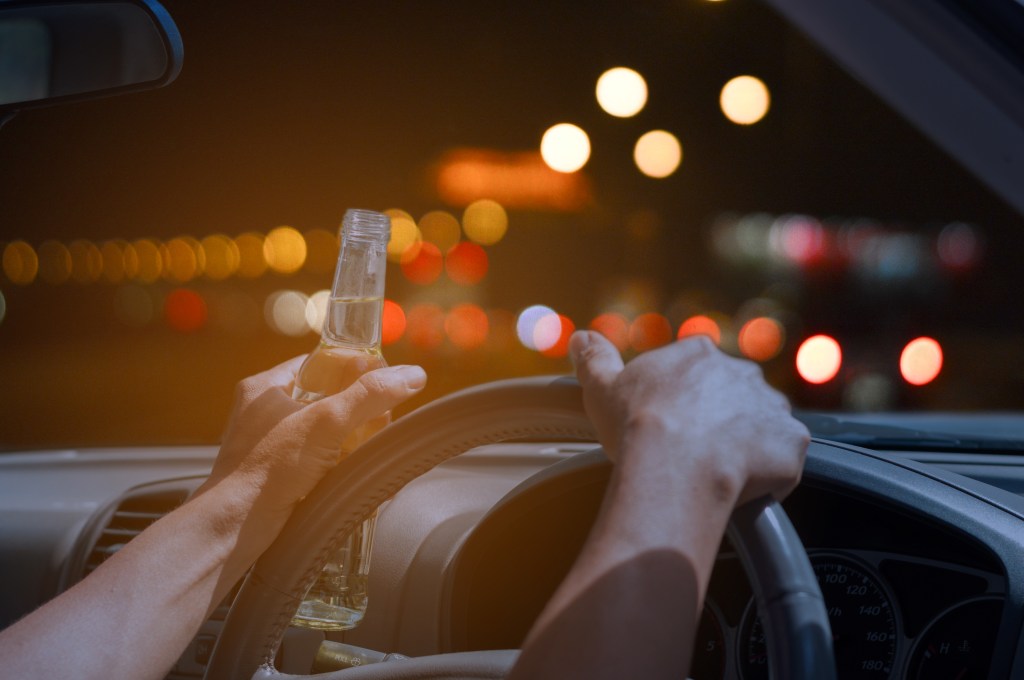
In December 2015, Montgomery County Police Officer Noah Leotta was killed by a drunk driver while working at a DUI checkpoint.[1] One year later, the Maryland General Assembly passed Noah’s Law, which requires all individuals convicted of drunk driving to install an ignition interlock system.[2] An ignition interlock system is a device that is “installed to prevent users from being able to start their vehicle after drinking alcohol.”[3] Under this law, an individual who is convicted of having a blood alcohol concentration that exceeds the legal limit of .08 will need to install the ignition interlock system for six months or forfeit their license for six months.[4] However, Rich Leotta, Noah’s father, and other advocates against drunk driving have insisted that there is a glaring loophole in the law.[5] In Maryland, individuals who drive under the influence are often given probation before judgment, which means that they are not convicted.[6] Therefore, the judge is not given the opportunity to order the individual to install an ignition interlock system.[7]
As of 2019, 67% of drunk drivers in Maryland have received probation before judgment, which means that approximately 36,000 people have served probation for drunk driving without being required to install an ignition interlock system.[8] This statistic is alarming considering that in 2020 alone, an ignition interlock system stopped 7,042 attempts at drunk driving, and in 2022, the ignition interlock program stopped 3,650 attempts.[9] Further, there are over 6,600 drunk driving crashes per year in Maryland, which on average cause 3,000 injuries and 170 deaths.[10]
Recently, the Maryland House Judiciary Committee examined the loophole outlined by Rich Leotta and his fellow advocates.[11] House Bill 105 (“HB 105”), introduced by Delegate Vanessa E. Atterbeary, aims to close the loophole by expanding Noah’s Law to apply equally to individuals who have been convicted of drunk driving and those given probation.[12] Advocates of the amendment believe that HB 105 presents an opportunity to save lives and should not be viewed as a punishment.[13] Last year, similar legislation passed unanimously in the Maryland Senate, but never made it through the House of Delegates.[14] Rich Leotta did not mince words this year, stating that, “there’s always one reason or another why this body of politics doesn’t seem to get it done… either they want to save lives or they’re going to continue to have blood on their hands if they don’t pass the legislation this year.”[15] Time will tell if 2024 is the year that the loophole is closed in Maryland.
[1] Matt Pusatory et al., Maryland House holds hearing to close DUI law loophole, WUSA9 (Feb. 22, 2024), https://www.wusa9.com/article/news/local/maryland/maryland-legislation-noahs-law-dui-loophole/.
[2] Alexus Davila & Alex Glaze, Advocates urging lawmakers to close loophole in Maryland drunk driving law, WJZ News (Feb. 21, 2024), https://www.cbsnews.com/baltimore/news/advocates-urging-lawmakers-to-close-loophole-in-maryland/. See S. 945, 2016 Gen. Assemb., 436th Sess., (Md. 2016).
[3] Intoxalock, What is an Ignition Interlock Device, https://www.intoxalock.com/ignition-interlock-devices/what-is-an-ignition-interlock-device, (last visited Mar. 11, 2024).
[4] Drunk Driving Reduction Act of 2016 (Noah’s Law), 2016 Md. Laws, ch. 512.
[5] Pusatory, supra note 1.
[6] Id.
[7] Id.
[8] Id.
[9] Moms Against Drunk Driving, Ignition Interlock Report, (2022), https://madd.org/wp-content/uploads/2023/01/2021-Ignition-Interlock-Report-FINAL-COPY.pdf.
[10] Josh Domen, Is this the year Noah Law’s loopholes closes? Activists push Maryland to prevent repeat drunk drivers, WTOP News (Feb. 13, 2024), https://wtop.com/montgomery-county/2024/02/is-this-the-year-noah-laws-loophole-closes-activists-push-maryland-to-prevent-repeat-drunk-drivers/.
[11] Pusatory, supra note 1.
[12] H.D. 105, 2024 Legis., 446th Gen. Assemb., Reg. Sess. (Md. 2024).
[13] Domen, supra note 9.
[14] Id.
[15] Id.

Mustafa Salameh is a third-year law student at the University of Baltimore School of Law and an Associate Editor for Law Forum. Mustafa received a Bachelor of Arts degree in Political Science and a minor in Middle Eastern Studies from the University of Tennessee. He previously worked as a Rule 19 Student Attorney with the Immigrant Rights Clinic and as a law clerk for Drechsler, Larkin and Walters and Ballenger and Roche. At UB, he serves as the Student Activities Director for the Student Bar Association. Upon graduation, Mustafa plans to pursue a career in Immigration Law.


 ublawforum.com
Leave a comment