

By: Dillan Moore
The Supreme Court of Maryland held that the trial court, with the assistance of the parties, must redact extended narratives admitted as statements against penal interest. State v. Smith, 487 Md. 635, 680, 321 A.3d 52, 78 (2024). The court also held that Smith adequately preserved his objection to the admission of the extended narrative despite the general nature of the objection. Id. at 684-85, 321 A.3d at 78.
Law enforcement arrested Lamont Smith (“Smith”), Tony Blake (“Blake”), and Dwight Woods (“Woods”) on August 9, 2019, during a home raid. As part of the evidence against Smith at trial, the prosecution sought to admit a lengthy police interview with Blake (“the Blake interview”). In their motion to admit the Blake interview, the State conceded that some statements within the interview only inculpated Smith but argued that they “were so interwoven” with Blake’s self-incriminating statements that the entire interview was admissible. The trial court accepted the State’s argument, admitted the Blake interview, and published it to the jury despite Smith’s objection to its admission in its entirety. Thereafter, Smith was found guilty of possession and conspiracy to distribute drugs.
Smith appealed on the grounds that the trial court had failed to follow the parsing process specified in State v. Matusky, and the Appellate Court of Maryland affirmed, finding that the trial court erred by admitting the entirety of the Blake interview and that Smith had adequately preserved his objection for appeal. The State then petitioned for certiorari, which was granted. The question before the Supreme Court of Maryland was whether the appellate court erred in finding that Smith properly preserved his objection.
The Supreme Court of Maryland began by examining an exception to the rule against hearsay: the declaration against penal interest. Smith, 487 Md. at 660, 321 A.3d at 66. In Maryland, Rule 5-804(b)(3) states declarations against penal interest are admissible when “(1) the declarant is unavailable; (2) the statement is genuinely against the declarant’s interest; and (3) the proponent demonstrates the statement’s trustworthiness via the circumstances surrounding the statement.” Id. at 661-62, 321 A.3d at 67 (citing State v. Galicia, 479 Md. 341, 359, 278 A.3d, 131 (2022)).
While hearsay statements suffer from questions of reliability, the court views declarations against penal interest as less likely to have the same faults because it is unlikely that one would make a statement that could potentially expose the declarant to criminal liability unless the statement were true. Smith, 487 Md. at 661, 321 A.3d at 67 (citing State v. Standifur, 310 Md. 3, 11, 526 A.2d 955, 959 (1987)). Simply put, it is unlikely that people would lie to make statements that are damaging to themselves. Smith, 487 Md. At 661, 321 A.3d at 67. However, the court expressed skepticism that the rationale for the rule holds true in the case of codefendants, recognizing that a codefendant may believe it is in their interest to appear cooperative with the investigation for a favorable plea bargain or to minimize the declarant’s culpability. Id. at 662, A.3d at 67-68 (citing Standifur, 310 Md. at 13, 526 A.2d at 960).
To address this potential fault with the hearsay exception for statements against penal interest, both the appellate court and Supreme Court of Maryland turned to State v. Standifur and Williamson v. United States. Smith, 487 Md. at 663-65, 321 A.3d at 68-69. In Standifur, the most critical factor of its four-part test was whether the circumstances surrounding the statement could reasonably lead a declarant to understand the statement is against the declarant’s penal interest. Id. at 664-65, 321 A.3d at 69. (citing Standifur, 310 Md. at 17, 526 A.2d at 962). In Williamson, the Supreme Court held that for a “statement” to be admitted under the exception, there must be a single discrete utterance that is directly self-inculpatory. Smith, 487 Md. at 665-66, 321 A.3d at 70 (citing Williamson v. United States, 512 U.S.594, 604 (1994)).
The court reconciled Standifur’s framework and Williamson’s definition of “statement” in State v. Matusky. Smith, 487 Md. 667, 321 A.3d at 71. There, the court incorporated Williamson into the Standifur framework, noting that Williamson’s primary addition was that the “collateral” statements were no longer assured to be admissible. Id. at 669, 321 A.3d at 71-72 (citing State v. Matusky, 343 Md. 467, 489-90, 682 A.2d 694, 704-05 (1996)). The Matusky court explained that the “final inquiry” Standifur requires is for the trial court to perform a parsing analysis to determine which statements are contrary to the declarant’s interest and which are simply made collateral during the narrative but do not incriminate the declarant. Smith, 487 Md. at 668, 321 A.3d at 71 (citing Matusky, 343 Md. at 482, A.2d at 701).
Finally, the court examined the admission of the Blake interview. Smith, 487 Md. at 670, 321 A.3d at 72. In arguing for its admission in its entirety, the State asserted that the defense waived its right to have the interview parsed because it did not request the redaction of specific parts of the Blake interview. Id. The State also argued that it was not the duty of the court to parse the analysis sua sponte and rather that it was the duty of the opponent to the offered evidence to object to portions it believed inadmissible. Id. at 670-71, 321 A.3d at 72-73.
The court refuted the State’s assertions. Smith, 487 Md. at 672, 321 A.3d at 73-74. The court held that Matusky’s test was a requirement imposed on the trial court, not one the opponent had to request the court to undertake. Id. The court clarified that the Matusky analysis is specific to extended narratives involving a mix of self-incriminating and self-neutral statements, like the Blake interview. Id. The court also examined the cases the State cited in order to counter the State’s assertion that the defense had failed to preserve its objection, saying “if there w[ere] a duty on an opponent . . . there would be at least a whiff of such duty referenced in these cases.” Id.
The court’s holding reflected the expansive nature of evidence like the Blake interview while also incorporating the concerns that self-inculpatory statements made by co-conspirators are generally less reliable than most statements against one’s own penal interest. Smith, 487 Md. at 676-77, 321 A.3d at 76-77. The court also concluded that such a holding simplifies future issues by ensuring that extensive interviews are analyzed line-by-line at the trial level, with parties having the opportunity to object to individual statements. Id. at 681, 321 A.3d at 79.
Justice Biran’s dissent argues the Majority’s holding complicates matters for the trial courts, takes up additional judicial resources, and disadvantages parties without advantage over the usual method of approaching hearsay objections. See Smith, 487 Md. at 688, 691-94, 698-700, 321 A.3d at 83-87. (Biran, J., dissenting). Justice Biran says that the Majority’s method gives trial courts the new duty to identify hearsay issues in addition to having to rule on them. Id. at 691, 321 A.3d at 85. He expresses concern that by doing so, the parties lose the freedom to not object to hearsay in situations that would benefit their position. Id. at 690, 321 A.3d at 84.
To best serve the rationale behind the exception for statements against penal interest, the Supreme Court of Maryland has given trial courts the duty to parse out interviews like Blake’s, ensuring that only statements that are truly self-incriminating are admitted. The clarity provided by the Smith holding benefits both parties and courts and should simplify proceedings in the future. Practitioners would do well to remember that while this is a duty incumbent on the court in cases like this one, they should still be prepared to advise the court on which statements the party argues should or should not be admissible. Additionally, once the parsing has occurred, parties must object to the admission of specific portions, as is the case for other hearsay statements.
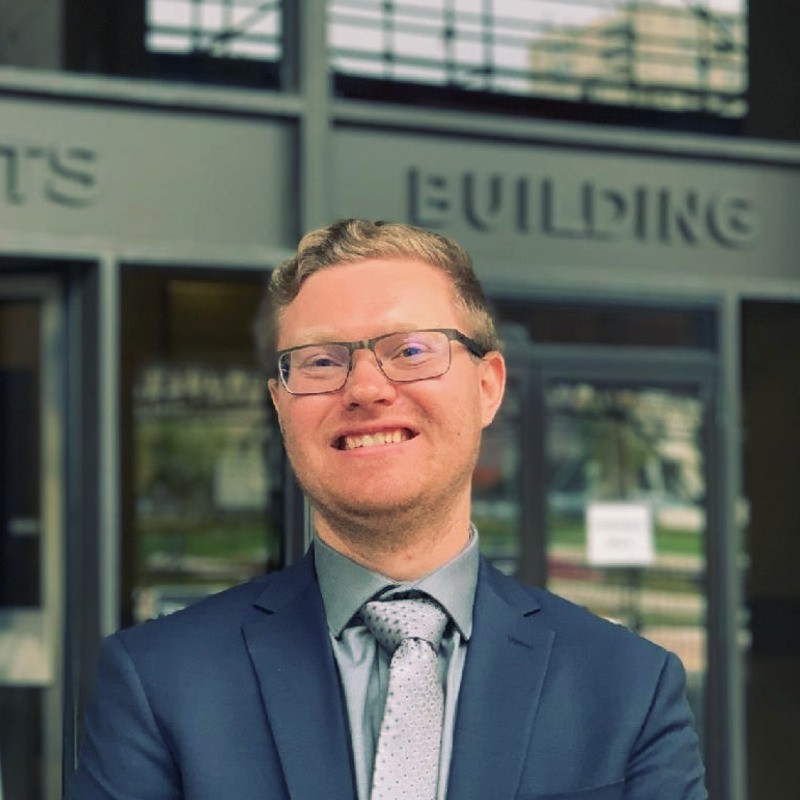
Dillan Moore is a third-year student at the University of Baltimore School of Law and serves as an Associate Editor for Law Forum. He earned his bachelor’s degree in Psychology with a minor in Biology from the University of Nevada, Reno. Dillan is currently a Law Clerk at Azrael, Franz, Schwab, Lipowitz, & Solter in Towson. After graduation, Dillan plans to return to his hometown of Reno to represent small business owners in his community.



 ublawforum.com
Leave a comment