
By: Allison Comess
The Appellate Court of Maryland held that trial courts do not abuse their discretion in admitting evidence of other acts when it helps establish key elements such as identity or motive, provided its probative value outweighs any unfair prejudice. Crawford v. State, 265 Md. App. 374, 399, 335 A.3d 176, 191 (2025). The Appellate Court further held that testimony regarding a defendant’s refusal to consent to a phone search does not automatically warrant a mistrial, provided it does not unfairly prejudice the defendant. Crawford, 265 Md. App. at 403, 335 A.3d at 193.
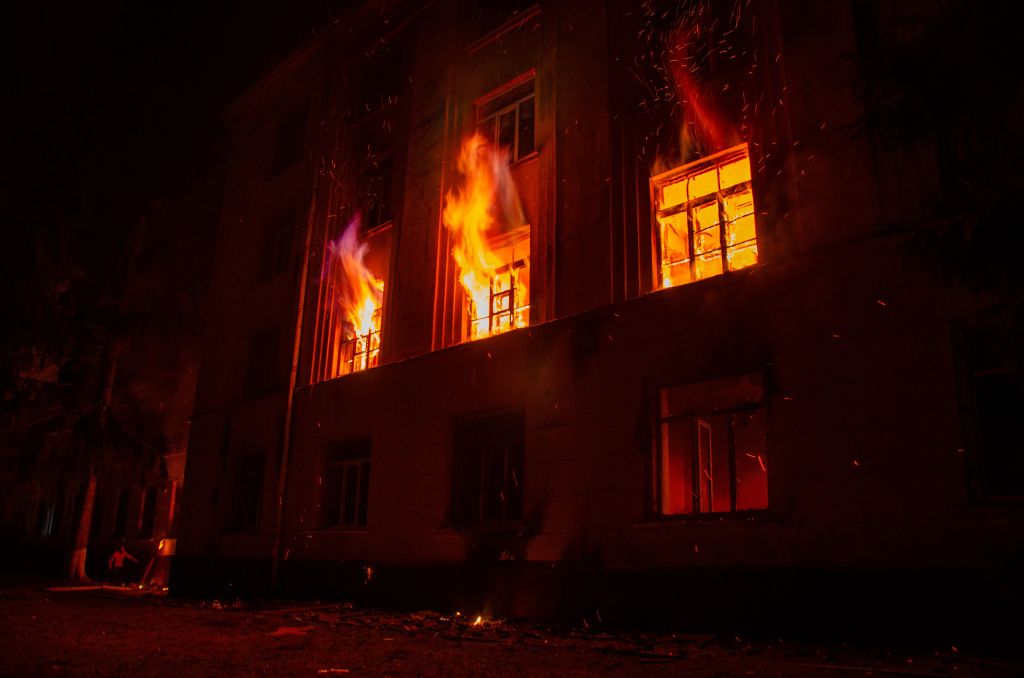
Defendant, David Michael Crawford (“Crawford”), a retired police chief, was convicted in the Circuit Court for Howard County of several offenses, including eight counts of attempted first-degree murder, three counts of first-degree arson, and one count of malicious burning related to four fires. The fires occurred at the homes of individuals who had prior personal or professional disputes with Crawford. During the investigation, police discovered a note on Crawford’s phone, called “the List,” containing names of individuals who knew Crawford and recalled minor prior grievances with him. The victims of the fires were among the individuals identified on the list.
Before trial, the State moved to admit evidence of eight other fires under Maryland Rule 5-404(b), from counties other than Howard County, arguing they were probative by identifying Crawford’s motive, common scheme, and identity. The Circuit Court for Howard County granted the motion, finding clear and convincing evidence of Crawford’s involvement and concluding that the value of the evidence outweighed the danger of prejudice. During trial, a detective testified that Crawford did not permit him to search his phone. His Defense Counsel objected, and he moved for a mistrial. The Circuit Court for Howard County found that the detective’s answer was a “blurt.” The jury found Crawford guilty and he was sentenced to two consecutive life terms plus an additional consecutive seventy-five years.
On appeal, the Appellate Court of Maryland considered two questions: (1) whether the trial court abused its discretion in admitting the evidence of the eight other fires and (2)whether the trial court abused its discretion by refusing to grant Crawford’s motion for mistrial after testimony that Crawford refused to consent to a search of his cellphone. Crawford,265 Md. at 380, 335 A.3d at 179.
In answering the first question presented, the Appellate Court of Maryland examined the circuit court’s application of the three-part test established in State v. Faulkner. Crawford,265 Md. at 391, 335 A.3d at 185 (citing State v. Faulkner, 314 Md. 630, 552 A.2d 896 (1989)). Under the Faulkner test, evidence is admissible under Maryland Rule 5-404(b) if: (1) if is specially relevant, (2) the defendant’s involvement is proved by clear and convincing evidence, and (3) the probative value is not substantially outweighed by the risk of unfair prejudice. Id. at 393, 335 A.3d at 187. The court emphasized that Rule 5-404(b) reflects Maryland’s exclusionary approach, designed to prevent convictions based on a defendant’s character rather than the charged conduct. Id.
Applying the test, the Appellate Court of Maryland agreed with the Circuit Court that the other fires were admissible to establish Crawford’s identity and motive. Id. at 399, 335 A.3d at 191. The List was admitted because the court deemed it relevant, as it contained names associated with the other eight fires. See id. at 396, 335 A.3d at 188. All of the fires shared distinctive similarities: they occurred late at night, were ignited with gasoline, and began in garages or driveways. Id. at 391, 335 A.3d at 186. The court noted that arson is “likely to be a clandestine offense” typically established through circumstantial evidence, and that limiting the State’s ability to link entries from the List to actual fires would diminish its probative value in identifying Crawford as the perpetrator. Id. at 395-96, 335 A.3d at 188 (citing Nasim v. State, 34 Md. App. 65, 76, 366 A.2d 70 (1976)). Thus, the Appellate Court found that the circuit court did not abuse its discretion in admitting the evidence of the eight fires. Id. at 399-400, 335 A.3d at 191.
Next, the court addressed the Circuit Court’s denial of Crawford’s motion for mistrial. See Crawford,265 Md. at 400-05, 335 A.3d at 191-94. Crawford argued that the circuit court erred in admitting the detective’s “blurt” testimony that he did not consent to a cellphone search and, as a result, abused its discretion in denying his subsequent motion for a mistrial. Id. at 400-01, 335 A.3d at 191. The Appellate Court of Maryland reconsidered the five Guesfeird factors identified by the circuit court in order to evaluate whether the “blurt” testimony warranted a mistrial. Id. at 401-02, 335 A.3d at 192 (citing Guesfeird v. State, 300 Md. 653, 480 A.2d 800 (1984)). The Guesfeird factors the court considered were (1) whether the statement was repeated or isolated, (2) whether the evidence was solicited by the State, (3) whether the witness testifying is the principal witness; (4) whether the witness’s credibility was central, and (5) whether other overwhelming evidence exists. Id.
The Appellate Court of Maryland reviewed the Circuit Court’s decision for abuse of discretion, emphasizing that “a mistrial is an ‘extraordinary remedy’ that is necessary only when ‘the prejudice to the defendant is so substantial that [the defendant is] deprived of a fair trial.’” Crawford,265 Md. at 402, 335 A.3d at 192. The Appellate Court found that none of the Guesfeird factors weighed in favor of granting a mistrial. Id. at 403, 335 A.3d at 193. The court reasoned that because the detective was only one of twenty-nine witnesses called by the State, he was not a principal witness, and the credibility of any individual witness was not pivotal to the prosecution’s case against Crawford. Id. Thus, the Appellate Court found that the “extraordinary remedy” of a mistrial was therefore not warranted. Id. at 403, 335 A.3d at 193. The Appellate Court of Maryland affirmed Crawford’s convictions. Id. at 405, 335 A.3d at 194.
The decision in Crawford v. State provides Maryland practitioners with a concrete application of the Faulkner test and illustrates how trial courts should evaluate the probative value and prejudicial effect of other crimes that are introduced in cases built largely on circumstantial proof. By affirming the admission of eight other fires, the Appellate Court of Maryland emphasized that the number of prior acts is not dispositive so long as the acts are clearly connected to the charged conduct and serve a non-propensity purpose such as identity or motive. In addition, the court’s analysis of the “blurt” testimony confirms that mistrials remain an extraordinary remedy. Taken together, the opinion clarifies both the scope of Rule 5-404(b) and the demanding standard for mistrial, reinforcing the significant discretion Maryland trial courts have in managing evidentiary rulings.

Allison Comess is a second-year day student at the University of Baltimore School of Law, where she serves as the Symposium and Alumni Editor for Law Forum. Allison earned her bachelor’s degree from the University of Maryland, College Park in Government and Politics, with a minor in Rhetoric. At the University of Baltimore, Allison is the Co-President of the Jewish Law Student Association and a UB Leads Mentor. Previously, Allison interned at the Baltimore City State’s Attorney’s Office in the Post Conviction Litigation Unit. Allison currently works as a Law Clerk at Rollins, Smalkin, Richards & Mackie. She expects to graduate May 2027






Leave a comment