
By: Whitney Dudley
The Supreme Court of Maryland held that videos can be authenticated if there is sufficient evidence to convince a reasonable juror that the video is what it is purported to be. Mooney v. State, 487 Md. 701, 708, 321 A.3d 91, 95 (2024). Additionally, the court held that videos can be authenticated, under Maryland Rule 5-901(b)(4), by circumstantial evidence. Id. at 708, 321 A.3d at 95.Lastly, the court held that traditional methods of authentication can be combined with circumstantial evidence to authenticate videos. Id. at 708, 321 A.3d at 95.
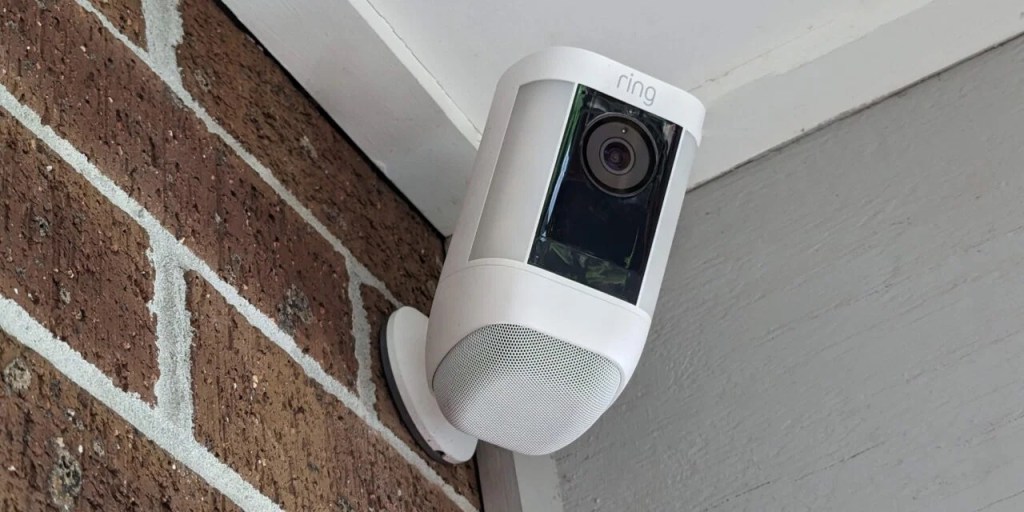
In September 2021, Christopher Mooney (“Mooney”) engaged in a verbal altercation with Joshua Zimmerman (“Zimmerman”). Zimmerman was sitting in his car and opened his door believing that Mooney was walking towards the driver’s side. Zimmerman got out of the vehicle, looked around, but did not see Mooney. As Zimmerman got back into his vehicle, he was shot in the back. A video was retrieved from a resident’s doorbell camera.
The Circuit Court for Baltimore City, by jury, found Mooney guilty of second-degree assault, reckless endangerment, and gun offenses. The Appellate Court of Maryland affirmed. Mooney appealed to the Supreme Court of Maryland, which granted certiorari. The Supreme Court of Maryland addressed the following issues: (1) whether the “reasonable juror” test applies to the authentication of video evidence; (2) whether videos can be authenticated through circumstantial evidence; and (3) whether video evidence can be authenticated through a combination of methods versus one single method. Mooney, 487 Md. at 701, 321 A.3d at 91. The first and third issues were of first impression. Id. at 701, 321 A.3d at 91.
The court held that videos can be authenticated by the “reasonable juror” test if there is sufficient evidence to convince a reasonable juror, by a preponderance of evidence, that the video is what it is purported to be. Id. at 708, 321 A.3d at 95. In adopting the “reasonable juror” test, the court relied on three points: (1) alignment with federal law; (2) its’ opinions in Sublet v. State and Sample v. State; and (3) the plain language of Mayland Rule 5-901. Id. at 718-19, 321 A.3d at 100-01 (first citing Sublet v. State, 442 Md. 632, 113 A.3d 695 (2015); and then citing Sample v. State, 468 Md. 560, 228 A.3d 171 (2020)).
Beginning with issue one, the court adopted the “reasonable juror” test for social media evidence in 2015 relying on the Second Circuit’s holding that Federal Rule of Evidence 901 is satisfied by the “reasonable juror” test. Mooney, 487 Md. at 718-19, 321 A.3d at 101 (citing United States v. Vayner, 769 F.3d 125 (2d Cir. 2014)). The court then explained how it utilized the “reasonable juror” test in Sublet to authenticate social media evidence. Mooney, 487 Md. at 719, 321 A.3d at 101. Five years later, the court clarified in Sample that the preponderance of evidence standard applies to the “reasonable juror” test. Id. at 719, 321 A.3d at 100. Finally, the court stated that Maryland Rule 5-901(b)(4) does not contain language allowing for the disposal of evidence based on the absence of certain information. Id. at 719, 321 A.3d at 100. This opening in the rule has allowed for the adoption of the “reasonable juror” test. Id.
Moving to the second issue, the court held that video footage can be authenticated, under Maryland Rule 5-901(b)(4), by circumstantial evidence. Mooney, 487 Md. at 708, 321 A.3d at 95. Traditionally, courts have authenticated video evidence by using the “pictorial testimony” and “silent witness” methods. Id. at 720-21, 321 A.3d at 102. “Pictorial testimony” is when a witness with personal knowledge testifies to what a video depicts; the “silent witness” theory is when a witness testifies to how a video was retrieved. Id. at 721, 321 A.3d at 102. The court emphasized that while the “pictorial testimony” and “silent witness” theories are often used, those are not the only two methods available. Id. at 729, 321 A.3d at 107. Additionally, the plain language of Maryland Rule 5-901(b)(4), allows for evidence to be authenticated through circumstantial evidence. Id. at 729, 321 A.3d at 107. Lastly, to determine whether circumstantial evidence should extend to video authentication, the court analyzed other jurisdictions’ holdings on video authentication issues. Id. at 726-29, 321 A.3d at 105-07. In conclusion, the court held that circumstantial evidence can authenticate video footage. Mooney, 487 Md. at 708, 321 A.3d at 95.
For the final issue, the court held that traditional theories of authentication can be combined with circumstantial evidence to authenticate video footage. Mooney, 487 Md. at 708, 321 A.3d at 95. Using similar analysis as issue two, the court explains that the traditional methods of authentication are not exhaustive. Id. at 729, 321 A.3d at 107. Further, these methods may be combined with circumstantial evidence. Id. at 730, 321 A.3d at 108. In analyzing this issue, the court turned to the firsthand testimony that Zimmerman did have and the temporal proximity of the relevant events that Zimmerman testified to. Id. at 732, 321 A.3d at 109.
Although Zimmerman was unable to testify with personal knowledge of who shot him, he was able to personally testify to the moments in the video leading up to the shooting and those immediately after. Mooney, 487 Md. at 731, 321 A.3d at 109. This testimony satisfied Rule 5-901(b)(1) – a traditional method of authentication. Id. at 730-31, 321 A.3d at 108-09. Since Zimmerman did not have knowledge of who shot him but could personally testify to the events immediately before and after, the court found that the shooting could be authenticated through temporal proximity. Id. at 731, 321 A.3d at 109-10. The court considered the temporal proximity to be circumstantial evidence. Id. at 731, 321 A.3d at 109. Additional circumstantial evidence that was considered is the detective’s testimony that supported that the video was retrieved from an independent party immediately following the shooting. Id. at 733, 321 A.3d at 110. The court held that the personal knowledge of Zimmerman could be combined with the circumstantial evidence to authenticate the video footage. Id. at 734, 321 A.3d at 110.
Chief Justice Fader concurred stating that although Mooney did not allege that the video was altered, artificial intelligence (“AI”) is creating evidentiary concerns that may require the court to adjust their rules in the future. Mooney, 487 Md. at 735, 321 A.3d at 111 (Fader, C.J., concurring).
In his dissent, Justice Gould expresses a similar concern regarding AI, further stating that allowing circumstantial evidence to authenticate video footage has lowered the bar of authentication. Id. at 736, 321 A.3d at 111 (Gould, J., dissenting). While Justice Gould agrees with the majority that circumstantial evidence may be sufficient to authenticate video evidence, as well as the traditional authentication methods, he does not agree that the circumstantial evidence here was sufficient to satisfy the “reasonable juror test.” Id. at 739-44, 321 A.3d at 113-16.
The Mooney decision supports that videos from personal devices will likely continue to be successfully admitted into evidence. Mooney has the potential to be harmful and helpful. On one end, there is the potential that convictions based on video evidence could alleviate traffic in courts due to plea deals. However, on the other end, Mooney increases the risk of manipulated evidence being admitted. AI poses a true risk to the integrity of courts’ admissibility decisions. Courts must be vigilant of video evidence objections and challenges to avoid miscarriages of justice. AI videos mislead people daily. Eventually, the court will likely have to determine a test that considers the negative effects of AI in order to protect the liberty of potentially innocent people.

Whitney is a second-year evening student at the University of Baltimore School of Law, where she also serves as a first-year Staff Editor for Law Forum. She balances her academic pursuits with working full time as a paralegal gaining invaluable hands on experience in the legal field. She earned her undergraduate degree in Legal Studies at the University of Baltimore. This foundation fueled her passion for the law. She is eager to bridge the gap between practical application and academic theory as she progresses towards her J.D
 ublawforum.com
Leave a comment