
By: Michael Zelley*
I. Introduction.
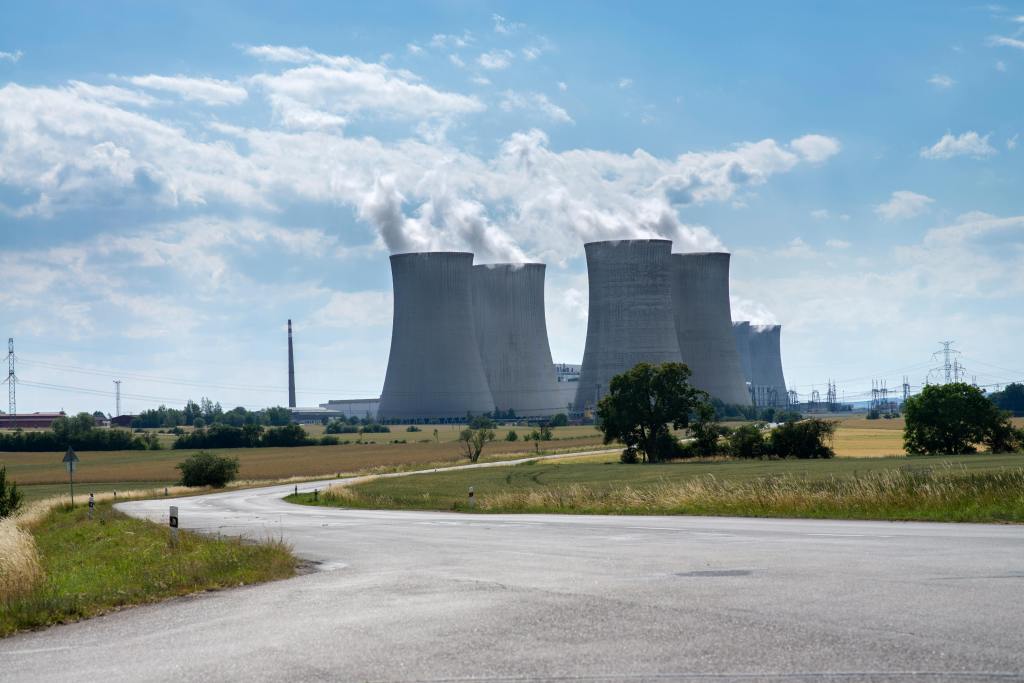
Nuclear power stands at a critical turn in Maryland’s energy future, as the state grapples with unprecedented growth in energy demand driven by rapid data center development and broader electrification initiatives.[1] While nuclear power represents one of humanity’s most sophisticated methods for energy production, offering remarkable efficiency and reliability, Maryland’s legislative framework has only recently begun to meaningfully support its development and integration into the State’s broader energy strategy.[2] The state’s sole nuclear facility, the Calvert Cliffs Nuclear Power Plant (“Calvert Cliffs”), has provided clean and efficient energy to Maryland’s power grid for over fifty years, yet until recently, efforts to expand the State’s nuclear capacity were largely constrained by limited statutory support.[3]
This Comment argues that although Maryland has taken significant legislative steps in recent years to modernize its energy framework and enable new nuclear development, its statutory scheme remains incomplete, limiting the State’s ability to fully meet its energy and decarbonization goals.[4] While recent legislation begins to incorporate nuclear energy into Maryland’s broader energy planning framework, its exclusion from the State’s core clean energy policy creates a structural inconsistency—one that can be remedied through the adoption of a clean energy standard that fully integrates nuclear power without compromising safety or regulatory oversight.[5] Specifically, this Comment proposes amending Maryland’s Renewable Portfolio Standard to adopt an expanded Clean Energy Standard that incorporates nuclear generation into the State’s primary compliance framework while preserving existing credit-based market mechanisms.[6] By aligning the State’s procurement mechanisms with its compliance obligations, such a framework resolves the current statutory disconnect between recognizing nuclear power as carbon-free and excluding it from the State’s core clean energy regime.[7] Although critics argue that incorporating nuclear energy into clean energy standards may distort renewable energy markets or increase costs to ratepayers,[8] these concerns can be addressed within the existing statutory framework through careful calibration of compliance mechanisms and credit structures.[9]
This Comment proceeds as follows, Part II explores the fundamental principles of nuclear power generation, including its benefits, and traces its historical development nationally and in Maryland.[10] Part III analyzes Maryland’s recent legislative successes and remaining shortcoming in addressing nuclear energy within its evolving statutory framework.[11] Finally, Part IV advocates for the adoption of a clean energy standard, drawing from successful approaches in other states, as the necessary next step to align Maryland’s energy policy with its long-term reliability and decarbonization objectives.[12]
II. Historical Development.
A. What is Nuclear Power?
Nuclear power is one of the most sophisticated methods for energy production ever devised.[13] The process begins at the atomic level, where the basic building blocks of all matter contain tremendous potential energy within their nuclear bonds.[14] These atoms, which comprise every known substance, consist of three essential components: protons, neutrons, and electrons.[15] The protons and neutrons are clustered together in the atom’s nucleus, while electrons orbit this central core in patterns that help determine the atom’s chemical properties and behavior.[16]
The key to nuclear power generation lies in the manipulation of these atomic structures, specifically through a process known as nuclear fission.[17] During nuclear fission, the nucleus of an atom is deliberately split apart, releasing the immense energy contained within its nuclear bonds, that is, the bonds between the protons and neutrons.[18] This process primarily utilizes uranium atoms, which have proven particularly suitable for controlled nuclear fission reactions.[19] When a neutron collides with an intact uranium nucleus, it causes the nucleus to split, releasing several products: additional neutrons, radiation, and significant amounts of heat energy.[20] These newly liberated neutrons then continue the process by colliding with other uranium atoms, creating a nuclear chain reaction.[21]
The practical application of this atomic process occurs within nuclear power plants, where the chain reaction is carefully controlled.[22] These facilities employ sophisticated engineering systems to manage the rate of nuclear fission, ensuring that the reaction proceeds at an optimal rate to generate the desired amount of heat energy.[23] This controlled release of atomic energy represents a remarkable achievement in energy technology, allowing humans to tap into the fundamental forces that bind matter together.[24] The heat generated through this process is then converted into electrical energy through traditional power generation methods.[25]
Nuclear power’s sophisticated atomic process not only demonstrates humanity’s mastery over fundamental physical forces, but also delivers remarkable practical benefits as an energy source.[26] The controlled nuclear fission reactions that occur within nuclear power plants harness atomic energy with unprecedented efficiency, allowing facilities to operate at maximum capacity more than 92% of the time throughout the year, far surpassing the reliability of both fossil fuel and renewable alternatives.[27] The careful engineering that enables the precise management of nuclear chain reactions translates into extended operational periods, with plants typically requiring refueling only once every two years, making nuclear power an exceptionally dependable energy source.[28]
This consistent operation, rooted in the fundamental process of nuclear fission, positions nuclear power as America’s leading source of emissions-free electricity, preventing the release of more than 471 million metric tons of carbon annually, while simultaneously supporting nearly half a million domestic jobs with competitive wages.[29] The sophisticated technology that harnesses the immense energy within atomic bonds not only demonstrates remarkable scientific achievement, but also provides a practical solution for meeting our growing energy needs while advancing national security interests by maintaining energy independence.[30] Despite these well-established advantages, nuclear energy has historically occupied an uncertain position within state energy policy, often recognized for its reliability and low emissions yet excluded from the primary statutory mechanisms used to promote clean energy development.[31]
B. Benefits of Nuclear Power.
i. Land Use Considerations.
The land use efficiency of nuclear power represents a compelling consideration in favor of expanding Maryland’s nuclear energy capacity.[32] Nuclear power can generate massive amounts of electricity while requiring remarkably little land, particularly when compared to other carbon-free energy sources, like wind and solar.[33] As documented in a comprehensive 2021 land use analysis, a typical nuclear power plant producing 1000 megawatts for electricity requires approximately 1.3 square miles of land.[34] To put this in perspective, this single nuclear facility can power roughly 750,000 homes while occupying a footprint smaller than Baltimore Washington International Airport and the University of Maryland’s campus in College Park.[35]
The concentrated nature of nuclear power generation provides distinct advantages from an environmental impact perspective.[36] While renewable energy sources like wind and solar require a large environmental footprint across vast geographic areas, nuclear plants concentrate their land use impact to a single, smaller location.[37] This concentrated footprint helps minimize habitat fragmentation and other ecological impacts.[38] Furthermore, nuclear power plants can often be sited on previously developed industrial land, whereas utility-scale renewable installations frequently require development of undisturbed natural areas.[39] These siting advantages, combined with nuclear power’s superior space efficiency, make it an optimal choice for minimizing the land use impacts of Maryland’s clean energy transition.[40]
ii. Job Creation.
Nuclear facilities serve as powerful employment engines, generating substantial direct and indirect job opportunities that persist for decades.[41] Each operational nuclear plant employs between 500 and 800 permanent workers, with salaries averaging fifty percent higher than other electricity generation sources.[42] During peak construction periods, a single reactor project can employ up to nine thousand workers.[43] More importantly, these positions span diverse skill levels and backgrounds.[44] The employment multiplier effect is also significant, with every one hundred nuclear plant jobs creating an additional 250 positions in the broader economy.[45]
iii. Grid Reliability.
From an infrastructure reliability perspective, nuclear power provides unique grid stability benefits that complement Maryland’s renewable energy goals.[46] As the United States Department of Energy explains, energy reliability requires power systems that can withstand “instability, uncontrolled events, cascading failures, or unanticipated loss of system components.”[47] Nuclear plants deliver this stability through consistent baseload generation that operates at approximately 90% capacity.[48] Unlike intermittent renewable sources, nuclear facilities can provide reliable power regardless of weather conditions or time of day, helping prevent disruptions that could impact critical infrastructure, such as hospitals and emergency services.[49]
iv. Cost Considerations.
While nuclear power projects require substantial upfront capital investments, various financing mechanisms and long-term operational economics make these costs manageable and ultimately cost effective.[50] The Biden Administration’s recent nuclear initiatives, including significant United States Department of Energy loan guarantee commitments, demonstrate the availability of federal support for nuclear development.[51] These initial investments are offset by nuclear power’s favorable long-term operational profile, as facilities maintain remarkably low fuel and operational costs, with variable operational and maintenance expenses constituting only approximately 13% of total costs.[52] Additionally, nuclear facilities’ potential operational lifespan of up to 80 years enables multi-generational returns that justify the upfront expenditure.[53]
This combination of available financing support and favorable long-term economics helps mitigate concerns about nuclear power’s initial capital requirements.[54] The positive characteristics of nuclear power are directly relevant to modern energy policy, where increasing demand and decarbonization goals require both reliability and emissions reductions.[55] As a result, the extent to which statutory frameworks recognize and incorporate nuclear energy has significant implications for a state’s ability to meet its long-term energy objectives.[56]
C. Potential Negatives Associated with Nuclear Power.
As with any industrial process, nuclear power is not free from concerns and criticisms.[57] The first concern is the possibility of a nuclear accident.[58] The most extreme example occurred on April 26, 1986, at the nuclear power facility at Chernobyl, Ukraine, which at the time was under the control of the Soviet Union.[59] The accident at Chernobyl killed 28 employes within 4 months of the accident and contaminated large areas of land with radioactive material.[60] While the accident was a terrible tragedy, the reality is that with the safety protocols in place and improvements in reactor design, the probability of another Chernobyl level accident occurring is extremely low.[61]
The second concern is what to do with the radioactive waste produced by nuclear reactors.[62] The most radioactive waste is the spent fuel assemblies, which can remain hazardous for thousands of years.[63] This concern, however, could be effectively eliminated through new technology, such as fast reactors.[64] From 1984 to 1994 the United States government at the Argonne National Laboratory worked on developing a fast reactor known as the Integral Fast Reactor (“IFR”).[65] Even though the IFR was on track to address the major criticisms of nuclear power, the program was cancelled abruptly approximately 2 years before completion due to political pressure.[66]
While it is important to acknowledge these downsides to nuclear power, it is equally important to acknowledge that they have the ability to be reduced or eliminated with advancements in technology.[67] These concerns have historically shaped the regulatory treatment of nuclear energy, leading to a statutory focus on safety, oversight, and risk mitigation rather than on facilitating development or integrating nuclear power into broader energy policy frameworks.[68]
D. History of Nuclear Power Nationally and Globally.
Nuclear power began in 1942, when Nobel Prize-winning physicist Dr. Enrico Fermi successfully achieved the first controlled nuclear chain reaction using Chicago Pile-1, the world’s first nuclear reactor.[69] In 1946, the United States’ Atomic Energy Act was passed, creating the framework for governmental regulation of the newly privatized nuclear power industry, and the legislation established the first government regulatory body tasked with overseeing nuclear power.[70] The act made it federal policy to develop and use atomic energy “to promote world peace, improve the general welfare, increase the standard of living, and strengthen free competition in private enterprise.”[71] The law created programs for research and development, information control, and promoting the aforementioned policies.[72] The 1946 act also created a comprehensive licensing system for civilian nuclear power, requiring companies to obtain commission approval before engaging in any nuclear-related activities.[73]
Federal support for nuclear power technology led to the establishment of several research facilities.[74] On December 20, 1951, the Argonne National Laboratory successfully converted nuclear power to electrical energy for the first time.[75] The further development of nuclear power inspired the Atoms For Peace program, announced in December 1953 by President Eisenhower, which sought to promote nuclear power by demonstrating its benefits.[76] President Eisenhower’s vision for the world was to “tak[e] nuclear materials ‘out of the hands of soldiers . . . (and placing them) into the hands of those who will . . . adapt (them) to the arts of peace.’”[77]
The next step in nuclear power development came with the first major change to federal regulation of the nuclear power industry came with the Atomic Energy Act of 1954.[78] This change granted even more access to technological information regarding nuclear power to the private energy sector.[79] The 1954 act also granted the Atomic Energy Commission broad authority to establish and enforce safety standards and regulations to protect health and minimize dangers in nuclear activities.[80] This new policy led to the first residential area powered by nuclear energy in 1955, in Arco, Idaho.[81] followed by the first civilian nuclear power plant two years later.[82]
Over the next two decades, nuclear power continued to expand, demonstrating its value through multiple energy crises.[83] However, in March of 1979, the Three Mile Island Nuclear Generating Station (“Three Mile Island”) suffered the most severe nuclear incident in American history.[84] Even though the accident resulted in no adverse effects on the surrounding population, including zero deaths or injuries,[85] public sentiments shifted severely towards an anti-nuclear stance.[86] The political ramifications of the accident at Three Mile Island were evidenced by the termination of funding for other nuclear power projects, such as the Clinch River Breeder Reactor project.[87]
Public fears were crystalized in 1986, when a nuclear reactor at Chernobyl in the Soviet Union experienced the “worst nuclear accident in history.”[88] This incident and its aftermath led to a rapid decline in new nuclear development, and even the dismantling of some active nuclear plants, regardless of the massive financial loss caused by those decisions.[89] This decline in new generation capacity has resulted in 96% of the United States’ current nuclear capacity being developed between 1970 and 1990, including Maryland’s nuclear power station.[90]
Overall, from the first commercial nuclear power plan coming online until the late 1980s, nuclear power enjoyed a meteoric rise in its development.[91] This rise was halted in its tracks by the fears brought about by the accident at Chernobyl.[92] As technology has substantially mitigated the basis of those fears, Maryland can look to the initial growth period for inspiration of how nuclear power can be expanded rapidly and safely.[93] This historical trajectory, marked by rapid early expansion followed by decades of stagnation driven by public perception and regulatory caution, continues to shape the modern legal and policy landscape surrounding nuclear energy, including the limited role it plays in contemporary state energy frameworks.[94]
E. History of Nuclear Power in Maryland.
Maryland’s experience with nuclear power reflects both the promise of long-term, carbon-free energy generation and the regulatory, political, and economic barriers that have ultimately limited its development to a single facility.[95] On May 8, 1975, Unit 1 at Calvert Cliffs brought nuclear power to Maryland’s power grid.[96] This marked the beginning of a near 50 year stretch of bringing clean and efficient energy to Maryland.[97] Unfortunately, Calvert Cliffs has remained the only source of nuclear energy in the state since.[98]
In May 1967, the Baltimore Gas and Electric Company (“BG&E”) announced its plan to build a nuclear power plant in southern Maryland.[99] At the time, it was one of the largest planned commercial nuclear power plants in the country.[100] Funding for the project was provided not by the government, but through a private securities sale by BG&E.[101] The legislature’s only contribution to the project was passing a bill that permitted BG&E to pay inventory taxes at the Calvert County rate, vice the Baltimore City rate.[102] While this methodology resulted in the completion of the project, public bond measures in place of corporate securities could have kept project costs lower.[103]
The process from inception to commercial operation was not smooth, as new federal environmental laws created some unforeseen problems.[104] At the time, a group of scientists were concerned that environmental impacts of Calvert Cliffs were not properly considered in the licensing process under the National Environmental Policy Act of 1969 (“NEPA”).[105] The court agreed that the licensing rules of the Atomic Energy Commission did not meet their mandate under NEPA, therefore, the entire regulatory process had to be retooled.[106] This led to Calvert Cliffs being the first plant to produce an environmental impact statement, which delayed licensing by a year.[107]
Today, Calvert Cliffs remains the only nuclear power source in Maryland.[108] This status has remained unchanged, notwithstanding that Calvert Cliffs generates approximately 34% of Maryland’s electricity and constitutes the state’s largest source of carbon-free energy.[109] Unfortunately, nuclear development was stymied not just in Maryland, but nationwide, after the accident at Three Mile Island in 1979.[110]
However, in 2005, Calvert Cliffs was considered to be a strong candidate as the potential site for a new reactor.[111] The proposal made it well into the planning and design phase, projecting a 20 to 35% increase in Maryland’s nuclear capacity.[112] Not only was the new reactor set to massively increase Maryland’s carbon-free energy production, but its new design would recycle water instead of continuously flowing new bay water, further reducing environmental concerns about nuclear energy.[113] Unfortunately, poor federal energy loan practices led Constellation Energy[114] to walk away from the project after expending $880 million towards the project.[115] This left Maryland without an expansion of clean energy and the loss of thousands of jobs projected to result from the project.[116] As of today, there are no nuclear projects under review by Maryland, continuing to leave Calvert Cliffs as Maryland’s only nuclear power facility for the foreseeable future.[117]
F. Regulatory Framework.
The nuclear power industry is primarily regulated by the federal government through the Nuclear Regulatory Commission (“NRC”) with state and local government playing a relatively minor role.[118] The NRC is the entity responsible for licensing nuclear reactors.[119] The NRC utilizes two distinct frameworks for the licensing of commercial nuclear power facilities.[120] The traditional pathway involves sequential approvals, while an alternative streamlined process established in 1989 offers a more integrated approach.[121]
The traditional sequential framework begins with the issuance of a construction permit, contingent upon the applicant’s submission of three critical components: initial safety evaluations, environmental impact assessments, and economic documentation, including antitrust considerations.[122] Following the NRC’s technical review and documentation of safety parameters, the process mandates public engagement through hearings overseen by the Atomic Safety and Licensing Board, comprised of three members with both legal and technical expertise.[123] Subsequently, as construction progresses, operators must secure an operating license through additional submissions, detailing final design specifications and updated environmental considerations.[124] This process can take well over a decade from start to finish.[125]
The 1989 reforms introduced an innovative combined license mechanism that consolidates construction and operational authorizations.[126] This modernized approach incorporates two preliminary approval instruments: the early site permit, which validates location suitability for up to two decades, and the standard design certification, which endorses reactor designs for fifteen-year intervals.[127] One notable efficiency of the combined license pathway lies in its ability to incorporate previously approved early site permits and standardized designs.[128] While this framework expedites the process by preventing the re-examination of settled matters, it maintains regulatory rigor through mandatory completion of specified inspections and acceptance criteria.[129] Throughout both pathways, the NRC emphasizes public participation through structured meetings and mandatory hearings.[130]
The NRC maintains a comprehensive regulatory structure governed primarily through Chapter I of Title 10 of the Code of Federal Regulations.[131] The NRC supplements these regulations with detailed guidance documents, particularly through its Regulatory Guide system, [132] with Division 1 focusing on power reactor operations.[133] Key guidance includes addressing personnel qualifications and specifically detailing combined license applications.[134] Furthermore, the NUREG series[135] provides regulatory guidance, extensive technical documentation, and specialized knowledge catalogs addressing specific reactor types.[136] This multi-tiered regulatory approach ensures consistent standards while maintaining flexibility through regular public comment periods announced in the Federal Register, demonstrating the NRC’s commitment to both rigorous oversight and public engagement.[137] As a result, states retain limited authority over the safety and operation of nuclear facilities, but maintain primary control over energy policy decisions, including whether and how nuclear energy is incorporated into electricity markets and clean energy frameworks.[138]
However, Maryland plays a very small part in the direct regulation of nuclear power in the state, as primary authority remains vested in the federal government.[139] Consistent with this framework, Maryland historically sought to strike a balance by “encourag[ing] the constructive uses of radiation” while also “protect[ing] the public from unnecessary and harmful exposure resulting from a nuclear incident.”[140] Even within this limited framework, Maryland is required to maintain its standards in accordance with those established by the Nuclear Regulatory Commission (“NRC”).[141] The majority of statutorily mandated regulations have focused on the potential impact and control of radiation, which is overseen by the Radiation Control Advisory Board.[142]
This historically narrow focus on radiation management, rather than energy development, left Maryland with few mechanisms to actively promote nuclear power as part of its energy strategy.[143] The General Assembly’s recent enactment of the Next Generation Energy Act reflects a notable shift in legislative posture from regulating the risks of nuclear technology to affirmatively recognizing its role in the State’s energy future.[144] Indeed, the Next Generation Energy Act declares that “it is the policy of the State to encourage the development of clean, carbon-free nuclear power,” marking a departure from prior statutory language and signaling a more active role for Maryland in facilitating nuclear energy development.[145] Against this backdrop, Maryland’s recent legislative developments warrant closer examination, both from the progress they represent and the gaps that remain.[146]
III. Issue – Maryland has Failed to Fully Address its Growing Energy Demands and Clean Energy Commitments within its Current Statutory Framework.
The Maryland General Assembly has increasingly recognized the growing strain on the State’s electric grid driven by rising demand and evolving generation needs.[147] In response, the General Assembly has taken meaningful steps to address these challenges through recent legislation.[148] In particular, the enactment of the Next Generation Energy Act reflects a deliberate shift towards a more active, state-directed approach to energy planning, including the facilitation of new nuclear generation resources.[149] At the same time, Maryland’s existing clean energy framework remains oriented toward renewable generation and does not fully incorporate all carbon-free energy sources.[150] As a result, while recent legislative efforts represent significant progress, they reveal a broader structural gap between the State’s energy objectives and the statutory mechanisms available to them.[151] More specifically, Maryland’s statutory framework simultaneously recognizes nuclear energy as a carbon-free and reliability-critical resource while excluding it from the State’s primary clean energy compliance mechanism.[152]
A. Emerging Energy Demands.
Maryland faces unprecedented growth in energy demand, driven primarily by the rapid expansion of data center[153] development and broader electrification initiatives.[154] Maryland’s power infrastructure requires significant upgrades to meet these emerging needs.[155] As noted by State Senator Brian Feldman, who chairs the Maryland General Assembly’s Education, Energy, and the Environment committee, Maryland’s baseline power demands continue to rise while traditional generation sources, particularly fossil fuels, are being retired.[156] This creates a fundamental supply-demand mismatch that must be addressed through comprehensive planning.[157] While these baseline challenges are substantial on their own, they are only intensified by the growing prospect of large-scale data center development.[158]
The scale of an anticipated data center development presents a particularly acute challenge for Maryland’s power grid.[159] PJM Interconnection (“PJM”), which coordinates electricity movement across multiple states, including Maryland, estimates that new data centers in Maryland and Virginia will require up to 7,500 megawatts of electricity.[160] This massive increase in demand coincides with the deactivation of more than 11,000 megawatts of power generation across PJM’s grid.[161] The confluence of these factors–rising demand and decreasing generation capacity–creates urgent infrastructure needs that must be addressed through coordinated policy action.[162]
These pressures are not abstract, they are being realized in concrete, high-demand projects already underway.[163] The Quantum Loophole data center development in Frederick County, for example, illustrates the magnitude of individual projects driving this demand growth.[164] This single campus is expected to require up to 800 megawatts of power by mid-2027, with long-term growth projections reaching 3,000 megawatts by 2033.[165] To put this in perspective, a 20 megawatt data center consumes as much electricity as approximately 16,500 homes; at full projected capacity, the Quantum Loophole data center could require power equivalent to roughly 2.47 million homes.[166]
While this represents a substantial electrical load, the appropriate response is to meet the increased demand, not cancel the project.[167] This is because economic impact studies estimate that once complete, the campus will generate approximately $41 million in annual county tax revenue and nearly $197 million in state tax revenue, while employing 1,700 people.[168] This demonstrates that while data center expansion will place a strain on the power grid, the financial incentives for Maryland should promote governmental action on the grid.[169]
These trends underscore the increasing need for reliable generation resources capable of meeting sustained, large-scale demand.[170] Intermittent renewable sources alone are unlikely to satisfy these requirements, particularly as Maryland’s energy consumption becomes more concentrated and continuous.[171]
B. Maryland’s Legislative Response.
Maryland’s enactment of the Next Generation Energy Act (the “Act”) represents a significant shift in the State’s approach to energy policy, moving away from a largely market-reliant framework toward a more active, state-directed role in electricity generation planning and procurement.[172] In doing so, the General Assembly responded directly to increasing concerns regarding grid reliability, rising demand, and the limitations of existing statutory mechanisms to ensure the development of sufficient generation capacity.[173] In effect, the Act creates a hybrid procurement and financing regime that substitutes state-directed contracting for traditional reliance on wholesale electricity markets.[174]
At the center of this shift, the Act establishes a new statutory framework authorizing the Public Service Commission to conduct competitive solicitation and approve long-term contracts for the development of dispatchable energy generation, large capacity resources, and nuclear energy generation projects.[175] This framework is implemented through the creation of a new subtitle governing energy solicitation and procurement, which sets forth procedures for bid evaluation, project approval and contract administration.[176] By formalizing these processes, the Act enables the State to directly influence the type, timing, and scale of new generation resources brought onto the grid.[177]
The Act also contains several provisions specifically designed to facilitate nuclear energy development, marking a departure from Maryland’s historically limited engagement with nuclear power as an energy resource.[178] Among these provisions, the legislation authorizes the Public Service Commission to approve orders necessary to enable the financing of nuclear energy generation projects under specified conditions.[179] In addition, the Act requires electric companies to procure nuclear energy and associated zero-emission credits through structured mechanisms, including escrow-based arrangements, thereby creating a pathway for nuclear generation to participate in Maryland’s electricity market.[180] By incorporating zero-emission credits and long-term pricing mechanisms, the Act represents Maryland’s first meaningful effort to assign explicit economic value to the environmental and reliability attributes of nuclear generation.[181]
These nuclear-specific provisions reflect a broader legislative recognition that existing market structures may be insufficient, standing alone, to support the development of capital-intensive, dispatchable, and carbon-free generation resources.[182] Rather than relying exclusively on wholesale market signals, the Act introduces state-facilitated mechanisms designed to reduce financial risk and provide greater certainty for developers of new generation capacity.[183]
In addition to its generation-focused provisions, the Act addresses the growing impact of large-load customers, including data centers, on Maryland’s electric system.[184] To that end, the legislation requires electric companies to develop specialized rate structures for customers with substantial energy demands, including those with projected loads exceeding 100 megawatts.[185] The Act further directs the Public Service Commission to consider cost allocation and system impacts when approving such rate structures, reflecting a legislative intent to ensure that the costs associated with serving large-load customers are not borne by residential ratepayers.[186]
Taken together, the Act marks a meaningful evolution in Maryland’s energy policy, transitioning from a framework focused primarily on regulating existing resources to one that actively facilitates the development, procurement, and integration of new generation capacity.[187] Despite this expanded statutory framework, the Act operates largely outside Maryland’s existing Renewable Portfolio Standard, leaving nuclear energy enabled through procurement mechanisms but excluded from the State’s primary clean energy compliance structure.[188]
C. Clean Energy Commitments.
Maryland’s legislature has enacted aggressive clean energy planning policy in the Climate Solutions Now Act (“CSNA”).[189] CSNA “requir[es] the State to reduce statewide greenhouse gas emissions through the use of various measures.”[190] The ultimate requirement is that by 2045, Maryland is at net-zero greenhouse gas emissions.[191] While CSNA recognizes nuclear as one of six greenhouse gas free energy sources, it takes a major back seat to other sources of clean energy.[192] For example, the legislation creates 8 working groups, and the nuclear industry is only included on one.[193] Notably, while CSNA recognizes nuclear energy as a greenhouse gas-free resource, it does not incorporate nuclear generation into Maryland’s primary compliance mechanisms for achieving its clean energy targets.[194]
CSNA has been described as creating “the most ambitious greenhouse gas reduction goals in the nation.”[195] The plan is admirable but places the bulk of its focus on “[s]caling renewable infrastructure, including solar, wind and battery power.”[196] Maryland government officials have acknowledged that this plan will require a massive upscaling of Maryland’s power infrastructure.[197] The reality of the current state of energy in Maryland is that most clean energy must be imported from less densely populated areas of the country.[198] These current plans prioritize sources of clean energy that will not be able to meet Maryland’s exponentially growing energy needs.[199] Maryland will be able to meet these goals only through policies that aggressively expand nuclear power capacity.[200]
D. The Remaining Structural Gap.
Maryland’s Renewable Portfolio Standard (“RPS”) remains the State’s primary statutory mechanism for achieving its clean energy objectives, requiring electricity supplies to procure a specified percentage of their energy from qualifying renewable sources.[201] Although the RPS has played a central role in driving the development of renewable energy resources, its structure reflects a policy framework that prioritizes renewable generation rather than all carbon-free sources of electricity.[202] As a result, nuclear energy is excluded from the State’s core compliance regime, despite its zero-emission characteristics and existing contribution to Maryland’s clean energy supply.[203]
This exclusion creates a fundamental disconnect between Maryland’s stated clean energy commitments and the statutory mechanism designed to achieve them.[204] As discussed above, Maryland has committed to achieving net-zero greenhouse gas emissions and has recognized nuclear power as a carbon-free energy source within its broader policy framework.[205] However, because nuclear generation does not qualify under the RPS, it does not generate renewable energy credits and therefore cannot be used by electricity suppliers to satisfy their statutory obligations.[206]
The consequences of this structural exclusion are particularly significant in light of the increasing energy demand and the State’s recent legislative efforts.[207] While the Act established more mechanisms to facilitate the development and procurement of nuclear energy those mechanisms operate outside the RPS and therefore do not directly contribute to compliance with Maryland’s clean energy mandates.[208] This results in a fragmented policy framework in which nuclear energy is simultaneously recognizes as necessary, enabled through procurement, yet excluded from the State’s primary system of incentives.[209]
In practice, the RPS functions as the State’s primary driver of investment in new energy resources, as compliance obligations create sustained demand for qualifying generation through the renewable energy credit market.[210] By excluding nuclear energy from this framework, Maryland effectively directs investment toward the intermittent renewable resources while failing to provide comparable incentives for a dispatchable, carbon-free generation.[211] This imbalance is particularly problematic given the reliability challenges associated with large-scale renewable deployment and the increasing need for firm generation capacity to support grid stability.[212]
Accordingly, Maryland’s current statutory scheme reflects on a partial integration of nuclear energy, one that enables its development at the margins while excluding it from the State’s core clean energy framework.[213] As energy demand continues to rise and the State pursues increasingly ambitious decarbonization goals, this structural inconsistency becomes more pronounced, undermining the effectiveness of both its energy policy and its climate commitments.[214]
Under these considerations, this Comment proposes the adoption of a Clean Energy Standard as a means of resolving this inconsistency and aligning Maryland’s statutory framework with its long-term energy and environmental objectives.[215]
IV. Solution: Integrating Nuclear Energy into Maryland’s Clean Energy Framework will Bridge the Gap in Maryland’s Energy Policy.
The foregoing analysis demonstrates that Maryland’s energy policy has evolved in meaningful ways to address increasing demand and facilitate new generation resources, including nuclear power.[216] Yet, despite this progress, the State’s statutory framework remains internally inconsistent, as its primary clean energy compliance mechanism continues to exclude a category of generation it otherwise recognizes as essential.[217] This disconnect is not merely theoretical; it has direct implications for Maryland’s ability to meet both its energy and decarbonization objectives.[218] Part IV turns to potential solutions, examining how other states have resolved similar structural gaps and proposing a clean energy standard as a means of aligning Maryland’s policy goals with its regulatory framework.[219]
A. Lessons from Other States’ Clean Energy Frameworks.
States that have transitioned from traditional RPS to broader clean energy standards provide useful models for addressing the structural limitations identified in Maryland’s current statutory framework.[220] Unlike conventional RPS regimes, which limit compliance to renewable sources, these frameworks adopt a more expansive definition of qualifying energy sources, incorporating a wider range of carbon-free generation technologies.[221] This shift reflects a growing recognition that achieving deep decarbonization requires policies that are able to meet emissions goals and growing energy demands.[222]
Washington’s Clean Energy Transformation Act (“CETA”) provides a particularly illustrative example of this approach.[223] Under CETA, Washington has committed to transitioning its electricity supply to one hundred percent carbon-neutral by 2030 and one-hundred percent carbon-free by 2045, while simultaneously emphasizing the need to maintain system reliability and reasonable costs for consumers.[224] Importantly, the statute defines qualifying resources to include “non–emitting electric generation,” a category that extends beyond traditional renewable energy sources and encompasses a broader range of carbon-free technologies.[225] By structuring compliance around carbon emissions rather than resource type, Washington’s framework aligns its regulatory mechanisms with its decarbonization objectives.[226]
Michigan has similarly moved toward a more inclusive statutory framework through its Clean and Renewable Energy and Energy Waste Reduction Act, which integrates both renewable and clean energy considerations within its energy standards.[227] Under this framework, utilities are required to have a clean energy portfolio of at least 80% by 2035 and 100% by 2040.[228] Although Michigan retains a renewable energy credit portfolio system, the addition of a clean energy standard vastly incorporates non-renewable clean energy sources into its long-term plans.[229]
These examples demonstrate that states have begun to move beyond the limitations of renewable only compliance regimes, adopting frameworks that better reflect the full spectrum of carbon-free generation technologies.[230] In doing so, they have addressed the precise structural issue present in Maryland’s current statutory scheme: the misalignment between clean energy goals and the mechanisms used to achieve them.[231] By incorporating broader categories of non–emitting generation into their compliance frameworks, these states ensure that policy incentives align with the objective of reducing greenhouse gas emissions, rather than privileging specific resource types.[232]
B. A Clean Energy Standard for Maryland.
Maryland’s existing framework, by contrast, continues to separate its recognition of nuclear energy as a carbon-free resource from its primary clean energy compliance mechanism.[233] While the Act takes meaningful steps to facilitate nuclear development through procurement and financing mechanisms, it does not incorporate nuclear energy into RPS or any equivalent compliance framework.[234] As a result, Maryland’s statutory scheme lacks the integrated structure present in states like Washington, where policy goals and compliance mechanisms are aligned around carbon neutrality rather than resource classification.[235]
Adopting a clean energy standard that incorporates nuclear power would bring Marland back into alignment with these emerging state models, ensuring that its statutory framework reflects both its decarbonization commitments and the realities of modern energy demand.[236] Such an approach would not displace renewable energy development but rather complement it by enabling a more balanced and reliable portfolio of carbon-free generation resources.[237] In this way, Maryland can build upon the foundation established by the Next Generation Energy Act and complete the transition toward a fully integrated clean energy policy framework.[238]
A viable path forward is illustrated by the clean energy standard legislation introduced during the 2025 legislative session, commonly referred to as the ENERGIZE Maryland Act.[239] Although the bill did not ultimately pass, it provides a useful structural model for reform by proposing to replace Maryland’s RPS with a broader Clean Energy Standard that recognizes a wider range of carbon-free generation resources.[240]
At its core, the proposed legislation redefines the State’s compliance framework by shifting from a renewable-only standard to one based on carbon neutrality, allowing utilities to satisfy their obligations through a portfolio of qualifying clean energy resources rather than a fixed subset of renewable technologies.[241] Under such a framework, nuclear energy would be recognized alongside wind, solar, and other zero-emission sources, thereby eliminating the current statutory exclusion that limits its role in Maryland’s clean energy strategy.[242]
Integrating nuclear energy into the State’s primary compliance mechanism would also resolve the fragmentation identified in Part III by aligning Maryland’s procurement and compliance frameworks.[243] Whereas the Act enables the development of nuclear generation through state-facilitated procurement, a Clean Energy Standard would create a sustained demand signal for that generation, ensuring that newly developed resources are not only constructed but also economically viable over the long term.[244]
Moreover, a Clean Energy Standard would better position Maryland to meet its statutory climate commitments by ensuring that all carbon-free generation contributes towards compliance obligations.[245] By aligning incentives with emissions outcomes rather than resource categories, the State can pursue a more efficient and effective decarbonization strategy that reflects both technological realities and evolving energy demands.[246] In this respect, the failure of the ENERGIZE Maryland Act does not undermine the viability of a Clean Energy Standard, but rather underscores the need for continued legislative refinement.[247] The framework it proposed demonstrates that Maryland already possesses both the institutional capacity and the statutory foundation necessary to implement such a system.[248] The remaining task is not to design an entirely new policy, but to complete the integration of nuclear energy into the State’s existing clean energy framework.[249]
C. Aligning Maryland’s Energy Policy with its Objectives.
The adoption of a Clean Energy Standard in Maryland can be accomplished through targeted amendments to the State’s existing RPS.[250] Because Maryland’s current statutory framework already establishes supplier obligations, credit-based compliance mechanisms, and Public Service Commission oversight the transition to a Clean Energy Standard does not require the creation of a new regulatory system, but rather the modification of existing definitions and compliance criteria.[251] This approach preserves institutional continuity while aligning the State’s energy policy with its decarbonization objectives.[252]
The most significant changes would occur in Section 7-701, which defines the categories of qualifying energy resources.[253] Under a Clean Energy Standard, the existing definitions of “Tier 1 Renewable Source” and “Tier 2 Renewable Source” would be replaced or supplemented with a broader classification of “clean energy resources,” organized into tiers based on emissions characteristics and system reliability.[254] Tier 1 would consist of a preferred zero-emission renewable resources, including solar, wind, offshore wind, geothermal, ocean energy, and small hydroelectric generation.[255] Tier 2 would encompass firm, dispatchable zero-emission resources, including nuclear energy and large-scale hydroelectric generation, reflecting their distinct role in maintaining grid reliability and providing continuous baseload power.[256] Tier 3 would include transitional or low-carbon resources that, while renewable, are not strictly zero-emission, such as certain biomass and waste-to-energy technologies currently recognized under Maryland law.[257] This revised tier structure preserves Maryland’s existing emphasis on renewable development while incorporating nuclear energy in a manner that reflects both its emissions profile and its operational characteristics.[258]
Section 7-703, which established Maryland’s portfolio standard and compliance requirements would be amended to reflect a Clean Energy Standard based on carbon-free generation rather than renewable resource classification.[259] Under this framework, electricity suppliers would be required to achieve a fully clean electricity supply by 2045, with interim compliance targets structured to ensure a balanced and reliable generation mix.[260] Specifically, the statute could require that at least 50% of electricity sales be derived from Tier 1 resources and at least 30% from Tier 2 resources, with the remaining portion satisfied by any qualifying clean energy resources.[261] This structure maintains a strong commitment to renewable energy development while ensuring that sufficient dispatchable, zero-emission generation is available to support system reliability.[262]
The credit-based compliance system established under Section 7-704 would remain largely intact but would require modification to accommodate the new tiered system proposed above.[263] Under the current statutory framework, incentives for new wind are built in through increased value of wind and methane power generation established after 2003.[264] The Act has already introduced a parallel mechanism for incentivizing new nuclear through long-term pricing structures and zero-emission credit-like constructs.[265] As such, there is no need to provide increased incentives for nuclear under the revised credit system.[266]
A Clean Energy Standard would formalize and integrate these mechanisms by maintaining renewable energy credits for Tier 1 resources while incorporating a complementary system of clean energy credits for zero emission credits for Tier 2 resources, including nuclear energy.[267] Under this unified framework, electricity supplies would satisfy their compliance obligations through a combination of Tier-specific credits, reflecting both the emissions characteristics and operational roles of different generation sources.[268] This approach allows utilities to meet their obligations without specifically generating with that source, making it easier for the state to meet its overall energy goals.[269]
Integrating these credit structures within Subtitle 7 would also resolve the fragmentation identified in Part III by aligning Maryland’s procurement and compliance frameworks.[270] While the Act enables the development of nuclear generation through state-facilitated procurement and long-term pricing arrangements, those mechanisms currently operate outside the RPS.[271] A Clean Energy Standard would extend the value of nuclear generation beyond initial procurement by creating an ongoing compliance demand for its environmental attributes, thereby supporting long-term project viability.[272]
V. Conclusion.
Maryland stands at a pivotal moment in its energy future, facing record growth in power demands that calls for bold and decisive action in expanding nuclear capacity.[273] While the State has taken meaningful steps to modernize its energy framework through the enactment of the Act, its statutory scheme remains incomplete.[274] By facilitating nuclear development through procurement and financing mechanisms without integrating nuclear energy into its primary compliance framework, Maryland has created a structural disconnect between its energy policy objectives and the tools used to achieve them.[275]
As this Comment has demonstrated, this disconnect is not merely a theoretical inconsistency, but a practical limitation on Maryland’s ability to meet both its reliability needs and its decarbonization commitments.[276] The State’s increasing energy demand, combined with its ambitious climate goals, requires a framework that supports both the expansion of renewable energy and the inclusion of firm, dispatchable, carbon-free generation.[277] While recent legislation reflects a growing recognition of nuclear energy’s importance, its continued exclusion from the RPS prevents it from playing a fully integrated role in Maryland’s clean energy strategy.[278]
The adoption of a Clean Energy Standard offers a straightforward and achievable path forward.[279] By amending Maryland’s existing statutory framework to incorporate nuclear energy into its primary compliance mechanism, the State can align its procurement efforts with its long-term policy objectives while preserving the market-based structures already in place.[280] Such a reform would not displace renewable energy development, but rather complement it, ensuring that Maryland’s energy portfolio reflects both the realities of modern demand and the requirements of long-term decarbonization.[281]
Ultimately, Maryland does not need to reinvent its energy policy; it needs to complete it.[282] By integrating nuclear energy into its clean energy framework, Maryland can transition from a partially aligned system to a fully coherent one, capable of supporting economic growth, maintaining grid reliability, and achieving its climate goals.[283]
* Michael Zelley is a 3L at the University of Baltimore School of Law. Prior to law school, Michael spent 9 years as a nuclear propulsion plant operator in the Navy. Michael would like to thank his wife, Professor Daniel Hatcher, and the University of Baltimore Law Forum staff, all of whom made this accomplishment possible.
[1] See Gabrielle Lewis, Maryland Data Center Summit Draws Hundreds, Aims to Educate Different Stakeholders, Loudoun Times-Mirror (Sept. 4, 2024), https://www.loudountimes.com/0local-or-not/2state/maryland-data-center-summit-draws-hundreds-aims-to-educate-different-stakeholders/article_0ec5cd20-6b1e-11ef-b8b7-c738800c7770.html (on file with the University of Baltimore Law Forum).
[2] See Nuclear Explained, U.S. Energy Info. Admin. (Aug. 21, 2023), https://www.eia.gov/energyexplained/nuclear (on file with the University of Baltimore Law Forum) [hereinafter Nuclear Explained]; see also Nuclear Power is the Most Reliable Energy Source and It’s Not Even Close, U.S. Dep’t of Energy: Off. of Nuclear Energy (Mar. 24, 2021), https://www.energy.gov/ne/articles/nuclear-power-most-reliable-energy-source-and-its-not-even-close (on file with the University of Baltimore Law Forum) [hereinafter U.S. Dep’t of Energy: Off. of Nuclear Energy] (discussing the reliability of nuclear power); Advantages and Challenges of Nuclear Energy, U.S. Dep’t of Energy: Off. of Nuclear Energy (June 11, 2024), https://www.energy.gov/ne/articles/advantages-and-challenges-nuclear-energy (on file with the University of Baltimore Law Forum) [hereinafter Advantages and Challenges of Nuclear Energy] (discussing the advantages of nuclear power); Next Generation Energy Act, 2025 Md. Laws chs. 625-26 (creating a comprehensive energy procurement framework that, for the first time, enables state-facilitated development and financing of new nuclear generation).
[3] See Constellation Energy, Calvert Cliffs Clean Energy Center 1 (Jan. 2023), https://www.constellationenergy.com/content/dam/constellationenergy/pdfs/fact-sheets/Calvert_Cliffs_Clean_Energy_Center_Fact_Sheet.pdf (on file with the University of Baltimore Law Forum); see also Md. Power Plant Rsch. Program, Md. Dep’t of Nat. Res., Nuclear Power in Maryland: Status and Prospects 2, 6, 10-11, 83 (2020) [hereinafter Md. Power Plant Rsch. Program] (discussing the status and challenges of nuclear power in Maryland).
[4] See infra Parts II-V.
[5] See infra Parts III-IV.
[6] See infra Part IV.
[7] See infra Part IV.
[8] Oppose SB 434 Empowering New Energy Resources and Green initiatives Toward a Zero-Emission (ENERGIZE) Act of 2025: Hearing on S.B. 434 Before the S. Comm. on Educ., Energy, and the Env’t, 2025 Leg., 447th Sess. (Md. 2025) (statement of Food & Water Watch).
[9] See infra Part IV.
[10] See infra Part II.
[11] See infra Part III.
[12] See infra Part IV.
[13] See Nuclear Explained, supra note 2.
[14] Id.
[15] Id.
[16] Id. For a more thorough explanation of the atomic structure, see Atomic structure, Austl. Radiation Prot. & Nuclear Safety Agency, https://www.arpansa.gov.au/understanding-radiation/what-is-radiation/ionising-radiation/atomic-structure (on file with the University of Baltimore Law Forum) (last visited Mar. 26, 2026).
[17] Nuclear Explained, supra note 2.
[18] Id.
[19] Id.
[20] Id.
[21] Id.
[22] See id. Nuclear fission in nature is extremely rare; it is the structural design of nuclear reactors that permits a sustained fission reaction to occur. See id.; see also Laura Gil, Meet Oklo, the Earth’s Two-billion-year-old only Known Natural Nuclear Reactor, Int’l Atomic Energy Agency (Aug. 10, 2018), https://www.iaea.org/newscenter/news/meet-oklo-the-earths-two-billion-year-old-only-known-natural-nuclear-reactor (on file with the University of Baltimore Law Forum) (explaining how it was once believed to be impossible for nuclear fission to occur naturally).
[23] Nuclear Explained, supra note 2.
[24] Id.
[25] Id.; Electrical power is generated by spinning a magnet inside a coil of wire using a turbine driven by a moving fluid. Electricity explained, U.S. Energy Info. Admin, https://www.iaea.org/newscenter/news/meet-oklo-the-earths-two-billion-year-old-only-known-natural-nuclear-reactor (on file with the University of Baltimore Law Forum) (last updated Oct. 1, 2023).
[26] See U.S. Dep’t of Energy: Off. of Nuclear Energy, supra note 2.
[27] Id. (listing the percent of the year that various energy sources produce maximum power: Nuclear (92.5%), Geothermal (74.3%), Natural Gas (56.6%), Hydropower (41.5%), Coal (40.2%), Wind (35.4%), Solar (24.9%)).
[28] Id.; In contrast, coal powered plants have to be continuously fueled, with power plants typically maintaining a stockpile of 90 to 120 days’ worth of coal on hand. Jonathan Church, Coal-fired power plants are well-stocked this year, U.S. Energy Info. Admin. (July 23, 2025), https://www.eia.gov/todayinenergy/detail.php?id=65787 (on file with the University of Baltimore Law Forum).
[29] Advantages and Challenges of Nuclear Energy, supra note 2 (explaining how much carbon would be released into the atmosphere if a non-clean source of energy was used to generate the same amount of power as nuclear currently produces).
[30] Nuclear Explained, supra note 2; see Advantages and Challenges of Nuclear Energy, supra note 2.
[31] See infra Part III.
[32] See Elizabeth Wachs & Bernard Engel, Land Use for United States Power Generation: A Critical Review of Existing Metrics with Suggestions for Going Forward, 143 Renewable & Sustainable Energy Rev. 1, 1 (2021).
[33] See id. at 7-8.
[34] Id. at 8.
[35] See id.; BWI Airport Facts & Figures, BWI Airport, https://bwiairport.com/flying-with-us/about-bwi/facts-figures (on file with the University of Baltimore Law Forum) (last visited Apr. 10, 2026) (listing the size of the airport at 3,596.3 acres (~5.6 square miles)); Introduction to the University of Maryland, Univ. of Md., https://academiccatalog.umd.edu/graduate/introduction-university-maryland/ (on file with the University of Baltimore Law Forum) (last visited Apr. 10, 2026) (explaining that the university is situated on 1,300 acres (~2 square miles)).
[36] See Wachs & Engel, supra note 32, at 8.
[37] Id.
[38] Id.
[39] See J. Hansen et al., Investigating Benefits and Challenges of Converting Retiring Coal Plants into Nuclear Plants 71 (Idaho Nat’l Lab’y, INL/RPT-22-67964 Rev. 1, 2022) (finding that 80% of retired coal plant sites were suitable locations for conversion to nuclear power generation); Wachs & Engel, supra note 32, at 1 (“Renewable-energy systems have the potential to vastly increase the land devoted to energy thus drastically changing landscapes and habitats.”).
[40] See J. Hansen et al., supra note 39, at 71; Wachs & Engel, supra note 32, at 1.
[41] Jobs: A Single Nuclear Power Plant Creates More Jobs Than Any Other Type of Energy Generation Facility, Nuclear Energy Inst.: Advantages, https://www.nei.org/advantages/jobs (on file with the University of Baltimore Law Forum) (last visited Nov. 3, 2024) [hereinafter Jobs].
[42] Id.
[43] Id.
[44] Id.
[45] Id.
[46] SeeOff. of Energy Efficiency & Renewable Energy, Energy Reliability and Resilience, U.S. Dep’t of Energy, https://www.energy.gov/eere/energy-reliability-resilience (on file with the University of Baltimore Law Forum) (last visited Nov. 3, 2024) [hereinafter Energy Reliability and Resilience].
[47] Id.
[48] Nadira Barkatullah & Ali Ahmad, Current Status and Emerging Trends in Financing Nuclear Power Projects, 18 Energy Strategy Rev. 127, 132 (2017).
[49] Energy Reliability and Resilience, supra note 46.
[50] See Barkatullah & Ahmad, supra note 48, at 127.
[51] Press Release, Joseph R. Biden, The Whitehouse Briefing Room, Fact Sheet: Biden-Harris Administration Announces New Steps to Bolster Domestic Nuclear Industry and Advance America’s Clean Energy Future (May 29, 2024), https://www.whitehouse.gov/briefing-room/statements-releases/2024/05/29/fact-sheet-biden-harris-administration-announces-new-steps-to-bolster-domestic-nuclear-industry-and-advance-americas-clean-energy-future (on file with Author).
[52] Barkatullah & Ahmad, supra note 48, at 128.
[53] Id. at 127.
[54] Id.
[55] See Int’l Energy Agency, Nuclear Power in a Clean Energy System 3 (Trevor Morgan & Caren Brown eds., 2019) (discussing the importance of nuclear power in clean energy transitions).
[56] See id. at 4-5 (“Without nuclear investment, achieving a sustainable energy system will be much harder.”).
[57] See Advantages and Challenges of Nuclear Energy, supra note 2 (discussing challenges of nuclear power).
[58] Id.
[59] Backgrounder on Chernobyl Nuclear Power Plant Accident, U.S. Nuclear Regul. Comm’n, https://www.nrc.gov/reading-rm/doc-collections/fact-sheets/chernobyl-bg#:~:text=The%20accident%20released%20massive%20amounts%20of%20radioactive,of%20Belarus%2C%20the%20Russian%20Federation%2C%20and%20Ukraine (on file with the University of Baltimore Law Forum) (last updated Apr. 4, 2024) [hereinafter Backgrounder on Chernobyl].
[60] Id.
[61] Id.
[62] Advantages and Challenges of Nuclear Energy, supra note 2.
[63] Nuclear power and the environment, U.S. Energy Info. Admin., https://www.eia.gov/energyexplained/nuclear/nuclear-power-and-the-environment.php (on file with the University of Baltimore Law Forum) (last visited Mar. 26, 2026).
[64] Jeffrey Donovan, Shrinking nuclear waste and increasing efficiency for a sustainable energy future, 61-3 IAEA Bulletin 14, 14-15 (Sept. 2020), https://www.iaea.org/sites/default/files/2025-09/cleanenergy_0.pdf (on file with the University of Baltimore Law Forum).
[65] Charles E. Till & Yoon Il Chang, Plentiful Energy: The Story of the Integral Fast Reactor 1 (John Ackerman et al. eds., 2011), https://anl.box.com/s/y4meh5nse77r3b2to3lwwp2rzna7xtve (on file with the University of Baltimore Law Forum).
[66] Id. at 47.
[67] Advantages and Challenges of Nuclear Energy, supra note 2.
[68] See id.
[69] American Experience, Meltdown at Three Mile Island: Timeline of Nuclear Technology, PBS, https://www.pbs.org/wgbh/americanexperience/features/three-nuclear-technology (on file with the University of Baltimore Law Forum) (last visited Jan. 3, 2025) [hereinafter PBS]. While the purpose of Chicago Pile-1 was the development of a nuclear weapon, the technological knowledge gained was instrumental in the development of nuclear power. Louise Lerner, The first nuclear reactor, explained, Univ. of Chi., https://news.uchicago.edu/explainer/first-nuclear-reactor-explained (on file with the University of Baltimore Law Forum) (last updated Dec. 2025).
[70] Lerner, supra note 69; History, U.S. Nuclear Regul. Comm., https://www.nrc.gov/about-nrc/history#:~:text=Before%20the%20NRC%20was%20created,of%20commercial%20nuclear%20power%20possible (on file with the University of Baltimore Law Forum) (last updated Feb. 20, 2025).
[71] 42 U.S.C.A. § 2011 (West 1992).
[72] 42 U.S.C.A. § 2013 (West 1992).
[73] Atomic Energy Act of 1946, ch. 724, 60 Stat. 755 (1946).
[74] Lerner, supra note 69.
[75] Id.
[76] PBS, supra note 69.
[77] Id.
[78] Id.
[79] Id.
[80] Atomic Energy Act of 1954, ch. 1073, 68 Stat. 919 (1954).
[81] PBS, supra note 69. This was a demonstration of the ability of nuclear power to be used for civilian purposes and only lasted approximately one hour. Press Release, U.S. Atomic Energy Comm., Idaho Town Gets Atomic Power and Light in Nuclear Power Demonstration (Aug. 12, 1955), https://www.ne.anl.gov/About/reactors/borax3/index.shtml (on file with the University of Baltimore Law Forum).
[82] PBS, supra note 69 (“The Sodium Reactor Experiment at Santa Susana, California becomes the first civilian nuclear power unit to go on-line. The unit continued to generate power until 1966.”).
[83] Id.
[84] Off. of Nuclear Energy, 5 Facts to Know About Three Mile Island, U.S. Dep’t of Energy: Off. of Nuclear Energy (May 4, 2022), https://www.energy.gov/ne/articles/5-facts-know-about-three-mile-island#:~:text=Experts%20determined%20that%20the%20approximately,plant%20workers%20or%20surrounding%20public (on file with the University of Baltimore Law Forum) [hereinafter 5 Facts to Know About Three Mile Island].
[85] Id.
[86] PBS, supra note 69.
[87] Id.
[88] Id. The accident at Chernobyl occurred when testing caused a runaway reaction leading to a steam explosion. Backgrounder on Chernobyl, supra note 51. The accident was caused by a combination of poor reactor designs, lack of proper procedures and controls, lack of competent staff, and lack of backup safety systems. See id. (explaining the concepts learned from the Chernobyl accident).
[89] PBS, supra note 69.
[90] Most U.S. Nuclear Power Plants Were Built Between 1970 and 1990, U.S. Energy Info. Admin. (Apr. 27, 2017), https://www.eia.gov/todayinenergy/detail.php?id=30972 (on file with the University of Baltimore Law Forum); see also Deep Dive: Maryland’s Nuclear Future, Md. Ass’n. of Counties (Oct. 9, 2025), https://conduitstreet.mdcounties.org/2025/10/09/deep-dive-maryland-nuclear-future/#:~:text=Maryland’s%20nuclear%20experience%20centers%20on,its%20most%20reliable%20power%20producers (on file with the University of Baltimore Law Forum) (“Maryland’s nuclear experience centers on a single facility: the Calvert Cliffs Nuclear Power Plant in Calvert County. Commissioned between 1975 and 1977, the two-reactor facility remains the state’s only nuclear station and one of its most reliable power producers.”).
[91] See supra notes 60-90 and accompanying text.
[92] See supra notes 79-91 and accompanying text.
[93] See supra notes 60-84 and accompanying text.
[94] See David Toke et al., Nuclear Power in Stagnation: A Cultural Approach to Failed Expansion 1-5 (2021) (discussing the stagnation of nuclear development due to safety concerns).
[95] See infra Section II.E.
[96] Constellation Energy, supra note 3.
[97] Id.
[98] Md. Power Plant Rsch. Program, supra note 4, at 2. While Calvert Cliffs is the only nuclear power plant located in Maryland, the state receives additional nuclear power from the Peach Bottom Atomic Power Station in York County, Pennsylvania through the regional power transmission system. Greg Williams, The Importance of Nuclear Energy to Maryland’s Environment, Maryland Energy Administration (May 21, 2020), https://news.maryland.gov/mea/2020/05/21/the-importance-of-nuclear-energy-to-marylands-economy-environment-and-its-electricity-needs/ (on file with the University of Baltimore Law Forum).
[99] Gene Smith, Nuclear Unit Set by Baltimore Gas: Utility to Spend $302-Million on a 1.6-Billion-Kilowatt Plant in Maryland, N.Y. Times (May 30, 1967), https://www.nytimes.com/1967/05/30/archives/nuclear-unit-set-by-baltimore-gas-utility-to-spend-302million-on-a.html (on file with the University of Baltimore Law Forum).
[100] Id.
[101] Jesse Glasgow, Utility Plans Securities Sale to Finance Nuclear Plant, The Balt. Sun, May 30, 1967, at B9, ProQuest, Doc. No. 539500265.
[102] Id.
[103] See Fed. Highway Admin., Value Capture: Capitalizing on the Value Created by Transportation 1 (2023). Public bond financing reduces total project costs by allowing government entities to secure lower interest rates, a function of both the reduced risk profile of government backed debt and the tax-exempt status of such bonds. See id. (“Historically, interest paid on most municipal bonds has been exempt from federal income taxation, which allows states and political subdivisions to borrow at lower interest rates than a similarly creditworthy non-municipal borrower.”).
[104] See Calvert Cliffs’ Coordinating Comm., Inc. v. U.S. Atomic Energy Comm’n, 449 F.2d 1109 (D.C. Cir. 1971) (holding that the Atomic Energy Commission’s licensing procedures violated NEPA by failing to adequately consider environmental impacts, and emphasizing that agencies must rigorously evaluate such impacts “to the fullest extent possible” before approving projects); see also Oliver Houck, Unfinished Stories, 73 U. Colo. L. Rev. 867, 855, 886 (2002) (explaining that the Calvert Cliffs Coordinating Committee was comprised of concerned scientists, local residents, and environmentalists).
[105] Calvert Cliffs’ Coordinating Comm., 448 F.2dat 1111. The failure of the government to comply with NEPA and address the concerns of various powerful groups was a major setback not just for the Calvert Cliffs’ project, but for new nuclear power construction generally. See John Gorham Palfrey, 74 Colum. L. Rev. 1375, 1380 (1974) (“Calvert Cliffs created extraordinary difficulties for the Commission, both in conforming to the court’s directives and licensing any nuclear reactors.”) (emphasis in original).
[106] Calver Cliffs’ Coordinating Comm., 448 F.2dat 1128-29.
[107] Press Release, Constellation Energy, Calvert Cliffs Nuclear Power Plant Earns a Place in History (May 2007), https://www.nrc.gov/docs/ML0716/ML071640023.pdf (on file with the University of Baltimore Law Forum) [hereinafter Press Release, Constellation Energy].
[108] See Power Plant Locations In and Around Maryland, Md. Dep’t of Nat. Res., https://dnr.maryland.gov/pprp/Pages/PowerPlant-Locations.aspx (on file with the University of Baltimore Law Forum) (last visited Nov. 20, 2024) [hereinafter Maryland Power Plant Locations].
[109] Md. Power Plant Rsch. Program, supra note 3, at 2.
[110] Gwyneth K. Shaw, Bush to Speak at Calvert Cliffs, The Balt. Sun (June 22, 2005), https://www.baltimoresun.com/2007/12/25/nuclear-power-has-new-shape (on file with the University of Baltimore Law Forum).
[111] Id.
[112] Tom Pelton, Nuclear Power Has New Shape: Proposed Reactor at Calvert Cliffs Would Recycle Water, Draw 98% Less From Bay, The Balt. Sun (Dec. 25, 2007), https://www.baltimoresun.com/2007/12/25/nuclear-power-has-new-shape (on file with the University of Baltimore Law Forum).
[113] Id. Calvert Cliffs uses water pumped from the Chesapeake Bay for cooling, a practice which kills fish and other microscopic organisms. Id. The new design would have reduce the necessary water flow by 98%, resulting in significantly fewer fish deaths. Id.
[114] In 1999, Constellation Energy is created with Baltimore Gas & Electric as a subsidiary. History: Driving change in clean energy leadership, Constellation Energy, https://www.constellationenergy.com/about/business-overview/history.html#:~:text=Constellation%20Navigator%2C%20a%20division%20of,2021 (on file with the University of Baltimore Law Forum) (last visited Mar. 27, 2026). In 2012, Constellation Energy merged with Exelon. Id. Constellation Energy and Exelon separated into two independent corporations in 2022. Id.
[115] Gus G. Sentementes, Calvert Cliffs 3 Project Halted: Constellation Energy Pulls Out of Federal Loan Talks, Miffs French Partner, The Balt. Sun (Oct. 10, 2010), http://proxybl.researchport.umd.edu/login?url=https://www.proquest.com/baltimoresun/newspapers/calvert-cliffs-3-project-halted/docview/757267750/sem-2?accountid=40537 (on file with the University of Baltimore Law Forum).
[116] Id.
[117] See Projects Under Review, Md. Dep’t Of Nat. Res., https://dnr.maryland.gov/pprp/Pages/Projects-Under-Review.aspx (on file with the University of Baltimore Law Forum) (last updated May 23, 2025) [hereinafter Projects Under Review]; see also Md. Power Plant Rsch. Program, supra note 3, at 2 (“Calvert Cliffs is the only nuclear power plant operating in Maryland.”).
[118] U.S. Nuclear Regul. Comm’n, Nuclear Power Plant Licensing Process 1 (2004), https://www.nrc.gov/docs/ML0421/ML042120007.pdf (on file with the University of Baltimore Law Forum) [hereinafter Nuclear Power Plant Licensing Process]; see also infra notes 121-28 and accompanying text (discussing the NRC’s licensing process).
[119] Nuclear Power Plant Licensing Process, supra note 118, at 1. Every nuclear power generation facility in the United States is required to be licensed by the federal government. 42 U.S.C. § 2131 (West 1992).
[120] Nuclear Power Plant Licensing Process, supra note 118, at 1.
[121] Id.
[122] Id. at 2.
[123] Id. at 2-3.
[124] Id. at 4.
[125] Duke Energy, NRC New Licensing Process, Nuclear Info. Ctr. (Jan. 17, 2012), https://nuclear.duke-energy.com/2012/01/17/nrc-new-nuclear-licensing-process#:~:text=The%20licensing%20process%20%E2%80%93%20something%20that,for%20new%20nuclear%20power%20facilities (on file with the University of Baltimore Law Forum).
[126] Nuclear Power Plant Licensing Process, supra note 118, at 4.
[127] Id. at 6, 8.
[128] Id. at 9.
[129] Id. at 9-10.
[130] Id. at 1.
[131] Operating Reactors Regulations, Guidance, and Communications, U.S. Nuclear Regul. Comm’n, https://www.nrc.gov/reactors/operating/regs-guides-comm.html (on file with the University of Baltimore Law Forum) (last updated Oct. 28, 2020) [hereinafter Operating Reactors].
[132] NRC Regulatory Guides, U.S. Nuclear Regul. Comm’n, https://www.nrc.gov/reading-rm/doc-collections/reg-guides/index.html (on file with the University of Baltimore Law Forum) (last updated July 2, 2024) [hereinafter NRC Regulatory Guides] (“The Regulatory Guide series provides guidance to licensees and applicants on implementing specific parts of the NRC’s regulations, techniques used by the NRC staff in evaluating specific problems or postulated accidents, and data needed by the staff in its review of applications for permits or licenses.”).
[133] Operating Reactors, supra note 131 (“The guides most applicable to licensing operators are in Power Reactors (Division 1).”). There are 10 divisions in total which range from Power Reactors (as pertinent here) to Transportation. NRC Regulatory Guides, supra note 132.
[134] Operating Reactors, supra note 131.
[135] NUREG-Series Publications, U.S. Nuclear Regul. Comm’n, https://www.nrc.gov/readingrm/doc-collections/nuregs/index.html (on file with the University of Baltimore Law Forum) (last updated July 8, 2020) (stating that NUREG-Series publications are “[r]eports or brochures on regulatory decisions, results of research, results of incident investigations, and other technical and administrative information”).
[136] Operating Reactors, supra note 131; see, e.g.,U.S. Nuclear Regul. Comm’n, NUREG/BR-0468, Frequently Asked Questions About License Applications for New Nuclear Power Reactors (2009), https://www.nrc.gov/docs/ML1004/ML100470391 (on file with the University of Baltimore Law Forum).
[137] Operating Reactors, supra note 131. This is, of course, the usual notice and comment procedure required by the Administrative Procedure Act. 5 U.S.C. § 553 (West 2023).
[138] See Pac. Gas and Elec. Co. v. State Energy Res. Conservation & Dev. Comm’n, 461 U.S. 190, 212, 222 (1983) (“[T]he federal government has occupied the entire field of nuclear safety concerns, except the limited powers expressly ceded to the states. . . . Congress has allowed the state to determine-as a matter of economics-whether a nuclear plant vis-vis a fossil fuel plant should be built.”).
[139] See Md. Code Ann., Env’t §§ 8-101, 8-704 (West 2025).
[140] Id. § 8-102(b).
[141] Id. § 8-106(c).
[142] See id. § 8-205.
[143] See generally Md. Power Plant Rsch. Program, supra note 3 (identifying potential, but largely unimplemented, state policy mechanisms, including portfolio standards, procurement programs, and financial incentives, to support nuclear energy development).
[144] See Next Generation Energy Act, 2025 Md. Laws chs. 625-26 (moving beyond a purely regulatory framework by declaring a policy of encouraging nuclear development and authorizing state-directed procurement and financing mechanisms).
[145] Id.
[146] See infra Part III.
[147] Rachel Baye, Maryland legislative leaders reveal plan to tackle rising electric bills, WYPR (Feb. 3, 2025, at 17:15 EST), https://www.wypr.org/wypr-news/2025-02-03/maryland-legislative-leaders-reveal-plan-to-tackle-rising-electric-bills (on file with the University of Baltimore Law Forum).
[148] See Next Generation Energy Act, 2025 Md. Laws chs. 625-26.
[149] See id.
[150] See Md. Code Ann., Pub. Util. §§ 7-701 to 7-714 (West. 2025) (omitting nuclear power from Maryland’s renewable energy portfolio standard).
[151] Compare id. (omitting nuclear power from Maryland’s renewable energy portfolio standard), with Next Generation Energy Act, 2025 Md. Laws chs. 625-26 (expanding statutory framework for nuclear power expansion in Maryland).
[152] Next Generation Energy Act, 2025 Md. Laws chs. 625-26 (“The General Assembly finds and declares that it is the policy of the State to encourage the development of clean, carbon-free nuclear power, including development through innovative designs.”); see Pub. Util. §§ 7-701 to 7-714.
[153] Stephanie Susnjara & Ian Smalley, What is a Data Center?, IBM (Sept. 4, 2024), https://www.ibm.com/think/topics/data-centers (on file with the University of Baltimore Law Forum) (“A data center is a physical room, building or facility that houses IT infrastructure for building, running and delivering applications and services. It also stores and manages the data associated with those applications and services.”); Data Centers and Servers, U.S. Dep’t of Energy, https://www.energy.gov/eere/buildings/data-centers-and-servers (on file with the University of Baltimore Law Forum) (last visited Feb. 15, 2025) [hereinafter Data Centers and Servers] (“Data Centers are one of the most energy-intensive building types, consuming 10 to 50 times the energy per floor space of a typical commercial office building.”).
[154] See Lewis, supra note 1, at 3-4. Broader electrification initiatives include programs such as the Zero-Emission Vehicle Infrastructure Plan, which requires the Maryland Department of Transportation to implement strategies to expand Maryland’s electric vehicle charging capabilities. Maryland Zero Emission Vehicle Infrastructure Plan, Md. Dep’t of Transp., https://evplan.mdot.maryland.gov/?doing_wp_cron=1774656479.6923480033874511718750 (on file with the University of Baltimore Law Forum) (last visited Mar. 27, 2026).
[155] Lewis, supra note 1, at 3-4.
[156] Id. at 4.
[157] Id. at 3-4.
[158] Id.
[159] Id.
[160] Id. at 3.
[161] Lewis, supra note 1, at 3.
[162] Id. at 3-4.
[163] See infra notes 170-72 and accompanying text.
[164] See FirstEnergy, PJM Load Adjustment Public Document 1 (2024).
[165] Id.
[166] See Sergio Toro, 20 MW data center consumer enough electricity to power approximately 16,500 average U.S. homes, Aterio (Jan. 20, 2025), https://www.aterio.io/blog/20-mw-data-center-consumes-enough-electricity-to-power-approximately-16-500-average-u-s-homes (on file with the University of Baltimore Law Forum).
[167] See infra notes 174-75 and accompanying text.
[168] Lewis, supra note 1, at 2.
[169] See id. at 3-4.
[170] See supra notes 153-69 and accompanying text.
[171] See Int’l Energy Agency, supra note 55.
[172] See Danielle Powers & Lisa Quilici, Developments in the energy industry – Maryland and Ohio, Concentric Energy Advisors (Apr. 18, 2025), https://ceadvisors.com/developments-in-the-energy-industry-maryland-and-ohio/ (on file with the University of Baltimore Law Forum) (“Both Maryland and Ohio have recently advanced energy legislation aimed at regaining control of their energy resource mix, accelerating the development of new in-State generation, meeting the growing demand for electricity, and controlling rising rates.”).
[173] Id.
[174] See Md. Gen. Assembly Dep’t of Legis. Servs., Fiscal and Policy Note, H.B. 1035, 2025 Leg., 447th Sess. (2025) (describing the provisions and effects of the Next Generation Energy Act, including state-directed procurement of generation resources and ratepayer-back financing mechanisms).
[175] Id. at 14-21.
[176] Id.
[177] Id. at 10-13 (describing provisions that require the Public Service Commission to solicit, evaluate, and approve generation projects subject to capacity targets, resource mix requirements, and expedited timelines).
[178] Id. at 12-15, 17.
[179] Id. at 13-15.
[180] Md. Gen. Assembly Dep’t of Legis. Servs., supra note 174, at 14-15.
[181] See supra notes 172-80 and accompanying text.
[182] See Md. Gen. Assembly Dep’t of Legis. Servs., supra note 174, at 10-15 (describing State intervention to procure and finance resources not adequately supported by existing market structures).
[183] Id.; see Int’l Energy Agency, supra note 55, at 82 (“Long-term contracts and price guarantees can greatly improve the creditworthiness of a new nuclear project.”).
[184] See Md. Gen. Assembly Dep’t of Legis. Servs., supra note 174, at 5 (“‘Large load customer’ means a commercial or industrial customer for retail electric service that has or is projected to have an aggregate monthly demand of at least 100 megawatts. . . .”); see also Martin C. Offutt, Ling Zhu & Ashley J. Lawson, Cong. Rsch. Serv., R48646, Data Centers and Their Energy Consumption: Frequently Asked Questions 5 (2026) (“Another Report indicated that new hyperscale datacenters have been built with capacities from 100 MW to 1,000 MW each.”).
[185] Md. Gen. Assembly Dep’t of Legis. Servs., supra note 174, at 2.
[186] Id. at 5.
[187] See supra notes 172-86 and accompanying text.
[188] See infra Section III.D.
[189] See Climate Solutions Now Act of 2022, 2022 Md. Laws ch.38.
[190] Id.
[191] Id. “Net-zero emissions means that the total [Greenhouse Gas] emissions from Maryland’s economy will be equal to the [Greenhouse Gases] removed from the atmosphere through natural and technological systems annually.” Md. Dep’t of the Env’t, Priority Climate Action Plan State of Maryland 22 (2024).
[192] Climate Solutions Now Act of 2022, 2022 Md. Laws ch.38.
[193] Id. For comparison, the “Just Transition Employment and Retraining Working Group” includes members of the solar energy industry, wind energy industry, and geothermal energy industry, while the nuclear industry is left out. Id.
[194] Id. (“[E]nergy facilities in the state that do not emit greenhouse gas, including: 1. Solar energy generating facilities; 2. Nuclear energy generating facilities; 3. Wind energy generating facilities; 4. Geothermal energy generating facilities; 5. Hydroelectric energy generating facilities; and 6. Biofuel energy generating facilities.”); Md. Code Ann., Pub. Util. §§ 7-701 to 7-714 (West. 2025) (omitting nuclear power from Maryland’s renewable energy portfolio standard).
[195] Press Release, Md. Dep’t of the Env’t, Maryland Department of the Environment Releases Climate Pollution Reduction plan to Significantly Cut Greenhouse Gas Emissions by 2031 (Dec. 28, 2023), https://news.maryland.gov/mde/2023/12/28/maryland-department-of- the-environment-releases-climate-pollution-reduction-plan-to- significantly-cut-greenhouse-gas-emissions-by-2031 (on file with the University of Baltimore Law Forum) [hereinafter Greenhouse Gas Press Release].
[196] Id.
[197] Gary Collins, ‘Clean Energy’ Goals Forcing Maryland to Double Size of Electric Grid, Moore Official Says, FOX 45 NEWS (Aug. 29, 2024, at 20:47 ET), https://foxbaltimore.com/news/local/clean-energy-goals-forcing-maryland-to-double-size-of-electric-grid- moore-official-says-frederick-maryland-piedmont-reliability-project-mprp-power-transmission-line-carroll-county-baltimore-county (on file with the University of Baltimore Law Forum).
[198] Id.
[199] See supra Sections II.B and III.B.When considering factors such as land use and operating capacity of non-nuclear renewable sources, along with the exponentially increases energy demands, it becomes clear that Maryland will not be able to be its goals under the current framework. See supra Sections II.B and III.B.
[200] See infra Part IV.
[201] See Md. Code Ann., Pub. Util. §§ 7-701 to 7-714 (West. 2025).
[202] See Janak Joshi, Do renewable portfolio standards increase renewable energy capacity? Evidence from the United States, 287 J. of Env’t Mgmt. 112261 (2021) (“The results show that RPS adoption drives more than one third increase in overall renewable electricity capacity.”); see also Pub. Util. §§ 7-701 to 7-714(including only renewable resources).
[203] See Pub. Util. §§ 7-701 to 7-714; see also Md. Power Plant Rsch. Program, supra note 4 (demonstrating nuclear energy provides clean energy for Maryland).
[204] See supra notes 201-03 and accompanying text.
[205] See Pub. Util. §§ 7-701 to 7-714.
[206] See id.
[207] See supra Sections III.A-B.
[208] See supra Sections III.B-C.
[209] See supra Sections III.B-C.
[210] See Eric O’Shaughnessy, Jenny Heeter & Jenny Sauer, Nat’l Renewable Energy Lab’y 36 (Celina Bonugli et al. eds., 2018) (“Maryland subsequently increased RPS targets in 2017, which could eventually increase SREC prices and support community solar development.”).
[211] See id.; see also Pub. Util. §§ 7-701 to 7-714 (omitting nuclear power from the state’s RPS).
[212] See supra Section III.A.
[213] See supra notes 201-12 and accompanying text.
[214] See supra Sections III.A-C; see also Int’l Energy Agency, supra note 55, at 4-5 (discussing the importance of investment in nuclear power for a government to achieve its clean energy goals}.
[215] See infra Part IV.
[216] See supra Part III.
[217] See supra Part III.
[218] See supra Section III.D.
[219] See infra Sections IV.A-C.
[220] See infra notes 223-29 and accompanying text.
[221] Ryan Fitzpatrick et al., Clean energy standards: how more states can become climate leaders, Third Way (June 28, 2018), https://www.thirdway.org/report/clean-energy-standards-how-more-states-can-become-climate-leaders (on file with the University of Baltimore Law Forum) (“A state could create a Clean Energy Standard (CES) instead of a Renewable Portfolio Standard, which would take advantage of renewables as well as existing and new nuclear, carbon capture and storage, waste-to-energy, and other technologies in its effort to eliminate carbon from the power sector. By putting additional clean energy options on the table, most states would be able to set much more ambitious targets for emissions reduction – often doubling their current RPS levels – and some unexpected states could rapidly become new leaders in the fight against climate change.”).
[222] Id.
[223] See Wash. Rev. Code Ann. §§ 19.405.010-901 (West 2025).
[224] Id. § 19.405.010(2).
[225] Id. § 19.405.020(27).
[226] See id. § 19.405.010; see also Fitzpatrick et al., supra note 221 (“A state could create a Clean Energy Standard (CES) instead of a Renewable Portfolio Standard, which would take advantage of renewables as well as existing and new nuclear, carbon capture and storage, waste-to-energy, and other technologies in its effort to eliminate carbon from the power sector. By putting additional clean energy options on the table, most states would be able to set much more ambitious targets for emissions reduction – often doubling their current RPS levels – and some unexpected states could rapidly become new leaders in the fight against climate change.”).
[227] See Mich. Comp. Laws §§ 460.1021-1054 (West 2025).
[228] Id. § 460.1051.
[229] See id. §§ 460.1028, 460.1051; see also id. § 460.1003(e)-(i) (“‘Clean energy system’ means an electricity generation facility or system or set of electricity generation systems that meets any of the following requirements: (i) Generates electricity or steam without emitting greenhouse gas, including nuclear generation.”).
[230] See supra notes 223-29 and accompanying text.
[231] Compare Wash. Rev. Code Ann. §§ 19.405.010-901 (establishing Clean Energy Standards in Washington) and Mich. Comp. Laws § 460.1051 (establishing Clean Energy Standards in Michigan), with Md. Code Ann., Pub. Util. §§ 7-701 to 7-714 (establishing Maryland’s Renewable Portfolio Standard).
[232] See supra notes 220-29 and accompanying text.
[233] Pub. Util. §§ 7-701 to 7-714.
[234] See Next Generation Energy Act, 2025 Md. Laws chs. 625-26.
[235] See supra Section IV.A.
[236] See Fitzpatrick et al., supra note 221.
[237] See id.; see also A new dawn for nuclear energy?, Int’l Energy Agency, https://www.iea.org/energy-system/electricity/nuclear-power (on file with the University of Baltimore Law Forum) (last updated July 11, 2023) (“Nuclear power is an important low-emission source of electricity, providing about 10% of global electricity generation. For those countries where it is accepted it can complement renewables in reducing power sector emissions while also contributing to electricity security as a dispatchable power source.”).
[238] See Fitzpatrick et al., supra note 221.
[239] ENERGIZE Maryland Act, S.B. 434, 2025 Gen. Assemb., 447th Sess. (Md. 2025).
“ENERGIZE” is an acronym for “Empowering New Energy Resources and Green Initiatives Toward a Zero-Emission.” Id.
[240] See Md. Gen. Assembly Dep’t of Legis. Servs., Fiscal and Policy Note, S.B. 434, 2025 Leg., 447th Sess. 1 (2025) (“This Administration bill establishes a 100% Clean Energy Portfolio Standard (CEPS), establishes a ratepayer-funded incentive for new nuclear energy, and increases incentives for solar energy and offshore wind energy.”).
[241] Id. at 2.
[242] Id. at 2-3.
[243] See supra Part III.
[244] Compare Next Generation Energy Act, 2025 Md. Laws chs. 625-26 (creating a comprehensive energy procurement framework that, for the first time, enables state-facilitated development and financing of new nuclear generation), with ENERGIZE Maryland Act, S.B. 434, 2025 Gen. Assemb., 447th Sess. (Md. 2025) (proposing a modification of the RPS to a Clean Energy Standard); see also Fitzpatrick et al., supra note 221 (“[C]hoosing a broader CES would also provide encouraging signals to emerging carbon-free technologies that there is a market available if or when they become commercially viable.”).
[245] See Md. Gen. Assembly Dep’t of Legis. Servs., supra note 240 at 2 (“The General Assembly finds and declares that: the State has a goal of achieving 100% clean electricity; as of January 1, 2025, the State RPS and offshore wind energy leases will not satisfy that goal; and to achieve its clean electricity goal, the State must facilitate the construction of at least 3,000 megawatts of electricity from clean energy generation projects to (1) reduce the adverse climate and health impacts of traditional fossil fuel energy sources; (2) promote the development of clean energy sources that increase the nation’s independence from foreign sources of fossile fuels; (3) position the State to take advantage of the economic development benefits of the emerging small modular reactor industry; and (4) provide a long-term hedge against volatile prices of fossil fuels.”).
[246] See id.; see also Fitzpatrick et al., supra note 221 (“There is ample research suggesting that a diverse combination of low-carbon electricity soruces, including options like nuclear power, can offer the most efficient and affordable path to drastically cutting emissions in the power sector.”); supra Section III.A (discussing the emerging energy demands in Maryland).
[247] See sources cited supra note 244.
[248] See Md. Gen. Assembly Dep’t of Legis. Servs., supra note 240, at 1-2.
[249] See id.
[250] See ENERGIZE Maryland Act, S.B. 434, 2025 Gen. Assemb., 447th Sess. (Md. 2025).
[251] See id. The ENERGIZE Maryland Act proposed amending § 7-701 of the Public Utility Article of the Maryland code to define the term “Clean energy portfolio standard” as “the percentage of electricity sales at retail in the State that is to be derived from clean energy sources in accordance with § 7-703(B) of this subtitle” and “Clean energy source” to include Tier 1 and Tier 2 renewable sources, as well as “a nuclear energy generating station, including a small modular reactor, connected with the electric distribution grid serving the state.” Id. The act also proposed amending § 7-703 of the Public Utility Article to meet an overall percentage of energy generation from clean energy sources by certain dates, retaining minimum requirements for Tier 1 and Tier 2 renewable sources within the overall clean energy goal. Id.
[252] See id.; see also Fitzpatrick et al., supra note 221 (discussing the propriety of using a Clean Energy Standard to achieve carbon reduction goals).
[253] See ENERGIZE Maryland Act, S.B. 434, 2025 Gen. Assemb., 447th Sess. (Md. 2025).
[254] See id. The ENEZERGIZE Maryland Act did not propose any amendment to the definitions of Tier 1 or Tier 2 renewable sources. Id. For the reasons discussed below, this comment proposes a more ambitious amendment to those definitions. See infra notes 255-58 and accompanying text.
[255] See ENERGIZE Maryland Act, S.B. 434, 2025 Gen. Assemb., 447th Sess. (Md. 2025). Under the current definition, Tier 1 renewable source currently includes non-zero-emission renewable energy sources such as biomass, methane, and poultry litter-to-energy. Md. Code Ann., Pub. Util. § 7-701(s) (West 2025). While these renewable sources are recognized for their overall impact in emissions, they still emit greenhouse gases. Biomass explained, Energy Info. Admin, https://www.eia.gov/energyexplained/biomass/biomass-and-the-environment.php (on file with the University of Baltimore Law Forum) (last visited Apr. 10, 2026) (“Using biomass and biofuels made from biomass has positive and negative effects on the environment.”).
[256] See ENERGIZE Maryland Act, S.B. 434, 2025 Gen. Assemb., 447th Sess. (Md. 2025). Including large hydroelectric and nuclear generation in Tier 2 would maintain the legislative prioritization of resources such as wind and solar while giving due credit to hydroelectric and nuclear power’s non–emitting qualities. See Off. of Nuclear Energy, 3 Reasons why nuclear is clean and sustainable, U.S. Dep’t of Energy (Mar. 31, 2021), https://www.energy.gov/ne/articles/3-reasons-why-nuclear-clean-and-sustainable (on file with the University of Baltimore Law Forum) (“Nuclear is often left out of the ‘clean energy’ conversation despite it being the second largest source of low carbon electricity in the world behind hydropower.”).
[257] See ENERGIZE Maryland Act, S.B. 434, 2025 Gen. Assemb., 447th Sess. (Md. 2025).
[258] Id.
[259] Id.
[260] See id. The current RPS stops at a minimum requirement of 50% Tier 1 renewable sources by 2030. Md. Code Ann., Pub. Util. § 7-703(b) (West 2025). The proposed amendment would mirror the Washington timeline and align it with Maryland’s Climate Solutions Now Act’s 2045 net-zero greenhouse gas emissions goal. See Wash. Rev. Code Ann. § 19.405.010(2); see also Md. Code Ann., Env’t § 2-1205(c)(2)(ii) (West 2025) (requiring the Maryland Department of the Environment to adopt a plan to achieve net-zero emissions by 2045).
[261] See ENERGIZE Maryland Act, S.B. 434, 2025 Gen. Assemb., 447th Sess. (Md. 2025). This proposed allocation maintains the current goal of 50% of Tier 1 renewable sources, while giving strong standing to nuclear in the newly proposed Tier 2 clean energy sources, and leaving 20% flexibility for increased Tier 1 and Tier 2 and remaining capacity from the newly defined Tier 3. See Md. Code Ann., Pub. Util. § 7-703(b) (West 2025).
[262] See supra notes 259-61 and accompanying text.
[263] See ENERGIZE Maryland Act, S.B. 434, 2025 Gen. Assemb., 447th Sess. (Md. 2025).
[264] Md. Code Ann., Pub. Util. § 7-704(c) (West 2025).
[265] Next Generation Energy Act, 2025 Md. Laws chs. 625-26.
[266] See supra notes 263-65 and accompanying text.
[267] See ENERGIZE Maryland Act, S.B. 434, 2025 Gen. Assemb., 447th Sess. (Md. 2025).
[268] See id. Illinois uses a multi-tiered credit system which includes renewable energy credits and zero emission credits to facilitate compliance with its energy standards. 20 Ill. Comp. Stat. 3855/1-75 (West 2025).
[269] How do emissions trading programs work?, Env’t Prot. Agency (last updated Sept. 30, 2025), https://www.epa.gov/emissions-trading/how-do-emissions-trading-programs-work (on file with the University of Baltimore Law Forum) (“Emissions trading programs provide flexibility for emissions sources to select a compliance approach. The ability to trade allowances by selling or purchasing them from the market provides an incentive to reduce their emissions below the cap so that they can sell or bank surplus allowances.”).
[270] See supra Section III.D; see also supra notes 263-69 and accompanying text (listing the credit structures that should be integrated in Subtitle 7).
[271] See Next Generation Energy Act, 2025 Md. Laws chs. 625-26. The zero-emission credits created by the Next Generation Act are state-administered compliance instruments tied to long-term pricing obligations for nuclear generation, procured and allocated through the Public Service Commission and recovered through a non-by-passable ratepayer charges, rather than credits eligible for compliance under the RES. Md. Gen. Assembly Dep’t of Legis. Servs., supra note 174, at 14-15.
[272] See Env’t Prot. Agency, supra note 269 (discussing how excess tradeable credits can be sold for financial gain); see also Md. Gen. Assembly Dep’t of Legis. Servs., supra note 174, at 15 (“A [Zero Emission Credit] is defined as the difference between the price that a nuclear energy generating station with a long-term pricing schedule approved in a PSC order under the bill may receive on the wholesale market and the cost of constructing the nuclear energy generating station.”).
[273] Maryland’s Energy Future Should be Both Affordable & Reliable, Energy Future Md., https://www.energyfuturemd.com/ (on file with the University of Baltimore Law Forum) (last visited Dec. 9, 2025).
[274] See supra Part III.
[275] See supra Part III.
[276] See supra Part III.
[277] See supra Part III.
[278] See supra Part III.
[279] See supra Part IV.
[280] See supra Part IV.
[281] See supra Part IV.
[282] See supra Part IV.
[283] See supra Part IV.




Leave a Reply