
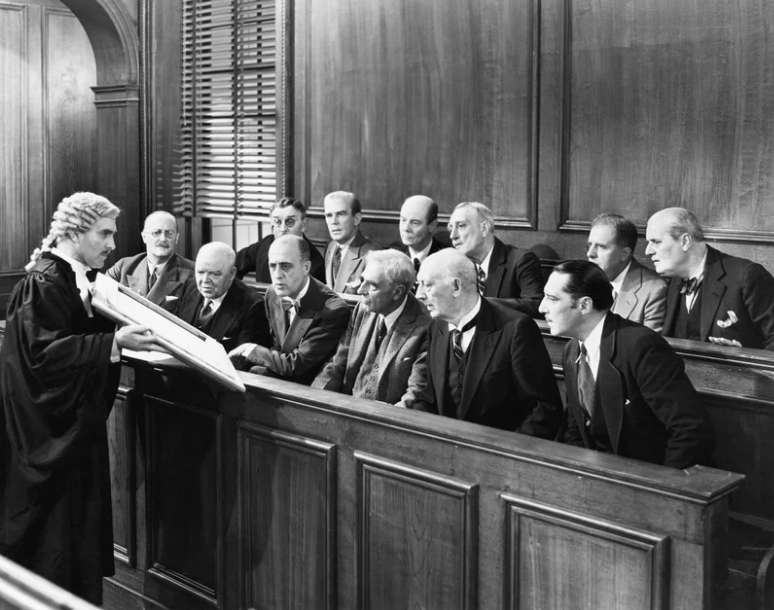
In forty-five states, jury selection procedures authorize trial attorneys to explore potential bases for exercising peremptory challenges and Maryland is not among them. In Maryland, voir dire procedures are exclusively limited to identifying potential challenges for cause. Maryland is also unique in that the voir dire process is almost exclusively conducted by circuit court judges, rather than a party’s own counsel. Only with a court’s leave may trial attorneys lead the voir dire process by directly questioning members of the venire, and even if granted, such questioning cannot be used for any purpose relating to potential peremptory challenges. In terms of both scope and form, Maryland’s voir dire laws remain an outlier on a national level.
Maryland’s voir dire process, aptly described as “limited voir dire” by the Supreme Court of Maryland, came to an inflection point in 2024 when the Maryland General Assembly and the Supreme Court of Maryland considered expanding Maryland’s voir dire laws in terms of both scope and form. In lieu of entering final decisions on the matter, the Supreme Court of Maryland implemented a temporary “Pilot Program for Expanded Voir Dire,”(hereinafter referred to as the “Pilot Program”) whereby a select number of circuit court judges were authorized to employ five new forms of expanded voir dire procedures to gather data from which future amendments to Rules 2-512 and 4-312, if any, will rely.
This pivotal moment presents a rare opportunity to amend Maryland’s laws to more closely comport with the history and tradition of the Sixth Amendment right to an impartial jury. Although the constitutionality of voir dire procedures is not reviewed under a strict “history and tradition” standard per se, the Supreme Court of the United States consistently emphasizes and incorporates historical and traditional factors while analyzing issues pertaining to the right to an impartial jury. As such, any discussion relating to the means of achieving an impartial jury warrants reflection on the historical and traditional underpinnings of that same right.
To that end, Part II of this articlebriefly explores the potential future of expanded voir dire in Maryland through the context of the experimental Pilot Program. Part III presents a pertinent history of jury selection in the colonial United States through the early nineteenth century, demonstrating the particular context and sociopolitical considerations surrounding the ratification of the Sixth Amendment. Part IV then analyzes the judicial history of voir dire laws in Maryland specifically, as well as the analytical shortcomings in early decisions that have since tainted the resulting progeny upholding limited voir dire. Part V explains how the voir dire procedures studied by the Pilot Program would, if adopted, more closely comport with the Framers’ intentions when drafting the Sixth Amendment. In particular, Part V explains that: (1) early American laws promoted the meaningful exercise of peremptory challenges; (2) colonial Americans specifically rejected court-led voir dire; and (3) colonial Americans generally considered attorney-led voir dire to be the most effective method of protecting the right to an impartial jury. From this perspective, this article ultimately concludes that Maryland should adopt expanded voir dire procedures in order to more faithfully execute and achieve the requirements of a “fair and impartial jury” as contemplated by the Framers at the time of ratifying the Sixth Amendment.
For the purposes of this article, the label of “expanded voir dire” refers to jury selection procedures that vary in terms of both scope and form when compared to Maryland’s current laws. In this context, the scope of voir dire refers to a litigant’s ability to probe for information relating to the exercise of either challenges for cause and peremptory challenges, or challenges for cause exclusively. The form of voir dire refers to any procedures that vary from strict court-led voir dire, regardless of whether such procedures would also expand the scope of questioning to account for peremptory challenges. Since neither concept is mutually exclusive of the other, and in fact the two overlap quite frequently, this article uses the term “expanded voir dire” to generally describe either one or both instances.
It is important to note that this article does not assume or otherwise conclude that Maryland’s current voir dire procedures are constitutionally deficient. The only conclusion advanced by this article is that the Framers understood the right to an “impartial jury” to protect the type of expansive voir dire procedures utilized in colonial America, which Maryland’s current laws do not reflect. This article also does not address the relative merits between expanded and limited voir dire, for which there is a legitimate debate. Instead, the only policy rationale underlying this analysis is the general presumption that the better of two laws more closely comports with the original intentions of applicable constitutional provisions. This article ultimately suggests that Maryland law could more closely resemble the original intent of the Sixth Amendment by embracing expanded voir dire procedures.
Read the entire article here.






Leave a Reply